THE BEST FOR EACH USE CASE
- Garmin Cadence Sensor 2 best overall, 12g, automatic pairing on any Garmin, dual ANT+/Bluetooth
- Magene S314 best budget, third-generation chip, 500-hour battery, dual protocol at the lowest price here
- Bryton Smart Cadence Sensor best magnetless alternative to Wahoo's retired RPM, 7.6g, IPX7
Measuring your cadence is an underrated performance cycling metric.
Pedaling with a correct cadence will help you improve your performance, prevent injuries, and get the most out of your training.
That’s why you need to choose the best cadence sensor.
When installed in a bike, cadence sensors measure the rider’s pedaling rate and provide feedback about performance.
This feedback will help you understand how to improve the technique and ultimately increase speed and endurance.
Finding the suitable cadence sensor for your bike is an important decision, as different sensors provide different features and levels of functionality.
In this guide we compare 9 cadence sensors currently on sale, after dropping two that no longer exist: the Wahoo RPM, discontinued in June, and the Saris Magnetless, gone from Amazon and out of stock at Saris. Every weight, battery figure and protocol comes from the manufacturer.
Whether you are an experienced cyclist or a beginner following a cycling training plan, you should be able to find a cadence sensor that will meet your needs by the end of this guide.
How We Choose These Cadence Sensors
We are not a lab with a test rig, and pretending otherwise would be dishonest. What we do instead is verifiable.
What we verify. Every weight, battery figure, protocol and waterproof rating in this guide comes from the manufacturer's own specification, and every sensor is on sale today. Two that appeared in the previous version were dropped because they no longer are, and one was replaced by its successor.
What we bring that a bench test does not. Cycling Coach AI reads the cadence data of thousands of riders, so we see which sensors drop out, which ones double-count on rough roads, and which ones simply work for months without a thought. That is the signal that decides this list.
How we select a bike cadence sensor. A sensor makes this list if it broadcasts on both ANT+ and Bluetooth, or on one of them with a clear reason, publishes a full specification, comes from a brand that answers support tickets, and can be bought today from a listing we have checked ourselves.
Bike Cadence Sensor vs Speed Sensor: Which One Do You Need?
A bike cadence sensor and a speed sensor are usually the same piece of hardware doing two different jobs, and that is where most of the confusion in this category comes from. Mounted on the crank arm, the sensor counts pedal revolutions and reports cadence. Mounted on the wheel hub, it counts wheel revolutions and reports speed. Most of the sensors here, the Magene, the CooSpo and the iGPSPORT among them, do one or the other at a time, chosen by where you strap them.
If you have a GPS head unit or ride with a phone, you already have speed and the bike cadence sensor is the one you are missing. If you ride indoors on a trainer with no GPS, you may want both, which means two sensors or a combined unit like the Wahoo Blue SC. And if you have a power meter, most already report cadence, so check before you buy anything.
The other question is protocol. ANT+ is what most bike computers speak; Bluetooth is what phones and watches speak. Every sensor on this list except the Polar set does both, which is the single feature that has made this decision easy in 2026. Our guide to what cadence to ride at covers what to do with the number once you have it.
Best Cadence Sensors 2026: Compared
| Sensor | Price bracket | Weight | Battery | Protocol | Buy |
|---|---|---|---|---|---|
| Garmin Cadence Sensor 2 | Mid-range | 12g | 12 months | ANT+, Bluetooth | Buy→ |
| Magene S314 | Budget | 7.7g | 500 hours | ANT+, Bluetooth 5.0 | Buy→ |
| Bryton Smart Cadence | Budget | 7.6g | 360 hours | ANT+, Bluetooth | Buy→ |
| Wahoo Blue SC | Mid-range | — | 12 months | ANT+, Bluetooth | Buy→ |
| CooSpo | Budget | — | 500 hours | ANT+, Bluetooth | Buy→ |
| iGPSPORT | Budget | 7.8g | 300 hours | ANT+, Bluetooth | Buy→ |
| Polar Speed + Cadence set | Mid-range | — | ~1,300 hours | Bluetooth | Buy→ |
| moofit | Budget | 9g | 9-12 months | ANT+, Bluetooth | Buy→ |
| Sunny 2-in-1 | Budget | — | 500 hours | ANT+, Bluetooth | Buy→ |
This guide contains affiliate links. We may earn a commission if you buy through them, at no extra cost to you. It never changes what we recommend. See our affiliate disclosure.
Best Cadence Sensors 2026: Reviewed
Garmin Cadence Sensor 2
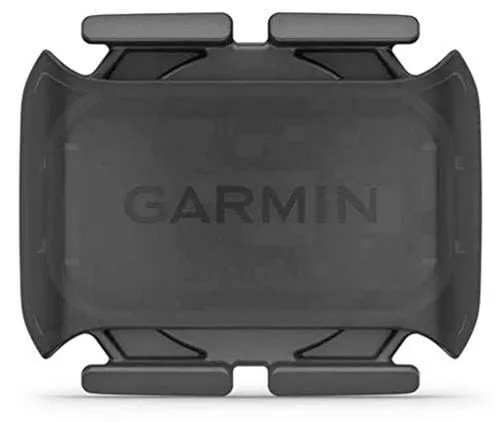
The Garmin Cadence Sensor 2 is a Bluetooth-enabled cycling cadence sensor with very low-power technology.
It can measure the rotations per minute (RPM) of your cycling and provide feedback based on that information.
The weatherproof sensor has LED indicator lights to inform you if the battery is low and the device needs to be charged. The battery can last up to a year, and you can mount it on various bicycles.
Specifications
- Weight: 12g
- Battery: CR2032, 12 months
- Protocol: ANT+ and Bluetooth
- Mounting: Magnetless, crank arm
Price bracket: Mid-range
Magene S314 Speed and Cadence Sensor
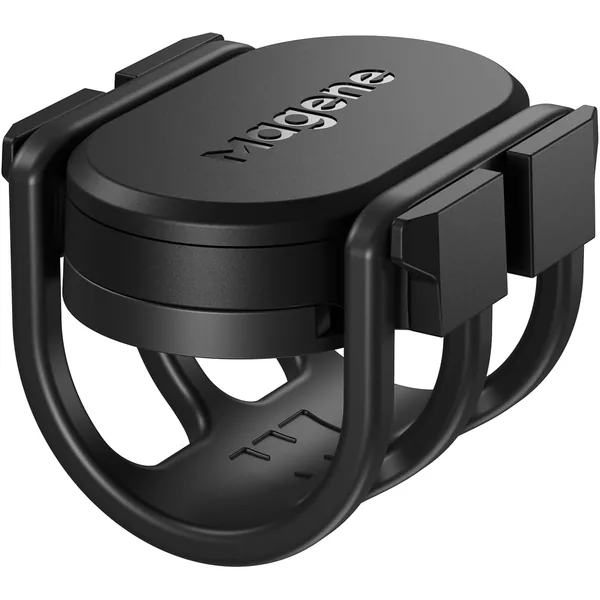
The S314 is the third generation of the sensor that sold over a million units as the S3+, and if you read an older version of this guide, this is what replaced it. Magene made it 10% smaller and 12% lighter, at 7.7g, and swapped the chip for a millisecond motion sensor with a new algorithm that filters out the false readings road bumps used to cause.
It still works the same way: one sensor, switchable between cadence mode on the crank and speed mode on the hub, so you buy two if you want both. Dual ANT+ and Bluetooth 5.0, IP66, and a 500-hour battery, the longest here alongside the Sunny. At the lowest price on this list it is the sensor most riders should buy.
Specifications
- Weight: 7.7g
- Battery: CR2032, 500 hours
- Protocol: ANT+ and Bluetooth 5.0
- Waterproof: IP66
- Modes: Cadence or speed, one at a time
Price bracket: Budget
Bryton Smart Cadence Sensor
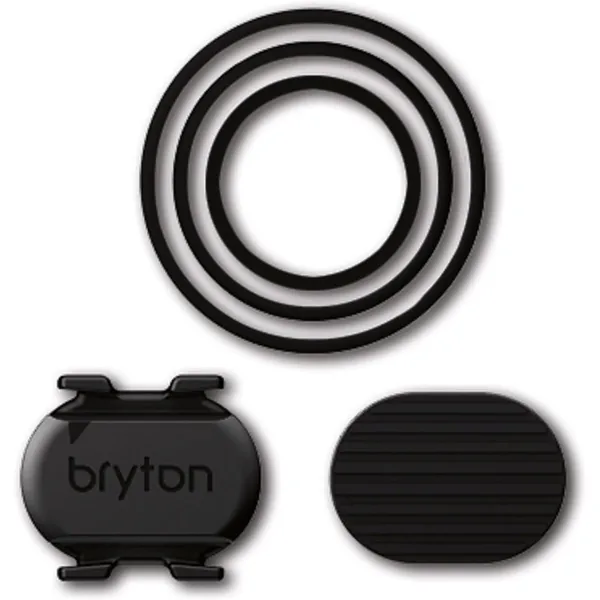
Wahoo discontinued the RPM in June 2026 and does not sell a cadence-only replacement, which leaves a gap this sensor fills better than any other: magnetless, dual ANT+ and Bluetooth, an accelerometer and geomagnetic sensor inside, and an IPX7 rating. Bryton makes bike computers, so the sensor is a first-class citizen with a Rider head unit and a plain dual-protocol sensor with everything else.
At 7.6g it is the second-lightest here. The battery is rated at about 360 hours of riding, shorter than the Magene, though the 300-day standby means it will not drain in the garage. One thing to watch on Amazon: Bryton groups its sensors in a single listing, so pick the Cadence variant.
Specifications
- Weight: 7.6g
- Battery: CR2032, about 360 hours
- Protocol: ANT+ and Bluetooth 4.0
- Waterproof: IPX7
- Mounting: Magnetless, crank arm
Price bracket: Budget
Wahoo Blue SC Speed and Cadence Sensor
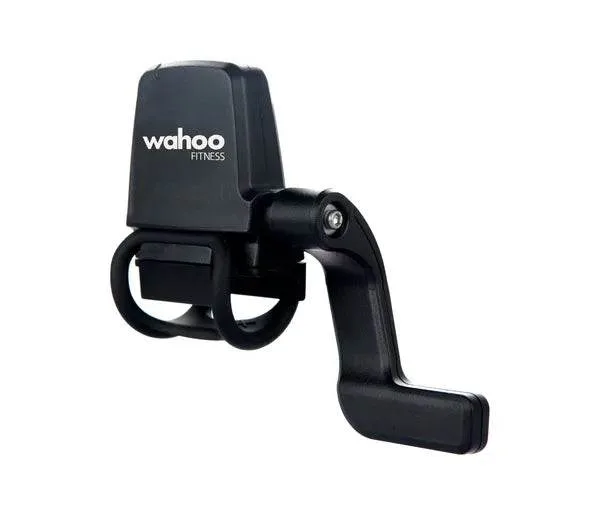
The Wahoo Blue SC Speed and Cadence Sensor is a cycling sensor easily attached to any bike.
The sensor accurately measures the speed or cadence of your cycling and is compatible with popular cycling tracking apps and platforms such as Strava and Zwift.
The Wahoo Blue SC Speed & Cadence Sensor also has a very long battery life of up to one year, is waterproof, and very lightweight at just 6.8 grams.
Specifications
- Battery: CR2032, 12 months
- Protocol: ANT+ and Bluetooth
- Mounting: Chainstay, two magnets
Price bracket: Mid-range
CooSpo Cadence and Speed Bike Sensor
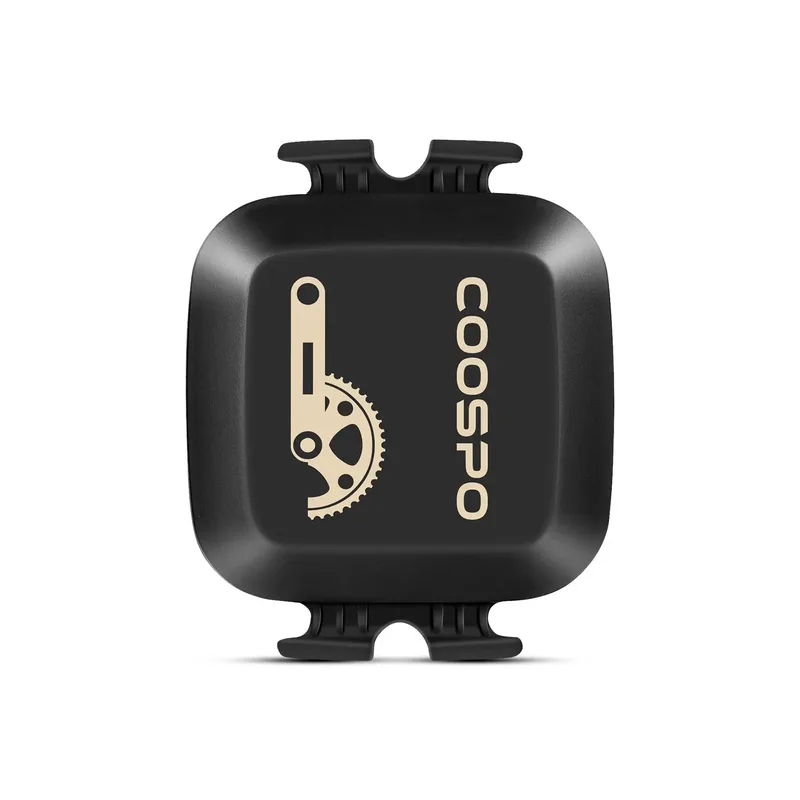
The CooSpo Cadence and Speed Bike Sensor is a compact, lightweight cycling cadence and speed sensor designed for cyclists.
This sensor is designed to be compatible with both Bluetooth and ANT+ protocols and can track your current speed, maximum speed, and average speed.
The CooSpo Cadence and Speed Bike Sensor also features low power consumption and an impressive battery life of up to 15 months.
Specifications
- Battery: CR2032, 500 hours
- Protocol: ANT+ and Bluetooth
- Waterproof: IP67
- Modes: Cadence or speed, one at a time
Price bracket: Budget
iGPSPORT Speed or Cadence Sensor
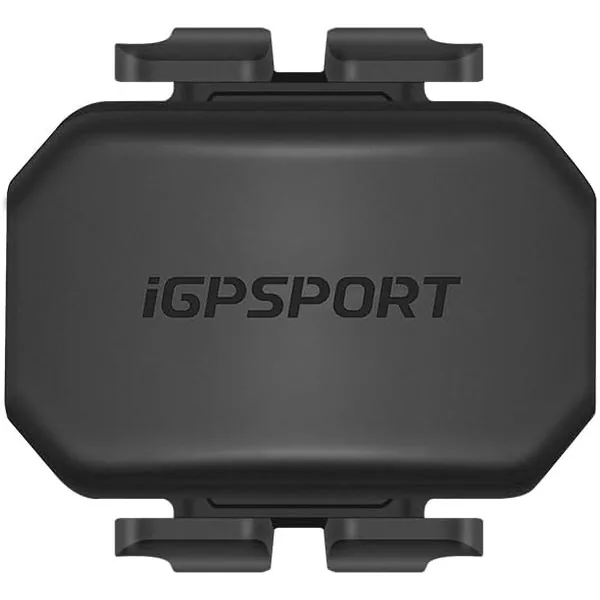
The iGPSPORT Speed or Cadence Sensor is a cycling sensor that is designed for cyclists.
This sensor is designed to be compatible with Bluetooth and ANT+ protocols and accurately measures the speed or cadence of your cycling.
The iGPSPORT Speed or Cadence Sensor also features a long battery life of up to one year and is water-resistant for wet and rainy days.
Additionally, it is tiny and lightweight, making it quite easy to attach to your bike.
Specifications
- Weight: 7.8g
- Battery: CR2032, 300 hours
- Protocol: ANT+ and Bluetooth
- Waterproof: IPX7
Price bracket: Budget
Polar Speed and Cadence Sensor Bluetooth Smart
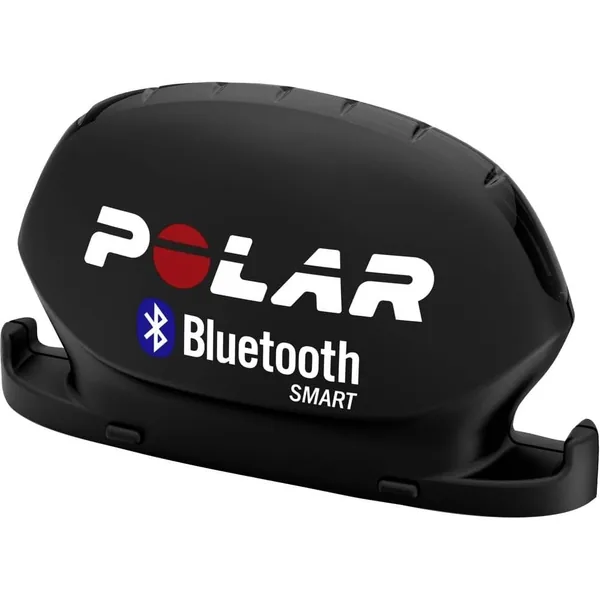
The Polar Speed and Cadence Sensor Bluetooth Smart is a Bluetooth-enabled cycling cadence sensor designed specifically for cyclists.
It uses very low-power technology to measure the RPM of your cycling and provides you with detailed feedback based on this information.
The Polar Speed and Cadence Sensor Bluetooth Smart is easy to install, water-resistant, and lightweight.
The battery lasts up to one year, and you can easily transfer data to the popular Polar Flow app.
Specifications
- Sensors: Two: one speed, one cadence
- Battery: CR2025, about 1,300 hours
- Protocol: Bluetooth Smart only
- Mounting: Magnet-based
Price bracket: Premium
moofit Cadence Sensor
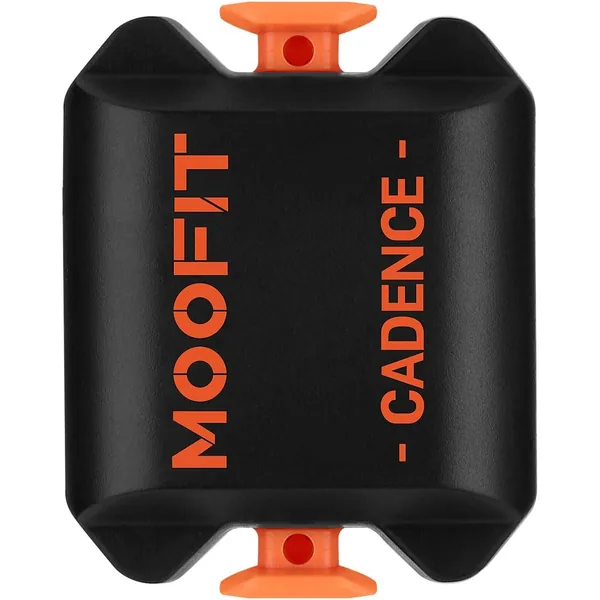
The moofit Bike Cadence and Speed Sensor is a Bluetooth-enabled cycling cadence sensor designed specifically for cyclists.
This sensor measures your cadence in real-time with high accuracy and can be connected to various platforms such as Strava, Zwift, and Wahoo Fitness.
The moofit Bike Cadence and Speed Sensor has a long battery life of up to 10 months and is also water-resistant for wet and rainy days. Additionally, it is a very lightweight sensor, weighing only 12 grams.
Specifications
- Weight: 9g
- Battery: CR2032, 9-12 months
- Protocol: ANT+ and Bluetooth
- Waterproof: IP67
Price bracket: Budget
Sunny Health & Fitness 2-in-1 Cadence and Speed Sensor
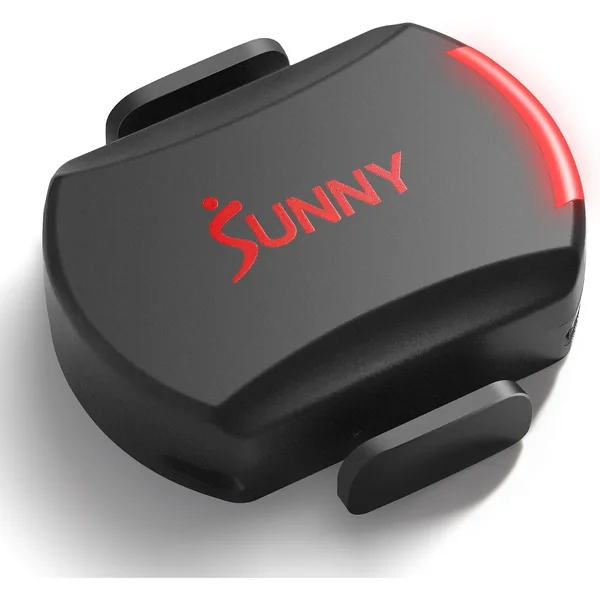
Every other sensor here was designed for a road bike and adapted to indoor use. The Sunny CB110 went the other way: it was built for spin bikes and home trainers, with rubber mounts for round and square cranks, Bluetooth and ANT+, no magnet, and a 500-hour battery. It reports to the SunnyFit app but pairs with Zwift and any dual-protocol head unit like the rest.
If the sensor is going on a stationary bike in a spare room rather than a Domane, this is the one to buy. Sunny does not publish its weight, which on a spin bike does not matter.
Specifications
- Model: CB110
- Battery: CR2032, 500 hours
- Protocol: ANT+ and Bluetooth
- Mounting: Rubber straps, round or square cranks
- Weight: Not published
Price bracket: Budget
How to Choose a Cadence Sensor
With nine options on this list, the choice comes down to four criteria.
Protocol: ANT+ or Bluetooth?
If you use a Garmin, Wahoo, or any dedicated cycling computer, you need ANT+. If you train exclusively with a smartphone app like Strava or Zwift, Bluetooth is enough. For maximum flexibility, choose a sensor that transmits both simultaneously. The Garmin Cadence Sensor 2 and the Magene S314 both do this.
Mounting Type
Most sensors clip onto the crank arm with a rubber band, with no tools and no magnets, installation under two minutes. Some older models require a spoke magnet or zip tie. Stick to magnetless sensors: they are more reliable and easier to move between bikes.
Battery Life
Eight of the nine sensors on this list use a CR2032 coin cell; the Polar set uses a CR2025. Manufacturers quote battery life two ways, in months of typical use (Garmin and Wahoo say 12) or in hours of riding (Magene, Sunny and CooSpo say 500, Bryton about 360, iGPSPORT 300), and at five hours a week those come out in the same range. Your cycling computer will show a low-battery warning before it fails.
Compatibility with Your App or Computer
Before buying, confirm your device supports the sensor protocol. Garmin Edge computers support ANT+ natively. Zwift and TrainerRoad accept both ANT+ (via USB dongle on PC) and Bluetooth. Apple Watch and most fitness apps use Bluetooth only.
ANT+ vs Bluetooth: Which Do You Need?
This is the single most important decision when buying a cadence sensor.
ANT+ is a one-to-many protocol: one sensor can broadcast to multiple devices at the same time without pairing. It is the standard for Garmin, Wahoo, and Lezyne cycling computers. Signal is stable, low-latency, and designed for outdoor use.
Bluetooth is a one-to-one protocol: one sensor pairs to one device at a time. It is required for smartphone apps (Strava, Zwift on mobile, Apple Health) and for indoor trainers without an ANT+ USB dongle.
The practical recommendation: if you own a Garmin or Wahoo cycling computer, choose a sensor with ANT+. If you also train with a phone app, choose dual ANT+/Bluetooth. The Garmin Cadence Sensor 2 and the Magene S314 transmit both protocols simultaneously, so you never have to choose.
Key Takeaways
The Garmin Cadence Sensor 2 is still the sensor to buy if you ride with a Garmin: 12g, automatic pairing, and the one model in this category that has not been discontinued or replaced in years. For everyone else, the Magene S314 does the same job on both protocols for the least money here, with a 500-hour battery and a third-generation chip that fixes the road-bump false readings of the old S3+.
If you came here looking for the Wahoo RPM, it is gone: Wahoo discontinued it in June 2026 and sells no cadence-only replacement. The Bryton Smart Cadence Sensor is the closest thing, magnetless and dual-protocol, and the Blue SC is what Wahoo still offers if you want the brand.
Whichever you pick, check two things first: whether your head unit speaks ANT+ or Bluetooth, and whether your power meter already reports cadence. A sensor you did not need is the most common purchase in this category. Once the number is on the screen, our guide to cycling cadence explains what to do with it.