Indoor cycling looks simple from the outside.
You get on a stationary bike, follow a few workouts, sweat, and assume progress will come with consistency.
But after a few weeks, most riders hit the same wall.
The workouts start to feel repetitive, fatigue accumulates, and results slow down or stop completely.
The problem is not indoor cycling.
The problem is training without a real plan.
An effective indoor cycling training plan goes beyond random workout routines or fixed weekly schedules.
It defines how workouts fit together, how intensity progresses, and how your body adapts over time, whether you train on a stationary bike or an indoor trainer.
In this guide, you’ll learn how indoor cycling training plans actually work, what separates routines from real plans, and how to structure indoor workouts for sustainable progress.
You’ll see the key components every indoor cycling workout plan needs, common mistakes that limit results, and how a typical 8-week indoor cycling training plan is structured.
More importantly, you’ll understand why most static indoor training plans eventually stop working and what it takes to keep improving indoors without guessing. If fat loss is your main goal, our cycling for weight loss plan covers the exact structure you need.
What Is an Indoor Cycling Training Plan?
An indoor cycling training plan is a structured approach to improve your cycling fitness while training indoors.Instead of choosing random workouts, a training plan defines what you train, when you train, and why each session exists.
It connects individual indoor cycling workouts into a logical progression.
A real training plan is built around adaptation.
Each session creates a specific training stimulus.
Over time, those stimuli accumulate and lead to measurable improvements in endurance, strength, and efficiency on the bike.
Indoor cycling training plans are often confused with workout routines.
They are not the same.
Workout routines focus on a single session.
A training plan focuses on how sessions work together over weeks, balancing stress and recovery.
Whether you train on a stationary bike or an indoor trainer, the principle is the same.
The goal is not to complete workouts.
The goal is to progress, week after week.
An effective indoor cycling training plan considers:
- Your current fitness level
- How many days per week you can train
- How intensity is distributed
- When recovery is needed
This is why indoor cycling training plans outperform isolated workout routines.
They replace guesswork with intent.
And they turn indoor sessions into long-term progress, not just sweat.
Stationary Bike vs Indoor Trainer: Does It Change the Training Plan?
At first glance, training on a stationary bike and training on an indoor trainer may seem very different.One feels more fitness-oriented.
The other feels more cycling-specific.
In reality, the training principles do not change.
What changes is how precisely you can apply them.
A stationary bike usually limits feedback.
You often train by time, perceived effort, or basic resistance levels.
That does not make it ineffective.
It simply means the plan must rely more on effort control and consistency.
An indoor trainer allows for greater precision.
Power, cadence, and structured intervals are easier to control.
This makes it simpler to execute specific intensities and progress workload over time.
However, precision does not equal progress by itself.
Without a plan that manages volume, intensity, and recovery, even the most advanced trainer becomes just another way to accumulate fatigue.
A well-designed indoor cycling training plan works on both setups.
The core elements stay the same:
- Progressive overload
- Balanced intensity distribution
- Planned recovery
Structure matters more than hardware.
That is why riders using basic stationary bikes can still improve when following a coherent indoor cycling training plan, while others with advanced trainers stagnate without one.
Indoor Cycling Workout Routines vs Training Plans
Indoor cycling workout routines are built around individual sessions.You pick a workout.
You complete it.
Then you pick another one the next day.
This approach feels productive in the short term.
You sweat.
You feel tired.
You feel like you trained.
The problem is that routines lack context.
They do not explain how today’s workout relates to last week or next week.
There is no long-term progression, only repetition with different names.
An indoor cycling training plan works differently.
Each workout has a purpose.
daily has a role.
Intensity, volume, and recovery are arranged to drive adaptation over time.
Workout routines answer the question:
“What should I do today?”
Training plans answer a more important one:
“What should I do today to improve next month?”
This distinction matters even more indoors.
Without external variables like terrain or group dynamics, indoor training magnifies mistakes.
Too much intensity leads to early fatigue.
Too little structure leads to stagnation.
Workout routines can be useful.
They can add variety or fill gaps.
But without a training plan guiding how and when they are used, routines rarely lead to sustained progress.
That is why riders who rely only on indoor cycling workout routines often plateau.
And why those following a structured indoor cycling training plan continue to improve, even with fewer sessions.
Key Components of an Effective Indoor Cycling Workout Plan
An effective indoor cycling workout plan is not defined by how hard the sessions feel.It is defined by how well stress and recovery are balanced over time.
1. Consistent Training Frequency
Progress depends on consistency.Most indoor cycling plans work best with 3 to 5 sessions per week.
More sessions are not always better.
What matters is whether you can repeat that frequency week after week.
2. Intensity Distribution
Indoor training makes intensity easy to overuse.Effective plans limit high-intensity sessions.
Most workouts should feel controlled, not maximal.
High-intensity efforts are included on purpose, not by accident.
3. Progressive Overload
Fitness improves when training stress increases gradually.This can happen through:
- Slightly longer sessions
- More structured intervals
- Higher quality efforts at the same duration
4. Planned Recovery
Recovery is part of the plan, not a break from it.Indoor cycling accumulates fatigue quickly.
Rest days and lighter weeks allow adaptations to take place.
Ignoring recovery leads to stalled progress and declining motivation.
5. Clear Session Purpose
Every indoor workout should answer one question:“What is this session training?”
Endurance, tempo, threshold, or high-intensity work should not be mixed randomly.
Clarity keeps training effective and repeatable.
6. Long-Term Structure
Single weeks do not drive progress.Training blocks do.
An effective indoor cycling workout plan connects weeks into phases, each with a specific goal.
This structure is what turns individual workouts into lasting improvement.
When these components work together, indoor training becomes predictable and productive.
When one is missing, progress becomes inconsistent, no matter how hard the workouts feel.
Indoor Cycling Workout Routines by Goal
Indoor cycling workout routines can be useful when they are aligned with a clear objective.The problem starts when every session tries to train everything at once.
Endurance and Aerobic Base
Endurance routines focus on steady, controlled effort.They improve efficiency and build the foundation for harder work later.
These sessions feel sustainable and should make up a large part of indoor training.
Workout Example
Name: Aerobic Endurance Ride with Short Sprints
Duration: 60–90 minutes
Effort: Mostly controlled and sustainable, with very short maximal efforts
Workout:
Start with a progressive warm-up of 10–15 minutes.
Effort increases gradually until you reach a comfortable, steady pace you can hold for a long time.
Breathing should remain controlled and rhythmic.
Settle into a steady endurance effort for most of the session.
This effort should feel sustainable.
You should be able to maintain it without mental strain or heavy fatigue.
During the main part of the ride, include 3–6 very short sprints of 10–15 seconds.
These efforts are sharp and explosive, not long.
After each sprint, return immediately to your endurance pace for at least 5–10 minutes.
The sprints should not turn the session into an interval workout.
They are included to stimulate neuromuscular coordination and maintain top-end recruitment without accumulating fatigue.
Finish the session with an easy 10-minute cool-down.
Effort gradually decreases, allowing heart rate and breathing to normalize.
The goal of this workout is to build aerobic efficiency while lightly stimulating neuromuscular systems.
This combination supports endurance development and helps preserve high-end capacity without compromising recovery.
Within an indoor cycling training plan, this workout is typically used:
- Multiple times per week
- Between harder sessions
- During base and recovery weeks
Improving Power and Sustained Effort
These routines target moderate to hard intensities.Efforts are longer and require focus, but remain controlled.
They help you hold stronger efforts for longer periods without excessive fatigue.
Workout Example
Name: Sustained Effort Intervals
Duration: 45–70 minutes
Effort: Moderately hard but controlled
Workout:
Start with a progressive warm-up of 10–15 minutes.
Effort should increase gradually until you reach a steady intensity that feels challenging but sustainable.
Breathing becomes deeper, but remains under control.
After the warm-up, begin the main set with sustained efforts of 8–15 minutes.
These efforts should feel demanding, but repeatable.
You should be able to hold the intensity without fading before the end of each interval.
Between sustained efforts, include 5–8 minutes of easy to moderate riding.
Recovery should feel sufficient to reset focus, but not so long that the workout loses continuity.
Repeat these blocks 2–4 times, depending on interval duration and overall session length.
Quality matters more than quantity.
Each effort should look and feel similar.
Finish the session with a 10-minute cool-down.
Gradually reduce effort to allow heart rate and breathing to return toward baseline.
The goal of this workout is to improve your ability to sustain stronger efforts for longer periods.
Over time, this increases muscular endurance and raises the ceiling of what feels “comfortably hard” during indoor riding.
Within an indoor cycling training plan, this workout is typically used:
- Once or twice per week
- After a solid aerobic base is established
- With easier endurance or recovery sessions surrounding it
High-Intensity and VO₂-Type Workouts
High-intensity routines are short and demanding.They improve your ability to handle hard efforts and recover between them.
Because they create a lot of stress, they must be used sparingly.
Workout Example
Name: Short High-Intensity Intervals
Duration: 30–50 minutes
Effort: Very hard during efforts, easy between intervals
Workout:
Start with a gentle warm-up of 10–15 minutes.
Effort should increase gradually, preparing the body for high-intensity work without fatigue spikes.
Then, alternate short, intense efforts of 3–5 minutes with controlled recovery periods.
Recovery can match the effort duration or be slightly shorter, depending on fitness and fatigue.
Repeat these blocks 3–6 times, based on the length of the intense efforts and overall session goal.
Each hard segment should feel challenging and require full focus.
Recovery intervals allow you to repeat the effort with quality, without breaking down completely.
This balance is what keeps the workout effective instead of overwhelming.
Finish the session with a 10–15 minute cool-down.
Effort gradually decreases, allowing heart rate and breathing to return to baseline.
The goal of this workout is to stimulate high-intensity aerobic capacity and improve your ability to recover between hard efforts.
These sessions deliver a strong training stimulus in a relatively short amount of time when used correctly within a plan.
Within an indoor cycling training plan, this workout is typically used:
- Once per week
- After a solid endurance base is established
- With easy or recovery sessions before and after
Recovery and Easy Rides
Not every workout should feel productive.Easy routines promote blood flow and reduce accumulated fatigue.
They allow consistency without overloading the system.
Workout routines work best when they are assigned a role.
Used randomly, they create noise.
Used intentionally within a plan, they reinforce progress instead of disrupting it.
This is why routines alone are not enough.
Without a structure deciding when and how each type is used, indoor cycling workouts lose their effectiveness over time.
Workout Example
Name: Easy Recovery Ride
Duration: 30–50 minutes
Effort: Very easy and relaxed
Workout:
Start with an easy spin of 5–10 minutes.
Pedaling should feel smooth and light from the beginning.
There is no need to gradually build intensity in this session.
Maintain a very comfortable effort for the main part of the ride.
Breathing remains calm.
You should be able to hold a full conversation without effort.
If in doubt, go easier.
Cadence can vary naturally, but resistance stays low at all times.
There should be no pressure to “make the ride productive”.
The purpose is circulation, not training stress.
Finish with a relaxed 5–10 minute cool-down, gradually reducing effort even further.
The goal is to leave the session feeling fresher than when you started.
The goal of this workout is to promote blood flow, support recovery, and reduce accumulated fatigue.
Easy rides help maintain consistency without adding stress to the system.
Within an indoor cycling training plan, this workout is typically used:
- After high-intensity or sustained effort sessions
- During recovery weeks
- On days when fatigue is elevated but movement is beneficial
How to Structure a Cycling Indoor Training Plan Over Time
Indoor training becomes effective when sessions are organized with a long-term perspective.Not daily should feel harder than the previous one.
Progress comes from planned variation, not constant intensity.
Most indoor cycling training plans are structured in phases.
Each phase emphasizes a specific adaptation while supporting the next one.
This prevents stagnation and excessive fatigue.
Early phases focus on consistency and aerobic development.
Workouts are controlled and repeatable.
The goal is to build a base that allows harder efforts later.
As the plan progresses, intensity becomes more specific.
Sessions target sustained efforts or short high-intensity work, depending on the goal.
Volume and intensity are adjusted together to avoid overload.
Recovery weeks are part of the structure.
They reduce accumulated fatigue and allow adaptations to consolidate.
Skipping them often leads to plateaus or burnout.
A well-structured indoor cycling training plan does not chase daily exhaustion.
It balances stress and recovery across weeks.
That balance is what allows improvement to continue indoors, even when training time is limited.
8-Week Indoor Cycling Training Plan Example
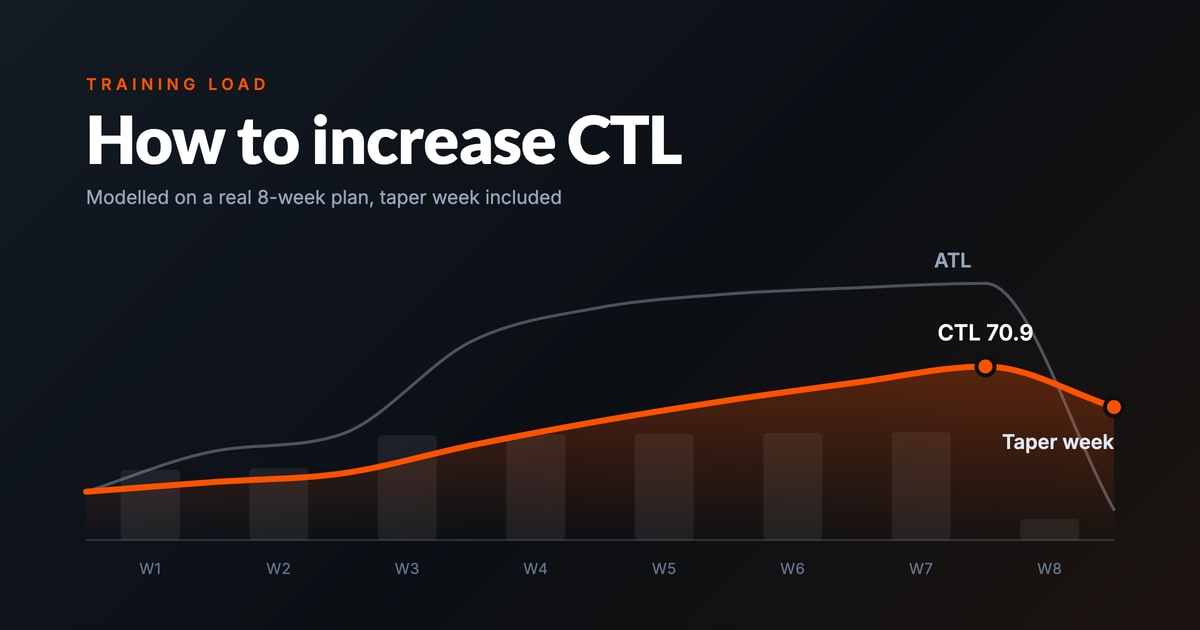
This 8-week indoor cycling training plan is an example of how structured indoor training is typically organized.It is not meant to be followed blindly.
It shows how workouts can be arranged over time to create progression.
Weeks 1–4: Base and Consistency
The first phase focuses on building routine and aerobic efficiency.The goal is to train consistently without accumulating excessive fatigue.
Most sessions feel controlled and repeatable.
Typical structure:
- 3 to 4 indoor cycling sessions per week
- Mostly endurance and moderate efforts
- One lighter week to absorb the training load
Weeks 5–8: Build and Specific Stress
The second phase introduces more demanding sessions.Intensity becomes more targeted, while overall structure remains stable.
Typical structure:
- 4 to 5 sessions per week
- One or two higher-intensity workouts
- Endurance and recovery sessions supporting the harder days
Recovery remains essential.
What This Example Does Not Show
This plan does not account for:- Individual fitness differences
- Schedule changes
- Fatigue accumulation
- Missed sessions
That is where most static indoor cycling training plans start to fail.
Why This Structure Works in Theory
The logic is simple.Build consistency first.
Add stress gradually.
Allow recovery to keep adaptation moving forward.
This structure explains why 8-week indoor cycling training plans are popular.
But it also explains their main limitation.
They assume your body responds exactly as expected.
And real training rarely works that way.
Common Mistakes in Indoor Cycling Training
Indoor training makes mistakes harder to notice.Without external feedback like terrain or group dynamics, it is easy to misjudge effort and load.
1. Training Too Hard Too Often
Indoor workouts feel controlled.That makes it tempting to push intensity every session.
Over time, this leads to accumulated fatigue and stalled progress.
Hard sessions only work when they are supported by easier days.
2. Ignoring Recovery Indoors
Indoor cycling is deceptively demanding.Heat, static position, and mental focus increase stress.
Skipping recovery rides or rest days quickly limits adaptation.
3. Following Static Plans Without Adjustment
Life rarely follows a perfect schedule.Missed sessions, poor sleep, or stress change how your body responds.
Static indoor cycling training plans do not adapt to these variables.
4. Confusing Fatigue With Progress
Feeling exhausted is not a performance metric.Progress shows up as better control, stronger sustained efforts, and improved repeatability.
Chasing exhaustion often does the opposite.
5. Treating Every Workout the Same
Indoor sessions need clear intent.Mixing endurance, intensity, and recovery randomly creates noise, not improvement.
Each workout should have a role inside the plan.
Avoiding these mistakes does not require more training.
It requires better structure and more awareness of how indoor stress accumulates over time.
From Static Indoor Training Plans to Adaptive Coaching
Static indoor cycling training plans are a useful starting point.They provide structure.
They remove uncertainty.
They help build consistency during the first weeks of indoor training.
But training does not happen in a vacuum.
Fatigue fluctuates.
Schedules change.
Some weeks feel easy.
Others do not.
Adaptive coaching acknowledges this reality.
Instead of forcing you to follow a fixed plan, training evolves based on how you actually respond.
Intensity adjusts.
Volume adapts.
Recovery is introduced when it is needed, not when a calendar says so.
This approach keeps the original structure of an indoor cycling training plan.
But it adds flexibility.
The plan becomes a framework, not a constraint.
For indoor cycling, this matters even more.
Without terrain variation or external cues, adaptation depends entirely on how well training stress is managed.
Small mismatches accumulate quickly indoors.
Moving from static plans to adaptive coaching is not about training harder.
It is about training with feedback.
Understanding when to push.
And knowing when to step back to keep progress moving forward.
This is how indoor cycling stops being repetitive.
And starts becoming a reliable way to improve.
Indoor cycling works best when training adapts to you.
Your fitness, your schedule, and how you respond to daily all matter.
Instead of following a static indoor cycling training plan, you can train with a plan that evolves as you do. If you already use Strava to track your rides, see how a Strava training plan compares to a fully adaptive coaching approach.
With Cycling Coach AI, your indoor training adapts automatically based on your level, availability, and progress.
You stop guessing when to push or back off.
And your indoor cycling workouts stay aligned with real improvement.
If you want an indoor cycling training plan that adjusts as you train, start with a personalized cycling training plan on.