You love pushing your limits, but lately, every ride feels like a monumental struggle.
That familiar burn in your legs has turned into a deep ache, and the joy is fading.Is this just fatigue, or are you teetering on the edge of cycling overtraining?
It’s a frustrating place to be when hard work stops paying off.
We promise to give you a clear, no-nonsense roadmap to understand this frustrating condition.
You’ll learn how to spot the warning signs, find the hidden causes, and build a smart plan to recover and prevent it from happening again.
In this guide, we will decode the signals your body is sending, from the obvious to the subtle.
You’ll learn how to balance stress and recovery to keep getting stronger without the crash.
We’ll also show you how to build a smarter, more sustainable training habit.
Are You Training Too Hard or Just Tired?
It's a fine line between productive training fatigue and a burnout that grinds your progress to a halt. We get it.The confusion between the two can make you second-guess every hard effort and every rest day.
This guide is here to clear that up for you.
We’ll give you a practical roadmap to understanding, preventing, and recovering from overtraining.
This isn’t about scaring you away from hard work. It’s about making sure your hard work actually pays off.
Ahead, we’ll decode the warning signs your body is sending you. You’ll learn how smarter training keeps you strong without the crash.
A great first step is understanding how hard your efforts feel. You can learn more in our guide to what is RPE.
What is Overtraining?
Understanding Overtraining in Cycling
Let's clear up what cycling overtraining actually is.It’s much more than just feeling beat up after a hard week.
Think of your fitness as a bank account.
Smart training makes consistent deposits.
Proper recovery is the interest that makes your fitness grow.
Overtraining is like making huge, non-stop withdrawals without putting anything back in.
Eventually, your fitness account goes bankrupt.
When that happens, you’re left in a state of prolonged, deep fatigue.
Your performance craters.
That’s a condition we call Overtraining Syndrome (OTS).
The Training Balance
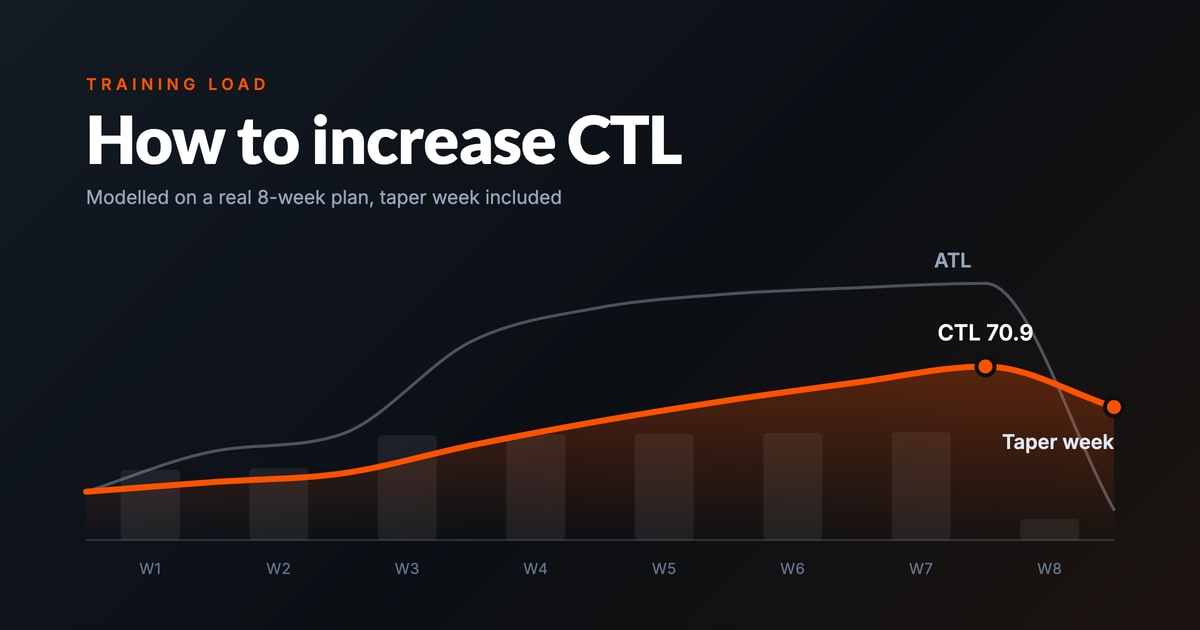
Getting stronger on the bike isn't just about stress.It’s about the delicate balance between stress and recovery. The chart that tracks it is CTL against ATL, and how to increase CTL shows what a build and a taper look like week by week.
When you apply a training load and recover properly, you get faster.
This planned dip in performance followed by a rebound is called functional overreaching.
It’s a key part of the adaptation process. You can learn more in our guide to the supercompensation cycle.
«"But when training stress consistently crushes your ability to recover, you start sliding into a dangerous place. This imbalance pushes you from productive training into full-blown OTS."»And it’s more common than you might think.
Among elite endurance athletes, the prevalence often hovers around 10% at any given time.
Digging into the research, you’ll find rates from 7-21%. This shows the risk for any dedicated rider.
Overtraining Symptoms
Recognizing the Warning Signs of Overtraining
Your body sends signals when you’re pushing too far.These warnings are easy to dismiss as just being tired.
Spotting the early red flags of cycling overtraining is key.
It prevents a small dip from becoming a season-ending setback.
These signs aren’t just physical.
They show up in your mood and motivation, too.
Lingering muscle soreness, a sudden drop in power, and catching every cold are classic symptoms.
Mentally, you might feel irritable or lose all desire to even look at your bike.
Physical and Mental Red Flags
One of the most reliable early indicators is your morning resting heart rate.A consistently elevated number is a clear sign of accumulated stress.
If you’re not already tracking it, our guide explains everything about what is resting heart rate.
Here are a few other common warning signs:
- Persistent Fatigue: A deep exhaustion that remains even after rest days.
- Mood Swings: Experiencing unusual irritability, anxiety, or emotional numbness.
- Disrupted Sleep: Difficulty in falling asleep or waking up without feeling rested.
- Frequent Illness: A weakened immune system increases vulnerability to colds.
- Reduced Performance: Performance and results decline despite maintaining or increasing training levels, with personal records and power decreasing instead of improving.
- Ongoing Fatigue: Continual tiredness even after ample rest and breaks from training.
- Sleep Challenges: Experiencing difficulties with sleep or having irregular sleep patterns.
- Persistent Muscle Soreness: Muscles remain sore over an extended period.
- Increased Perceived Exertion: Higher effort levels are felt even after a period of rest.
- Slower Recovery: The body takes longer to recover from physical exertion.
- Depression and Mood Changes: Experiencing feelings of depression and noticeable mood shifts.
- Cognitive Difficulties: Struggling with mental tasks.
- Higher Illness Susceptibility: Greater likelihood of catching colds and flu.
- Consistently High Perceived Exertion: Effort levels remain high even after rest or recovery weeks.
When that balance tips too far toward stress, you head for trouble.
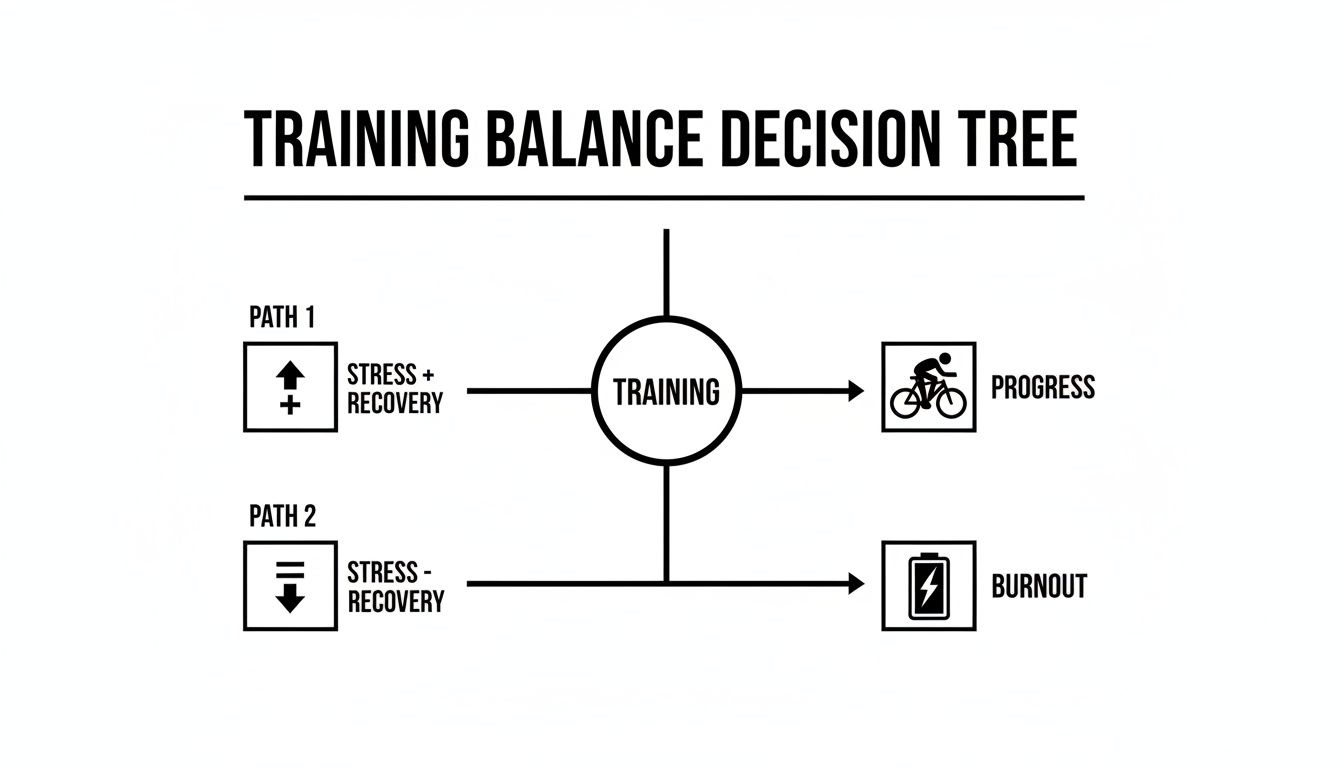
Pushing through these signs often leads to bigger problems.
A survey of over 500 cyclists identified 440 overuse injuries or pains in a single year.
This highlights how common the problem is when training isn’t managed correctly.
Causes of Overtraining in Cycling
Overtraining isn’t just about riding too many miles.It’s a perfect storm where training stress collides with the pressures of everyday life.
This collision creates the perfect recipe for cycling overtraining.
A sudden jump in training volume is a classic trigger.
But the real culprits are the stressors that don’t show up on your power meter.
They quietly drain your ability to recover.
Life Stress Adds Up
Think about your stress as one big bucket. It's not separate ones for training and life.A demanding job, family responsibilities, or bad sleep all pour into that same bucket.
Your body doesn’t know the difference between stress from intervals and stress from a work deadline.
It all draws from the same, limited recovery budget.
This means a moderate training week can push you over the edge if life is chaotic.
«"For many amateur cyclists, a high-pressure week at the office and a challenging training block is the exact formula for burnout. It’s a cumulative effect that erodes your ability to improve."»The demands of modern training are also getting higher.
Managing your training means looking at the whole picture.
Learning to measure all this stress is crucial.
How to Recover from Overtraining
Your Action Plan for Recovery and Prevention
Realizing you’re dealing with cycling overtraining is the first, hardest step.
The good news is that you’ve identified the problem.
Now, let’s build a smart, structured plan.
This will get you back on the bike and keep you from ending up here again.
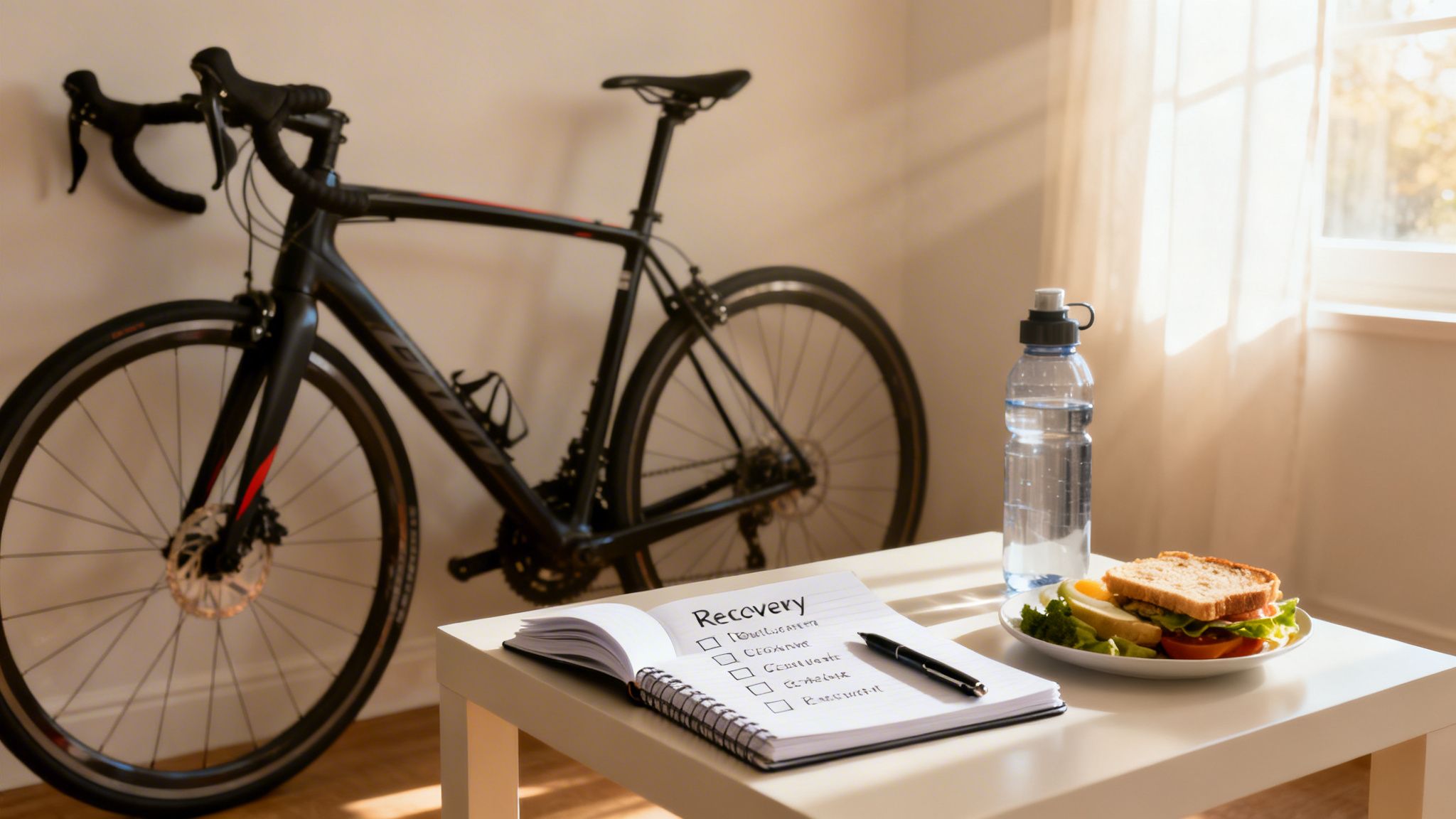
Your immediate priority isn’t more training. It’s intentional, unapologetic rest.
This often means radically cutting your volume or stopping completely for a bit.
Trying to train through it will only dig a deeper hole.
A Phased Return to Riding
Once you start feeling human again, your return to training must be gradual.Don’t jump right back into your old routine.
Your comeback plan needs to be built on patience. You must really listen to your body.
A sensible, phased approach looks something like this:
- Complete Rest: Start with several days to a full week completely off the bike. No "easy spins." Your only job is to sleep, eat well, and de-stress.
- Active Recovery: Once you're feeling better, introduce very short, easy rides in Zone 1. These should make you feel better, not more tired.
- Gradual Reintroduction: Slowly add back low-intensity volume. Only reintroduce structured, high-intensity workouts after you can handle that without feeling drained.
«"The golden rule of recovery is simple: if a ride leaves you feeling drained, your body isn't ready. True recovery is about rebuilding, not just resting."»For a deeper dive, our guide on recovery after cycling offers more practical strategies.
How to Prevent Overtraining
Static cycling training plans are a big risk factor for cycling overtraining. They are rigid.They don’t know if you slept poorly, got slammed at work, or felt surprisingly good.
This is where smart training technology becomes your most important training partner.
AI-powered platforms are built to prevent burnout.
They analyze your ride data to create a personal and adaptive plan.
Think of it as a digital coach. It ensures you’re always training smarter, not just harder.
Cycling Adaptive Training
Cycling Coach AI keeps track and analyzes every training session to manage your loads.It bases changes on how you’re actually performing.
If you crush a session, your plan might nudge the difficulty up.
If you skip a workout, it recalibrates the next one to avoid a risky jump in load.
It’s all about maintaining that perfect balance between stress and recovery.
It’s no longer just a feeling; it’s objective data.
This clear view of your readiness helps you spot trends before they become problems. It keeps you out of the red zone.
It guides you toward your goals without letting you fall into the overtraining trap.
Stop guessing and start training smarter.