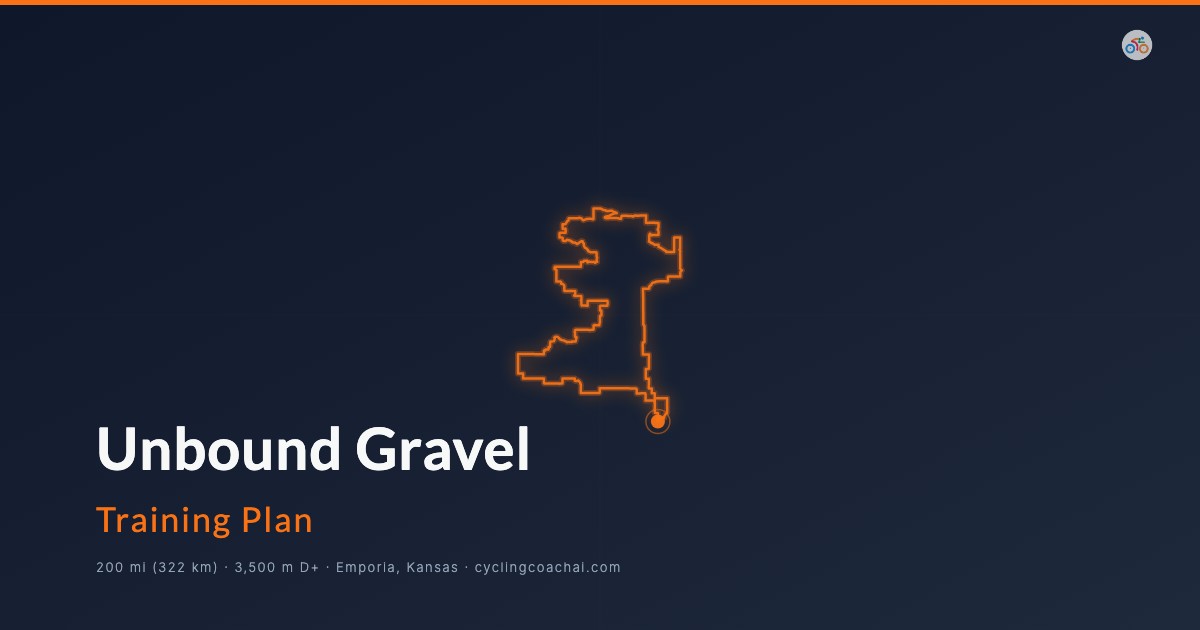
Chase the Sun is not a race. There is no timing, no ranking, no prize list. It is a challenge held on the longest day of the year: ride from one coast to another, starting at sunrise, finishing before sunset. That gives you roughly 16 to 17 hours of riding time, depending on the route. The event runs four editions covering 200 to 280 kilometres each, across the UK, Ireland, and Italy, all on the same day, the summer solstice.
What makes Chase the Sun harder than it looks on paper is the duration. You are pedalling almost continuously for 13 to 17 hours on rolling terrain with no single defining climb to pace yourself against. The physiological demand is not peak power on a col. It is the ability to sustain moderate output across a full day while managing glycogen, hydration, and motivation through the final hours when the sun is already low and your legs are not what they were at dawn.
This guide gives you a complete Chase the Sun training plan: race overview, physiological demands, how to train for any of the four routes from any fitness base, and full week-by-week plans for 12, 16, 20, and 24 weeks. Follow it and you will cross the finish line with daylight still on the horizon.
Chase the Sun Race Overview
| Race detail | |
|---|---|
| 📅 Next edition | Saturday, 20 June 2026 (summer solstice) |
| 🌐 Official website | chasethesun.org |
| 📏 Distance | 200–209 miles (UK/Ireland routes) · 280 km (Italia) |
| ⛰️ Elevation gain | 3,000–3,300 m D+ depending on route |
| 🛣️ Surface | Tarmac (open roads, no route marking — GPS required) |
| ⏱️ Riding window | ~16–17 hours (sunrise to sunset on the longest day) |
| ⏱️ Cut-off time | None official — sunset is the soft deadline |
| 👥 Participants | ~1,900 total across all four editions (2025) |
| 🎟️ Entry method | Open registration via chasethesun.org |
| 📁 GPX routes | Available via chasethesun.org after registration |
The Four Routes
| Route | Distance | Elevation | Start | Finish |
|---|---|---|---|---|
| UK South | 205 mi / 330 km | 3,000m D+ | Minster-on-Sea, Kent | Weston-Super-Mare |
| UK North | 200 mi / 322 km | 3,200m D+ | Whitley Bay | Ayr, Scotland |
| Ireland | 209 mi / 336 km | 3,100m D+ | Belfast, Titanic Docks | Enniscrone Bay, Sligo |
| Italia | 280 km | 3,300m D+ | Cesenatico (Adriatic) | Tirrenia, Tuscany |
Your Chase the Sun Finish Target
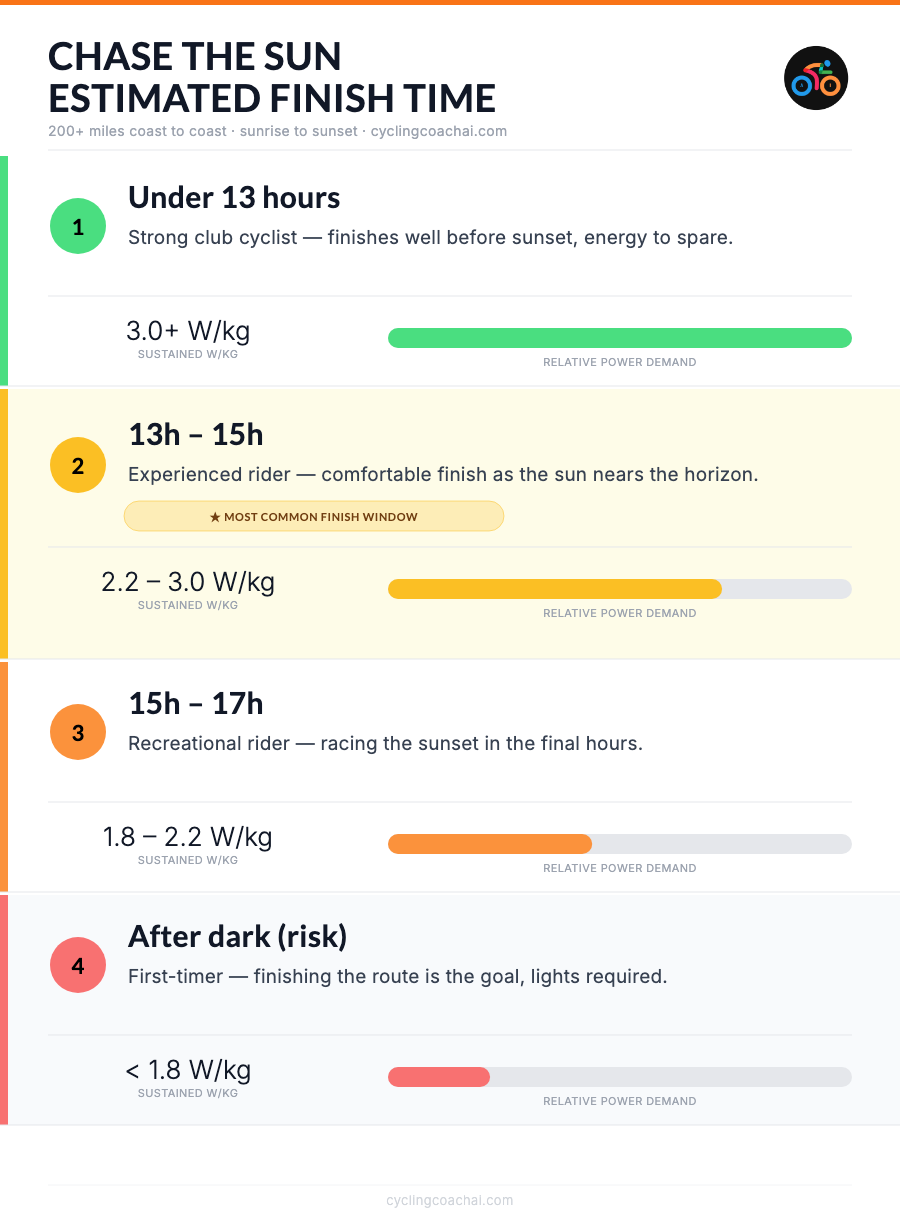
Since Chase the Sun is non-competitive, the relevant question is not your finish position but whether you complete the route before sunset. The chart below links estimated finish time to sustained average power output on rolling terrain.
What Makes Chase the Sun Different
Most endurance cycling events give you a cut-off time. Chase the Sun gives you a sunset. That distinction changes how you train and how you approach the day.
The terrain never stops
On a typical gran fondo, descents and flat valley sections offer genuine aerobic recovery. On Chase the Sun, the rolling terrain means you are pedalling almost continuously across 200-plus miles. There is no single hard climb to point at on the route map: the difficulty is distributed and cumulative rather than concentrated. Races built around one long sustained ascent instead, like the double Falls Creek climb in our Peaks Challenge training plan, demand a different kind of preparation.
Duration is the defining variable
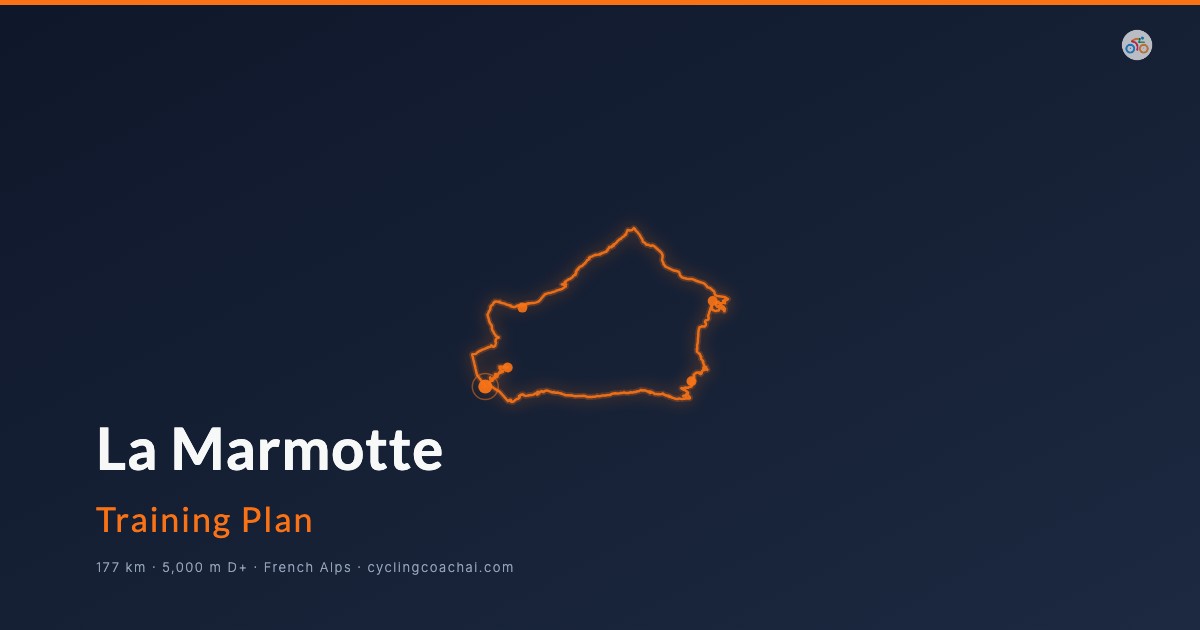
The total elevation of 3,000 to 3,300 metres across 200-plus miles averages less than 15 metres per kilometre. By alpine gran fondo standards, this is moderate climbing. But finishing before sunset requires 13 to 17 consecutive hours in the saddle, which takes the event into a physiological category that shorter events do not reach. Fat oxidation, glycogen management, and the psychological challenge of the middle hours matter far more here than peak climbing power. Alpine gran fondos built around one massive climbing day, like our La Marmotte training plan, ask for the opposite: less duration, far more sustained climbing power.
The final section works against you
All four routes travel east to west following the sun. In the afternoon, as fatigue accumulates and the sun drops toward the horizon, riders are riding into the prevailing westerly winds that dominate all four route corridors. The UK South finishes across the Somerset Levels into Weston-Super-Mare into the Bristol Channel headwind. Ireland finishes into the Atlantic breeze at Enniscrone. Riders who bank time in the morning by going hard and then fade in the final 50 kilometres are the most common stories of sunset misses.
In 2025, 776 of 1,095 starters on UK South finished before sunset. On UK North, 338 of 419 made it. The riders who miss the sunset are not the least fit: they are most often the riders who started too hard, under-fuelled in the middle hours, or underestimated the afternoon headwind.
Physiological Demands of Chase the Sun
Dominant energy system
Aerobic Base and Fat Oxidation
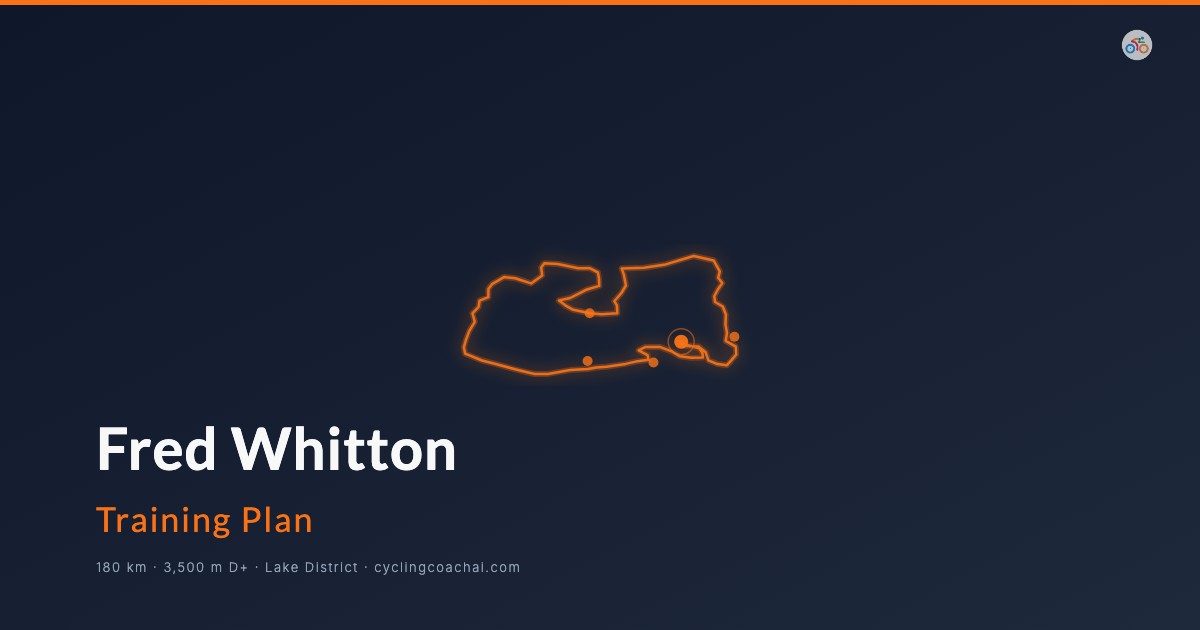
Unlike threshold-dominated events like the Fred Whitton or alpine gran fondos, Chase the Sun is built almost entirely around low to moderate aerobic intensity sustained for 13 to 17 hours. The primary training investment is not raising your FTP but extending how long you can maintain a steady output without glycogen depletion. Riders with a high FTP but poor aerobic base frequently outpace their fuelling capacity and slow sharply in the second half of the route. Zone 2 volume is the highest-return training investment for this event.
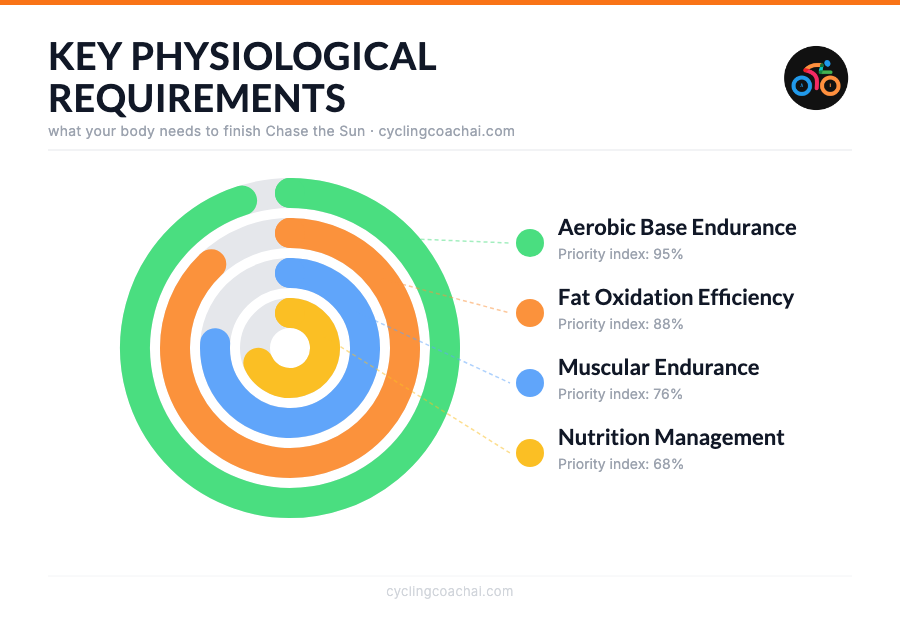
Aerobic base endurance (95%). The foundation of everything. You need a well-developed aerobic engine that can sustain steady output for 13 to 17 hours without excessive cardiac drift. This is built through consistent Zone 2 riding over several months, not weeks.
Fat oxidation efficiency (88%). At the intensities involved, your body must source a significant portion of its energy from fat. Riders who rely too heavily on carbohydrate deplete glycogen stores in the first half of the route and slow dramatically in the second. Long Zone 2 rides, performed consistently at an effort level where you can hold a full conversation, progressively shift your crossover point and raise the amount of fat you burn at race effort.
Muscular endurance (76%). Not the explosive power needed for steep cols, but the ability of your legs to maintain a consistent cadence and torque output across 200-plus miles of rolling terrain. Seated threshold work and long rides at moderate intensity are the primary training tools for this quality.
Nutrition management (68%). Eating and drinking effectively on the bike for 15-plus hours is a skill that requires practice before event day. Gut issues, appetite suppression, and flavour fatigue are real obstacles at this duration. The training plan includes dedicated nutrition practice rides specifically to develop this.
Chase the Sun Training Plan: Full Schedule
Select the plan length that matches your current weekly training volume and weeks until your Chase the Sun start line.
| Day | Session | Duration |
|---|
Key Workouts for Chase the Sun
1. The Very Long Zone 2 Ride
Session: 4 to 9 hours at 60 to 75% of FTP, depending on plan week. Ride at a pace where you can hold a full conversation without effort. Eat to a schedule every 30 to 45 minutes regardless of hunger, targeting 60 to 90 grams of carbohydrate per hour. Start at 4 hours in the early base phase and extend progressively to 9 hours in your peak week.
Why it works: Sustained Zone 2 riding builds the aerobic base and fat oxidation efficiency that Chase the Sun demands above all other qualities. Long duration forces the metabolic adaptations you cannot replicate in shorter sessions: mitochondrial density, fat enzyme activity, and the ability to sustain moderate output for hours without drawing on glycogen. It also creates the training environment to develop your fuelling protocol under real conditions.
When to use it: Every Saturday throughout the plan. Protect these sessions above all others. Missing a weekday session costs you little; missing the long Saturday ride slows your aerobic development significantly.
2. Back-to-Back Long Days
Session: Saturday long ride at 60 to 75% of FTP followed by a 4 to 6 hour Sunday ride at the same moderate intensity. The Sunday session must start in genuine fatigue from the previous day. Resist the temptation to shorten Saturday to feel fresher on Sunday.
Why it works: The Sunday ride in accumulated fatigue is the closest training simulation to the physiological state you will experience from hour 10 onward on event day. Chase the Sun is not decided in the first 100 miles. The riders who miss the sunset are those whose body cannot sustain steady output through genuine systemic fatigue. Back-to-back sessions train this specific capacity in a way no single long ride can replicate.
When to use it: Introduced in the mid-base phase and present in every peak build week. The Sunday duration increases progressively from 4 hours to 6 hours as the plan advances.
3. Nutrition Practice Ride
Session: 2 to 3 hours at 65 to 75% of FTP with a fully structured fuelling protocol. Eat exactly what you plan to use on event day, at the exact frequency you plan to use it. Target 60 to 90 grams of carbohydrate per hour from a mix of your chosen products. Test different foods, test your stomach under sustained effort, and log what works and what causes problems.
Why it works: Nutrition failure causes more missed sunsets than fitness failure. Gut tolerance, appetite suppression, and flavour fatigue at 12-plus hours all require specific adaptation before event day. This is not optional preparation at this duration.
When to use it: Once every two to three weeks from mid-base phase onward. Rotate through different food combinations early, then lock in your confirmed race-day protocol in the final six weeks.
4. Race Simulation Day
Session: 10 to 12 hours of continuous riding at 55 to 65% of FTP, at the sustained output you plan to hold for 16 hours on event day. This is not a maximum effort. Ride on terrain similar to your target route where possible and execute your full nutrition and pacing plan exactly as intended.
Why it works: A full-day simulation exposes weaknesses in saddle comfort, fuelling strategy, pacing discipline, and mental approach that shorter sessions cannot reveal. Discovering that your fuelling plan breaks down at hour 8, or that your target pace is unsustainable in the third quarter, during training is the outcome you want. Discovering it on event day is not.
When to use it: Once, in the 6 to 8 weeks before event day, during the late build phase. Allow full recovery before your final peak week begins.
Nutrition Strategy for Chase the Sun
Nutrition failure causes more missed sunsets than fitness failure. At 13 to 17 hours of riding, glycogen depletion is not a risk, it is a certainty if you do not eat consistently from the first hour to the last.
Target 60 to 90 grams of carbohydrate per hour across the full riding duration. For a 15-hour day, that is 900 to 1,350 grams of carbohydrate in total, from a mix of on-bike food, any organised feed stations (included on some entry tiers), and solid meals at longer stops. Eat to a schedule, not to hunger: appetite suppression from sustained moderate effort is normal and begins earlier than most riders expect.
Hydration targets depend on conditions. UK and Ireland routes in June typically see temperatures of 15 to 22 degrees Celsius: 500 to 750 ml per hour is a reasonable baseline. The Italia route in Tuscany can see 28 to 32 degrees at midday, increasing fluid needs significantly. Electrolyte replacement, particularly sodium, matters more as the day extends: diluting with plain water over 15 hours without replacing electrolytes leads to hyponatraemia in susceptible riders.
Caffeine strategy: save it for the final three hours. 150 to 200 mg consumed approximately 3 hours before your estimated finish provides peak stimulant effect when motivation and power output are at their lowest and the sunset deadline is approaching. Using caffeine in the morning blunts this effect when you need it most. On a 15-hour ride, you will be very glad you saved it.
The overnight start on UK and Ireland routes (04:27 to 04:46 sunrise) means your first two hours are ridden in cool or cold air, before appetite fully wakes. Eat anyway. The hours between 6 am and 10 am are your best fuelling window: gut function is optimal, intensity is manageable, and glycogen is at its highest. Riders who eat poorly in the morning are the riders who run out of energy 10 hours later.
Common Mistakes When Preparing for Chase the Sun
Going too hard in the first third
The long riding window creates a false sense of safety. Riders who feel strong at sunrise and push the effort for the first 60 to 70 miles consistently report severe slowdowns in the final section, often arriving at the finish line after dark having lost 30 to 60 minutes in the last two hours. Start at a pace that feels almost too conservative. The second half of Chase the Sun will find your real limit regardless.
Long rides at the wrong intensity
Long rides must be at Zone 2 pace, not at a hard group ride effort. Riding your 8-hour Saturday training session at 85% of FTP will leave you too fatigued to absorb the load and unable to recover in time for the following week. The purpose of long training rides is aerobic adaptation and fat oxidation development, both of which require low intensity to stimulate. If you cannot hold a conversation, you are going too hard.
Skipping fuelling practice
Most riders know they need to eat. Far fewer have spent time developing a fuelling protocol they can execute reliably for 15 consecutive hours in varying conditions. Gut issues, flavour fatigue, and appetite suppression all require specific adaptation. The nutrition practice rides and back-to-back sessions in the training plan are the place to develop this, not event day.
Underestimating the afternoon section
The final 40 to 50 miles of every Chase the Sun route run westward into the afternoon, into the prevailing wind, on legs that have already completed 160-plus miles. Riders who factor time banking into their morning plan and then discover they cannot sustain their target pace against a headwind are the most common stories of post-sunset finishes.
Adaptive Training for Chase the Sun
A fixed training plan treats every rider the same. Chase the Sun does not. The gap between finishing with daylight to spare and watching the sunset from the road is almost always a preparation quality problem, not a preparation quantity problem: too much time at the wrong intensity, back-to-back weekends skipped, nutrition practice neglected.
Cycling Coach AI builds your plan around your actual fitness, your specific weekly hours, and your target route. Every week adjusts to how you are responding. If aerobic base is building faster than projected, the plan advances. If recovery markers indicate accumulating fatigue, load is modulated before it becomes injury or illness. If your schedule changes because of work or travel, the plan rebuilds around the new reality.
The platform integrates progressive nutrition guidance aligned with your target finish time and specific back-to-back loading designed to peak your form for the longest day. Most importantly, it protects the final weeks of training when the longest rides matter most.
Start your personalised Chase the Sun training plan with Cycling Coach AI and arrive at the start line knowing exactly what your day will look like.