
THE BEST FOR EACH USE CASE
- Quintana Roo X-PR best dedicated tri bike for a first season, aero carbon frame from a triathlon-only brand, the cheapest true tri bike still on sale new at $3,999
- Cervelo Soloist 105 best road-bike route, aero carbon frame plus clip-on aerobars, round bar, same family as the P-Series
- Cervelo P-Series 105 best long-term benchmark, race-proven aero platform, buy it once and keep it for years
A triathlon bike is one of the biggest gear purchases in endurance sports, and in 2026 the hardest part is no longer choosing between models. It is finding one. Over the last two seasons BMC, Trek, Orbea and Ventum have pushed their triathlon ranges past $6,500, and Felt has retired first the alloy bike that used to anchor this list and then the carbon IAx Advanced that replaced it. The entry-level segment did not get more competitive. It emptied out.
This guide is the result of checking what is actually on sale. We verified every price against the manufacturer or a stocking dealer, and the answer for most first-time triathletes is not the bike you expect. Pair whichever you choose with a structured cycling training plan and a proper fit, which matters more than the frame.
How We Choose These Triathlon Bikes
We are not a magazine with a test fleet, and pretending otherwise would be dishonest. What we do instead is verifiable.
What we verify. Every price, groupset and availability in this guide is checked against the manufacturer's own site or a stocking dealer, and the date of that check is the update date at the top of this page. Where a price comes from a dealer rather than the brand, it says so next to the price. Three bikes that appeared in the previous version of this guide were removed because they no longer exist, and the Felt IAx Advanced 105 followed them in this revision when Felt's own site dropped it and its dealers sold out.
What we bring that a test ride does not. Cycling Coach AI sees how riders actually train: how many hours they really ride, how long their long ride is, and which sessions they skip. Most first-time triathletes ride five to seven hours a week. That number, not a wind-tunnel figure, is what decides whether a dedicated tri bike earns its price.
How we select a beginner triathlon bike. A bike makes this list if it is on sale new today at a price we can verify, uses a groupset at Shimano 105 level or above, comes from a brand with a dealer network or a working direct-sales operation, and fits a rider who has not yet committed to the sport for a decade.
What Makes a Good Entry-Level Triathlon Bike?
A good entry level triathlon bike does three things: it puts you in a sustainable aero position, it uses parts a normal bike shop can service, and it costs an amount you would not regret if you decide after one season that triathlon is not for you. Everything else is marketing.
That last point is the one the industry ignores. The honest entry level triathlon bike question is not "which is fastest" but "how much should I risk on a sport I have done twice". Aerodynamic gains at this level are worth a few minutes over 40km. A bad fit costs you far more than that, and a bike you resent costs you the sport.
Here is what changed. Two years ago a beginner could buy a new dedicated tri bike for around $2,900. Today the cheapest one we could verify is $3,999, and most brands start above $5,000. Meanwhile an aero road bike with clip-on aerobars costs about the same, puts you in a position close to a tri bike, and still has a job when the season ends. For a first sprint or Olympic triathlon, that is now the better answer for most riders, and the rest of this guide covers both routes.
Comparison Table: Triathlon Bikes and Road Alternatives
Dedicated triathlon bikes. These are the ones still on sale new.
| Bike | Frame | Groupset | Price | Buy |
|---|---|---|---|---|
| Quintana Roo X-PR | Carbon | Varies by build | $3,999 | Buy→ |
| Argon 18 E-117 105 | Carbon | Shimano 105 12s | $4,399 | Buy→ |
| Quintana Roo Service Course Tri | Carbon | Shimano 105 Di2 | from $4,599 | Buy→ |
| A2 Bikes SP | Carbon | SRAM Rival AXS | $4,999 | Buy→ |
| Cervelo P-Series 105 | Carbon | Shimano 105 | $5,300 | Buy→ |
| Canyon Speedmax CF 7 Di2 | Carbon | Shimano 105 Di2 | $5,999 | Buy→ |
Aero road bikes that take clip-on aerobars. All three have a round alloy handlebar with a separate stem, which is what a clip-on needs and what most aero bikes have stopped offering.
| Bike | Frame | Groupset | Price | Buy |
|---|---|---|---|---|
| Cervelo Soloist 105 | Carbon | Shimano 105 | $3,600 | Buy→ |
| Trek Madone SL 5 Gen 8 | OCLV 500 Carbon | Shimano 105 12s | $3,699.99 | Buy→ |
| Specialized Tarmac SL8 Comp 105 Di2 | FACT 10r Carbon | Shimano 105 Di2 | $4,699.99 | Buy→ |
How to Choose a Beginner Triathlon Bike
Match your race distance
For sprint and Olympic triathlons, an aero road bike with clip-on aerobars is genuinely enough, and the bike keeps working for training all year, which a tri bike will not. Put the fit money in before the frame money: it makes more difference. For 70.3 (Half Ironman) or longer, a dedicated tri bike like the Quintana Roo X-PR or the Cervelo P-Series reduces fatigue across a bike leg measured in hours rather than minutes.
Set a realistic budget
The old advice was $2,500 to $4,500 for a first tri bike. That range no longer describes the market: the cheapest dedicated tri bike we could verify is $3,999, and most brands now start above $5,000. Budget $3,600 to $4,700 for an aero road bike plus clip-ons, or $4,000 to $6,000 for a dedicated tri bike, and add $200 to $400 for a professional fit in either case. The two routes cost about the same; what changes is what the bike can do for the rest of the year.
Frame material matters
Alloy frames are durable, more affordable, and forgiving of minor crashes, the right choice for first-year triathletes. Carbon frames are lighter and damp road vibration better, the right choice once you commit to racing seriously or move beyond sprint distance.
Drivetrain hierarchy
Shimano 105 is the entry point for race-ready triathlon drivetrains; Shimano Ultegra is one tier above and worth the upgrade if budget allows. SRAM Apex and Force are equivalent SRAM tiers. Avoid bikes with lower groupsets (Tiagra, Sora) for any racing ambitions.
Brakes: rim vs disc
This choice has largely been made for you: every bike in this guide ships with disc brakes, because rim-brake tri bikes have essentially left the new market. Discs stop reliably in the wet and let manufacturers use wider tyres. If you are looking at a used bike, rim brakes are not a reason to walk away for sprint and Olympic distance, and they are cheaper to maintain.
Triathlon Bike vs Road Bike: When to Switch
Road bike first, tri bike later
If this is your first triathlon, do not buy a tri bike. An aero road bike covers training, group rides and race day, and it is the bike you will still ride when the season ends. With clip-on aerobars it handles sprint and Olympic distances well, and lets you train and race on the same bike. Spend that budget on a proper bike fit instead. If you would rather have a more relaxed geometry for long training days, our endurance road bike guide covers that, but check the handlebar first: several of those bikes cannot take a clip-on.
Switch when you commit to 70.3 or longer
A dedicated triathlon bike pays off once you are racing 70.3 (Half Ironman) or full Ironman distances. The forward-leaning aero position and steeper seat tube angle (76 to 78 degrees) preserve your running muscles for the run leg, a meaningful advantage over 4 to 6 hours of racing.
Geometry differences
Triathlon bikes use a steeper seat tube angle, longer top tube, and more aggressive front end. This rotates your hip angle forward, opening the hamstrings and quads for more efficient running off the bike. Road bikes prioritize climbing efficiency and all-day comfort over aero positioning.
Race rules check
Most age-group triathlons follow USA Triathlon or World Triathlon rules, which permit both road bikes (no aerobars allowed in draft-legal races) and dedicated tri bikes. Read your race's specific rules before buying, especially if you plan to race draft-legal events.
The Road Bike Route: How to Race Triathlon on Clip-On Aerobars
For a first sprint or Olympic triathlon, an aero road bike with clip-on aerobars beats a cheap tri bike on almost every measure that matters. It costs about the same, the race geometry gets you close to a tri position once the extensions go on, a normal shop can service it, and it still has a job in October when the season is over. The catch is finding one that takes the clip-ons at all.
Check the handlebar before you buy anything
This is the step people skip, and on an aero bike it is the whole decision. A clip-on aerobar clamps around a round section of handlebar, and most aero road bikes now ship with an integrated cockpit or a flat-topped aero bar that has no cylindrical bore at all: the Giant Propel, the Canyon Aeroad and the Cannondale SuperSix EVO all fall here. On those bikes a standard clip-on simply cannot be fitted, and Canyon only offers its own proprietary extensions. The three bikes in our table are there for one reason: a round alloy bar and a separate stem.
Know the rules before race day
Clip-on aerobars are allowed in non-draft-legal racing, and World Triathlon competition rules require that the bars do not extend beyond the leading edge of the front wheel. In draft-legal age-group racing they have been banned since 2023, aligning with UCI rules on peloton safety. If you plan to race draft-legal, do not spend money on clip-ons.
Budget for the position, not the bike
Adding aerobars changes your hip angle, and a road bike set up for comfort will not simply absorb that. Expect to move the saddle forward and up (a saddle built for long rides matters more once your weight shifts onto the nose) and budget $200 to $400 for a fit session that accounts for the new position. A good clip-on setup costs $150 to $300. Together that is still less than the gap between a road bike and the cheapest dedicated tri bike.
When the road bike stops being enough
Around 70.3 distance the maths changes. Four hours in an improvised aero position on road geometry costs you more in run legs than the aero saving is worth, and that is the point where a dedicated tri bike starts to pay for itself. Until then, the road bike is the better purchase.
Mistakes Beginners Make When Buying a First Triathlon Bike
Buying before getting fitted
The most expensive mistake in the sport. A tri bike puts you in a position your body has to hold for hours, and frame size is only the start of it. Book the fit first, then buy the frame the fitter says you need. A $3,000 bike that fits beats a $6,000 bike that does not, every single time.
Paying for aerodynamics you cannot hold
Wind-tunnel numbers assume the rider stays in the aero position. Most first-year triathletes cannot hold a deep position for a full Olympic bike leg, and sitting up on an aggressive bike is slower than staying down on a moderate one. Buy the position you can sustain this season, not the one you hope to reach.
Forgetting the cost after the bike
A first race needs more than a frame. Pedals, shoes, a helmet, hydration and a fit add $700 to $1,200 on top of the bike. Riders who spend their whole budget on the frame end up racing on borrowed pedals and a road helmet, which is exactly the wrong order of priorities.
Assuming last year's review still applies
This one caught us too. Between 2024 and 2026, BMC, Trek, Orbea and Ventum moved their triathlon ranges above $6,500 and Felt retired its alloy entry model and then the carbon IAx Advanced 105 that replaced it. Guides that have not been re-checked still list bikes at prices that no longer exist. Check the date on any buying guide, including this one, and check the price on the manufacturer's own site before you order.
New vs Used: Where the Entry-Level Bikes Actually Are
The used market is now the real entry point
With the cheapest new tri bike at $3,999, the honest answer for a sub-$3,000 budget is a used one. Certified pre-owned programmes changed this market: The Pro's Closet and buycycle both inspect, service and warranty the bikes they sell, which removes most of the risk that used to come with a private sale. A three-year-old Cervelo P-Series or Canyon Speedmax often sells for less than half its original price.
What to check on a used tri bike
Ask for the frame size and the fit coordinates, not just the size letter. Check the frame for cracks around the bottom bracket and the seatpost clamp, confirm the aerobar extensions and pads are included, and ask how many seasons the drivetrain has done. A worn chain and cassette is a $200 job; a cracked carbon frame is the whole bike.
Direct-to-consumer vs local dealer
Canyon and Quintana Roo sell direct, which is why their prices look better than the equivalent bike in a shop. The trade-off is real: you assemble the bike, you have no local mechanic invested in the sale, and warranty work means shipping. If this is your first bike of this kind, the dealer margin buys you help you will probably use.
Triathlon Bikes Reviewed in Detail
Quintana Roo X-PR
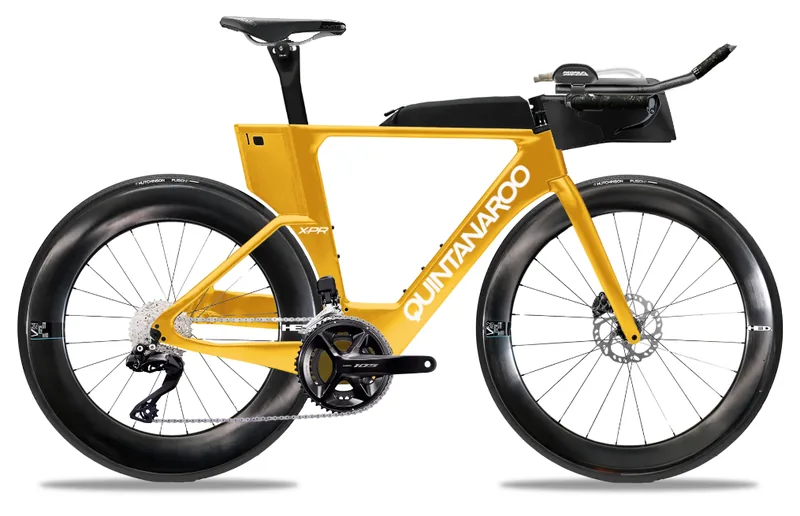
Quintana Roo is one of only two brands still defending the price point this guide is named after. The X-PR is their performance-per-dollar bike and, since Felt dropped the IAx, the cheapest dedicated triathlon bike we could verify on sale new: a full aero carbon frame from a company that builds nothing but triathlon bikes, at $3,999 when most of the industry has walked away from anything under $5,000.
Buying direct is what makes the price work, and it is also the trade-off. There is no local dealer with a stake in your purchase, builds vary so you should confirm the groupset before ordering, and a fit is on you to arrange. For a rider who already knows their fit numbers, it is the strongest value in a new tri bike right now.
Specifications
- Frame: Carbon
- Groupset: Varies by build
- Type: Dedicated triathlon
- Sold: Direct from Quintana Roo
Price: US$ 3,999
Argon 18 E-117 105
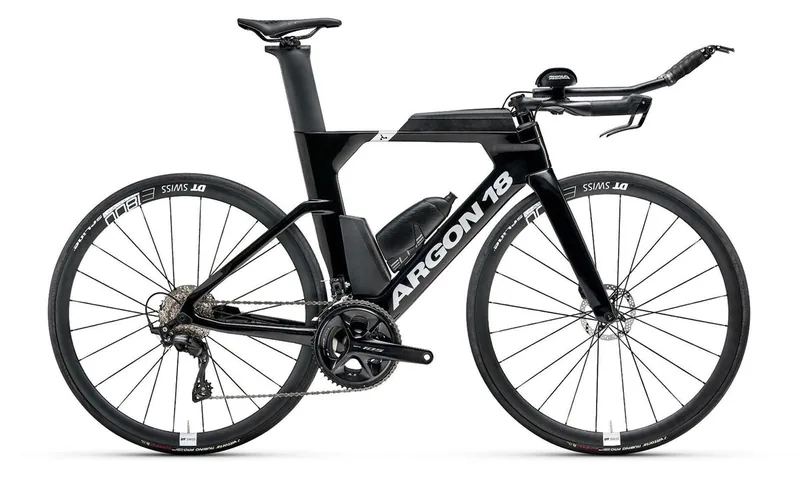
The E-117 has been the sensible first tri bike for years: a 78-degree seat tube, Argon 18's 3D System for adjusting the front end as your position develops, and Profile Design aerobars that a fitter can actually work with. It is the bike on this list most forgiving of a rider whose position is still changing.
Argon 18 sells the current E117 direct from its own site in five builds, from this mechanical Shimano 105 12-speed at $4,399 up to Force AXS. The 105 build is the one for a first season: R7100 52/36 cranks with an 11-34 cassette, Profile Design Sonic/Ergo aerobars, and Argon 18's own integrated brake system, which is the one part that ties you to the brand for pads and service.
Specifications
- Frame: Carbon
- Groupset: Shimano 105 12-speed
- Seat tube: 78 degrees
- Sold: Direct from Argon 18, five builds
Price: US$ 4,399
Quintana Roo Service Course Tri
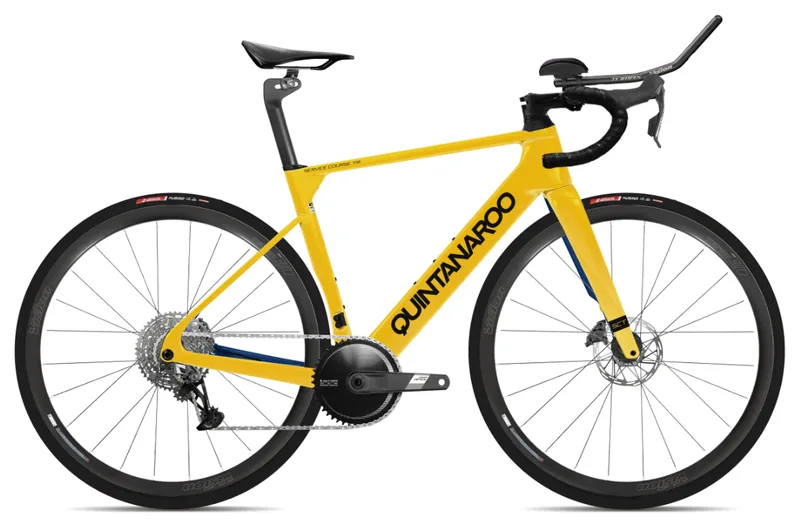
An unusual bike and a useful one. The Service Course Tri is a drop-bar triathlon bike built around a UCI-legal frame, which means it is legal in draft-legal sprint and Olympic racing where aerobars are banned, and it still works for 70.3 and road racing.
If your racing calendar mixes draft-legal events with non-draft ones, this solves a problem no aerobar bike can. Prices start at $4,599 with Shimano 105 Di2 and climb past $11,000 with Red AXS, so check the build carefully: the entry price is the one worth your attention.
Specifications
- Frame: Carbon, UCI-legal
- Groupset: Shimano 105 Di2 (base build)
- Type: Drop-bar triathlon
- Best for: Mixed draft-legal and non-draft calendars
Price: From US$ 4,599
A2 Bikes SP
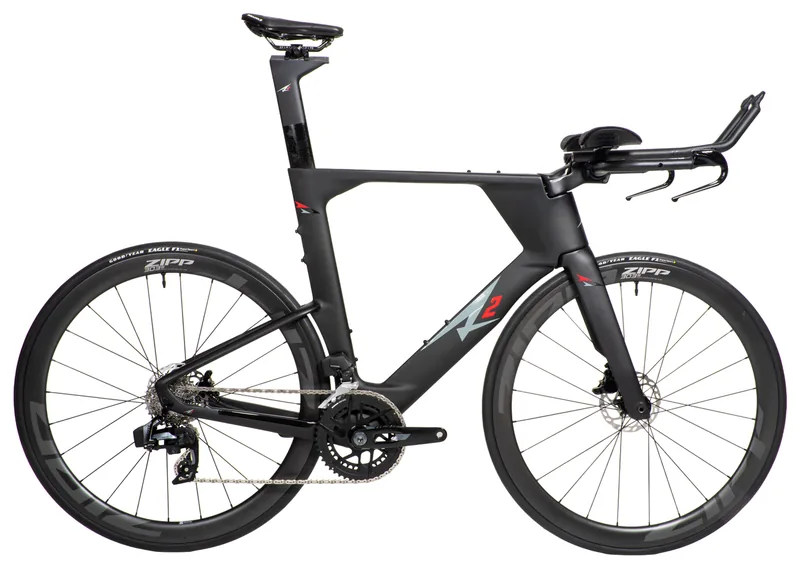
A2 Bikes built its reputation on the Speed Phreak, a wind-tunnel-developed aero frame sold at a fraction of what the big brands charged. The SP series continues that, and the current generation adds an adjustable stem and seatpost mast, which matters more for a beginner than any frame shape: it means the bike can follow your position as it changes.
Note that the SP 1.1 badge from earlier versions of this guide is gone. The line is now the SP1.x series, and the cheapest build with a listed price on A2's own site is the SRAM Rival AXS at $4,999. A Shimano 105 build exists but A2 does not publish its price, so ask before you plan a budget around it.
Specifications
- Frame: Carbon
- Groupset: SRAM Rival AXS (listed build)
- Wheels: Zipp 303 S
- Fit: Adjustable stem and seatpost mast
Price: US$ 4,999
Cervelo P-Series 105
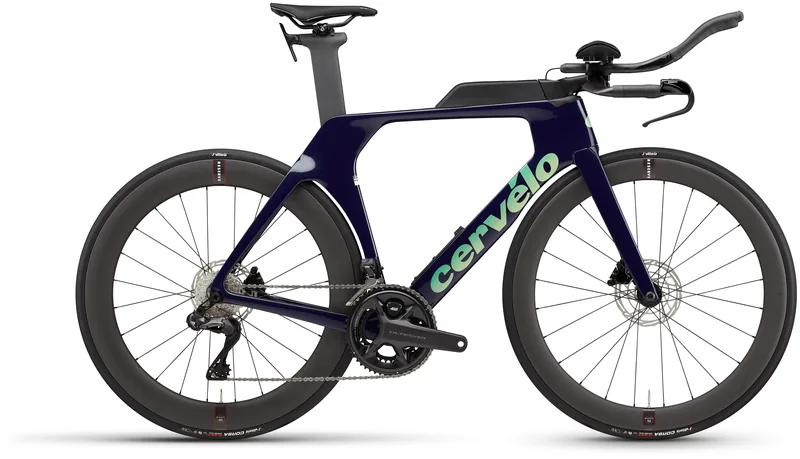
The P-Series is the aero platform age-groupers have raced for more than a decade, with internal storage, clean cable routing and generous tyre clearance. It holds resale value better than anything else here, and it is the bike you are least likely to outgrow.
It is also no longer an entry-level purchase, and this guide is not going to pretend otherwise. The cheapest P-Series is now $5,300 with mechanical 105; the Ultegra Di2 build that older guides list around $4,400 costs $8,800 today. If your budget is genuinely entry-level, buy a road bike or a certified used P-Series and put the difference into a fit.
Specifications
- Frame: Cervelo Carbon
- Groupset: Shimano 105 mechanical
- Storage: Internal frame storage
- Type: Dedicated triathlon
Price: US$ 5,300
Canyon Speedmax CF 7 Di2
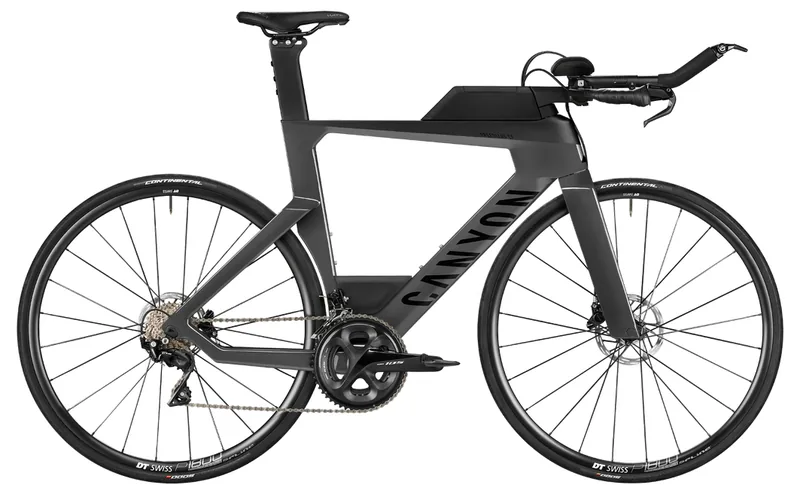
Canyon's direct-to-consumer model made the Speedmax the bike that disrupted entry-level triathlon, with integrated hydration, tool storage and championship-level aerodynamics at a price dealers could not match. It remains an excellent bike.
The price is the story. The CF 7 Disc that guides across this niche still quote at $3,799 is gone; the current CF 7 Di2 is $5,999. Several competing buying guides have not caught up with that, which is worth remembering the next time you read a round-up without a verification date on it.
Specifications
- Frame: Speedmax CF Carbon
- Groupset: Shimano 105 Di2
- Wheels: DT Swiss ARC1600
- Storage: Integrated bento box and tool storage
Price: US$ 5,999
Aero Road Bikes That Take Clip-On Aerobars
All three use a round alloy handlebar with a separate stem. That combination is disappearing from aero bikes, which is why the list is short.
Cervelo Soloist 105
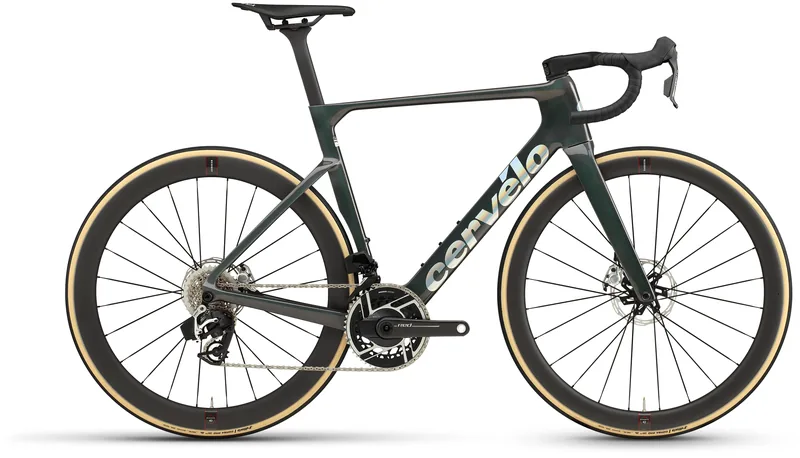
Our pick for the rider doing a first triathlon and not yet sure there will be a second. The Soloist is Cervelo's aero road frame, and the 105 build keeps the two things a clip-on needs: an alloy AB07 handlebar with a round 31.8mm section and a separate ST36 stem. The Race build swaps in a carbon bar and loses that, so make sure you are looking at the standard 105.
Two reasons it wins. The race geometry gets you close to a tri position once the extensions are on, which an endurance bike cannot do. And at $3,600 it costs about the same as the cheapest dedicated tri bike while keeping its job on group rides and winter training. It is also the same family as the P-Series, so an upgrade later stays in the same fit language.
Specifications
- Frame: Cervelo Carbon
- Groupset: Shimano 105 mechanical
- Handlebar: Cervelo AB07 alloy, 31.8mm, separate stem
- Type: Aero road, clip-on compatible
Price: US$ 3,600
Trek Madone SL 5 Gen 8
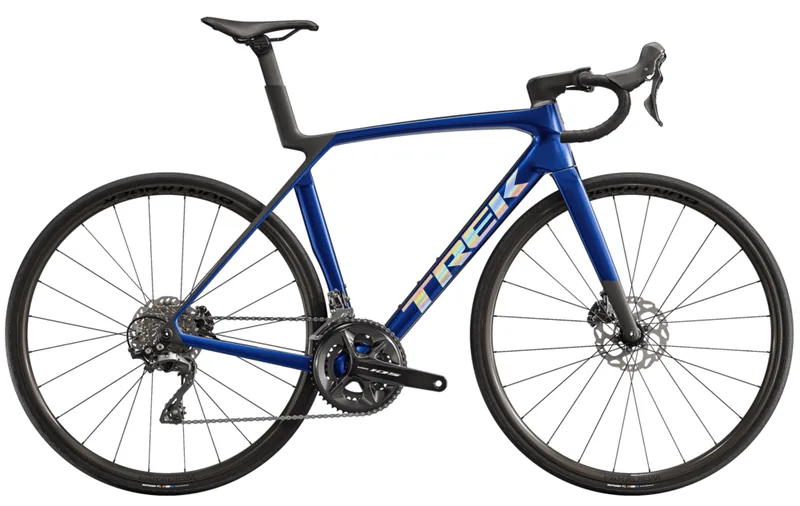
Trek's aero platform brought down to a mechanical 105 build and a two-piece cockpit: a Bontrager Comp alloy bar on an RCS Pro stem, with the cables hidden but the bar itself round where the clip-on clamps. The 500 Series OCLV frame is the same shape as the pricier SLR, just a heavier lay-up.
At $3,699.99 it sits next to the Soloist, and the choice between them is mostly dealer access: Trek's network is the largest in the sport, which matters for a first bike you will want set up and serviced by someone else.
Specifications
- Frame: 500 Series OCLV Carbon
- Groupset: Shimano 105 12-speed mechanical
- Handlebar: Bontrager Comp alloy, RCS Pro stem
- Type: Aero road, clip-on compatible
Price: US$ 3,699.99
Specialized Tarmac SL8 Comp 105 Di2
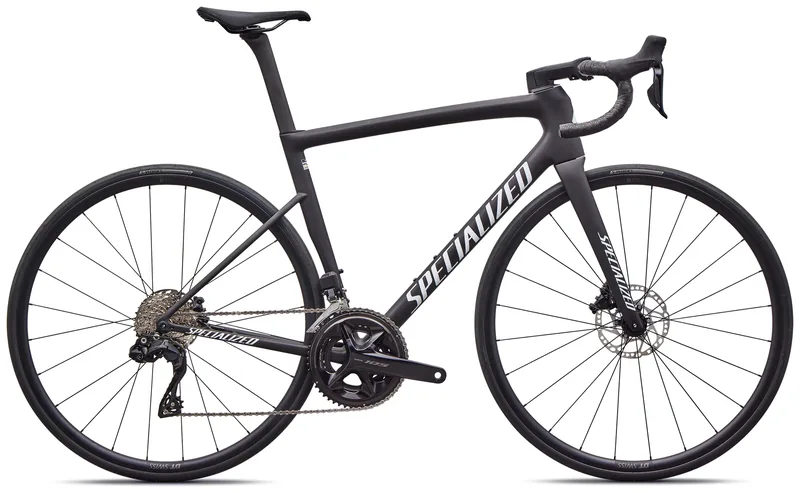
The Tarmac is a race bike rather than a pure aero frame, but the SL8 is light, quick and stiff, and the Comp build uses a Specialized Shallow Drop alloy bar on a separate Tarmac stem, so the clip-on goes on without argument. It is the only bike in this block with electronic shifting.
It is also the most expensive of the three at $4,699.99 list, which puts it above the Argon 18 E-117 and close to the P-Series. It makes sense if you want Di2 and a dealer on every corner; if the budget is tight, the Soloist does the triathlon job for a thousand dollars less. Stock has been thin at US dealers, so confirm before you plan around it.
Specifications
- Frame: FACT 10r Carbon
- Groupset: Shimano 105 Di2
- Handlebar: Specialized Shallow Drop alloy, separate stem
- Type: Race road, clip-on compatible
Price: US$ 4,699.99
Accessories You Actually Need for a First Triathlon
Non-negotiable
A helmet that meets your federation's standard, pedals and shoes, a race number belt, and a way to carry one bottle and one spare tube. Race organisers will not start you without a legal helmet, and a puncture without a tube ends your day at the roadside.
Worth the money in year one
A professional bike fit, at $200 to $400, returns more time than any component upgrade at this level. After that, clip-on aerobars if you are racing a road bike, and a front hydration system so you can drink without leaving the aero position. If your first race is a 70.3, our century training plan covers the endurance side of the bike leg.
Skip until season two
Race wheels, power meters and aero helmets are real gains, but they are gains measured in seconds on a bike leg where your position is still costing you minutes. Get the fit and the training right first. A structured cycling training plan will do more for your bike split than a set of deep-section wheels.
Best Triathlon Bikes for Beginners: Key Takeaways
For most people doing a first triathlon, the answer is an aero road bike with clip-on aerobars. The Cervelo Soloist 105 at $3,600 costs $400 less than the cheapest dedicated tri bike, takes clip-ons on its round alloy bar, gets you close to a tri position, and keeps earning its place in the garage after the season ends. That is not a compromise recommendation; at sprint and Olympic distance it is the better purchase.
If you want a real tri bike, the Quintana Roo X-PR at $3,999 is the cheapest one that exists, and the strongest value from a triathlon-only brand. The Argon 18 E-117 105 at $4,399 is the fixed-spec alternative with the more adjustable front end. Both are worth confirming with the seller before you order, because this segment is moving fast.
The Cervelo P-Series is still the benchmark, and it now costs $5,300. If you are racing 70.3 or longer and intend to keep the bike for years, it holds its value better than anything else here. If your budget is genuinely entry-level, buy it used through a certified programme instead.
Get the fit before the frame. A $300 fit on a $3,000 bike is not optional in triathlon: the aero position creates injury risk when it does not match your flexibility and proportions. And whatever you buy, check the price on the manufacturer's own site before ordering. This guide was verified before publishing, and half the bikes in its previous version had stopped existing.