THE BEST FOR EACH USE CASE
- Fizik Vento Argo R3 Adaptive best overall, 3D-printed zonal padding, short-nose Argo shape, Kium rails, 224g
- Selle Italia Flite Boost Superflow TM best short-nose classic, Superflow cutout, two widths, manganese rails, 233g
- Brooks Cambium C15 best for classic all-day comfort, vulcanized rubber top, weatherproof, no break-in
The right saddle is the difference between finishing a 4-hour ride feeling fresh and stepping off the bike sore for two days. Best road bike saddles for long rides balance sit bone support, soft-tissue relief, and padding density, with shape and width matched to your riding position. The wrong saddle on a long route is the fastest way to ruin a ride. A supportive saddle works best on a frame designed for distance, so if you are still choosing a bike, start with an endurance road bike built for long rides.
Saddle choice depends on three things: your sit bone width, how aggressive your position is on the bike, and how long you typically ride. A 4-hour endurance rider needs different support than a racer in the drops for 90 minutes. This guide compares 11 road saddles for 2026 across weight, width, rails and shape, with detailed reviews of each model.
For more on building your endurance base, see our cycling training plans and cycling workouts hub.
How We Choose These Saddles
We are not a magazine with a test fleet, and pretending otherwise would be dishonest. What we do instead is verifiable.
What we verify. Before publishing we check every weight, width, rail material and price against the manufacturer's own site.
What we bring that a test ride does not. Cycling Coach AI sees how riders actually train: how many hours they really ride, how long their long ride is, and which sessions they skip. A saddle that is comfortable for 90 minutes and punishing at four hours fails the only test that matters here.
What changed in this revision. Three saddles left this list: the Selle Italia Model X Comfort Plus, because its 440g of gel is the padding approach the guide below argues against, and two of the three Fabric Scoop profiles, which are the same saddle with a different curve and do not each deserve a slot. In came the Fizik Vento Argo R3 Adaptive, the Selle Italia Flite Boost Superflow TM and the Prologo Dimension R2, all verified on sale.
How we select a long-ride saddle. A saddle makes this list if it offers pressure relief through a channel or a cutout, comes in at least two widths or targets a clearly defined sit bone range, uses a cover and base that survive rain and mileage, and is on sale today at a price we can verify.
Comparison Table: 11 Road Bike Saddles Ranked by Specs
| Saddle | Weight | Widths | Rails | Best For | Price bracket | Buy |
|---|---|---|---|---|---|---|
| Fizik Vento Argo R3 Adaptive | 224g | 140/150mm | Kium hollow | Best overall, long days | Premium | Buy→ |
| Selle Italia Flite Boost Superflow TM | 233g | 135/145mm | Manganese | Short-nose classic, low positions | Mid-range | Buy→ |
| Brooks Cambium C15 | 300g | 140/162mm | Steel | Classic all-day comfort | Mid-range | Buy→ |
| Fizik Tempo Argo R3 | 235g | 150/160mm | Kium hollow | Best value Argo shape | Mid-range | Buy→ |
| Selle San Marco Shortfit Allroad Sport | 294g | 140/155mm | Carbon steel | Mixed surfaces | Budget | Buy→ |
| Fizik Antares Versus Evo R3 | 230g | 139/149mm | K:ium | Race positions | Premium | Buy→ |
| Ergon SR Pro Men | 220g | S/M and M/L | TiNox titanium | Ergonomic fit | Mid-range | Buy→ |
| Prologo Dimension R2 | 171g | 143mm | Tirox alloy | Lightest, forward positions | Mid-range | Buy→ |
| Fabric Scoop Elite Shallow | 269g | 142mm | CroMo | Budget all-rounder | Budget | Buy→ |
| Specialized Power Expert with Mirror | 214g | 130/143/155/168mm | Hollow titanium | Aggressive positions, printed inserts | Mid-range | Buy→ |
| Specialized Bridge Comp with MIMIC | 282g | 143/155/168mm | Hollow titanium | Pressure relief | Mid-range | Buy→ |
This guide contains affiliate links. We may earn a commission if you buy through them, at no extra cost to you. It never changes what we recommend. See our affiliate disclosure.
The Most Comfortable Road Bike Saddle for Long Rides
If you want one answer: the Fizik Vento Argo R3 Adaptive. It is the most comfortable road bike saddle here on the two things that decide comfort past hour three, for two reasons. The short-nose Argo shape and the relief channel solve the problem that ruins long rides, which is soft-tissue pressure when you rotate the pelvis forward. And the 3D-printed padding is the only padding in this list that does not go flat: it is firmer under the sit bones and softer at the edges, and it still feels that way in hour four, where foam has compressed and started transmitting pressure to the tissue around the bones.
That answer changes with your position and your budget. If you spend your long rides low on the bars, the Selle Italia Flite Boost Superflow TM is the short-nose classic: flat, narrow, a full Superflow cutout, and a price well under the Adaptive. If you sit upright and ride all day, the Brooks Cambium C15 flexes with each pedal stroke instead of cushioning, and needs no break-in at all. And if you want the Argo shape without the Adaptive price, the Tempo Argo R3 is the same rails and the same channel with conventional foam.
One caveat applies to all of them: comfort comes from width before it comes from padding. Measure your sit bones and match the width before you compare models, because a saddle 20mm too narrow feels worse than any of these at the right size.
How to Choose a Road Bike Saddle for Long Rides
Measure your sit bones first
Everything else is secondary. Sit on corrugated cardboard for 30 seconds, measure between the two dents, and add 20 to 25mm. That number is your saddle width. A saddle 20mm too narrow puts your weight on soft tissue instead of bone, and no amount of padding fixes it.
Match the shape to your position
The more you rotate forward, the more you need a short nose and a cutout. Riders who spend hours in the drops do better on the Fizik Antares or the Specialized Power. Riders sitting upright on endurance geometry do better on a wider, flatter saddle like the Brooks Cambium or the Selle San Marco Shortfit.
Less padding than you think
Firm foam under the sit bones beats thick gel for most riders on rides over 2 hours, because gel compresses and then transmits pressure to the tissue around the bones. The one padding that escapes this trade is 3D-printed lattice, which Fizik calls Adaptive: it is tuned zone by zone, firmer under the bones and softer around them, and it rebounds instead of packing down. That is why the Vento Argo R3 Adaptive tops this list, and why it costs what it does. Riders who sit fully upright and pedal at low intensity are better served by a top that flexes, like the Brooks Cambium, than by thick gel.
Rails change the price more than the comfort
Steel, CroMo, titanium and Kium rails all work. Going from steel to titanium saves 40 to 70g and adds a noticeable chunk to the price. Buy the shape you need first, and treat the rail material as a weight upgrade, not a comfort one.
What to Look For in a Long-Ride Saddle
Relief channel or cutout
A central channel or a full cutout keeps pressure off the perineal area, which is what causes numbness on long rides. Every saddle in this list has one except the standard Brooks Cambium C15, which relies on the flex of its rubber top instead, and offers a Carved version if you want the hole.
Cover and base materials
Microfibre covers last longer than synthetic leather and hold up better in the rain. A flexible nylon base, like the bio-based one Fabric uses on the Scoop Elite, adds compliance without foam, which is why that saddle feels softer than its padding suggests. A long-fibre carbon base, as on the Prologo Dimension R2, does the opposite: it is stiffer, lighter and relies on the shape for comfort.
Width options
Two widths is the minimum, three is better. The Specialized Power comes in four widths from 130 to 168mm and the Bridge in three, which covers almost every rider. Single-width saddles like the Fabric Scoop Elite at 142mm and the Prologo Dimension R2 at 143mm suit narrow sit bones and nothing else.
Try before you commit
Saddle fit is individual, and the only real test is hours of riding. Specialized and Trek run comfort guarantee programmes through their dealers that let you swap a saddle after real rides. Use them if the shop offers one.
Road Bike Saddles Reviewed in Detail
Fizik Vento Argo R3 Adaptive
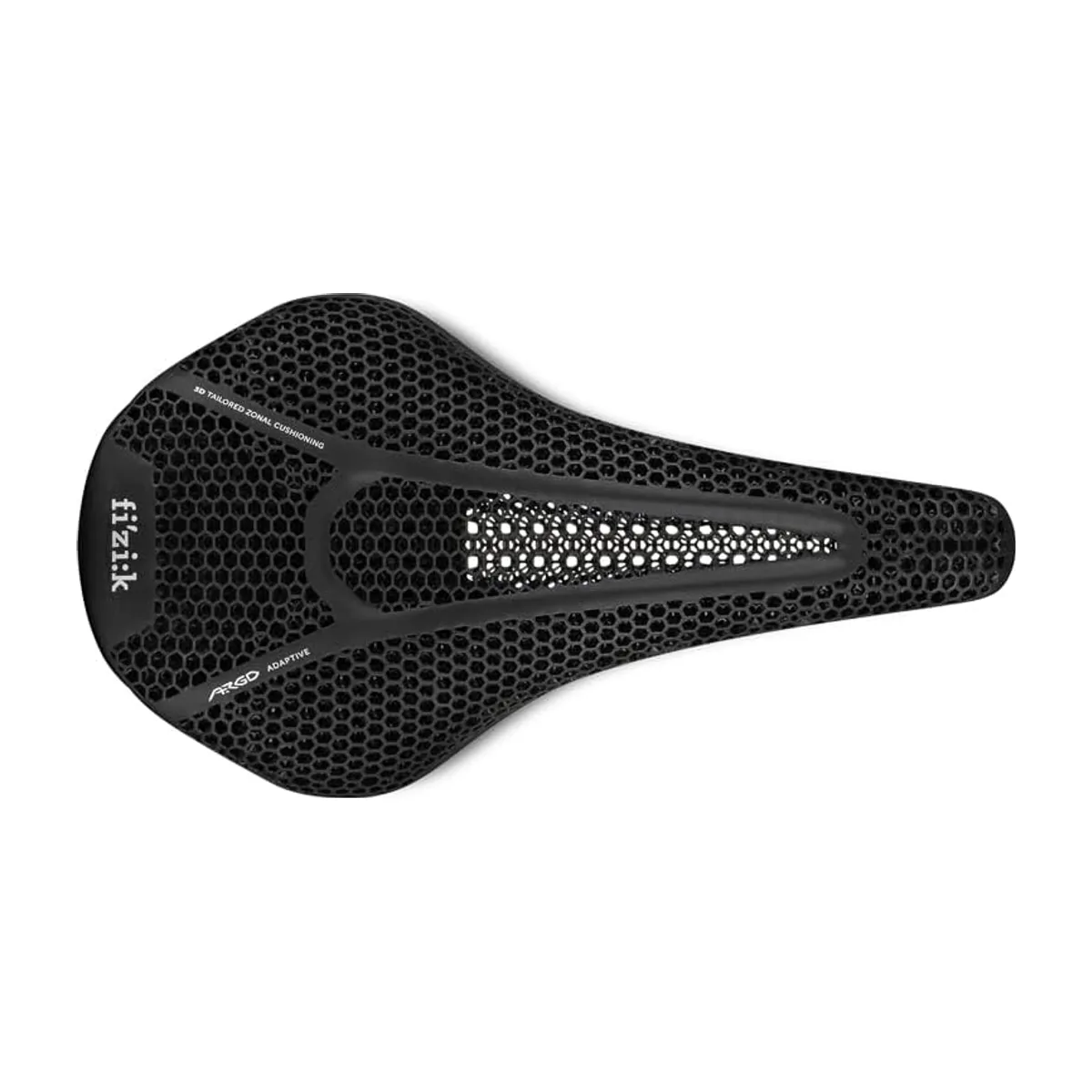
The Vento Argo R3 Adaptive is the saddle we would put on a bike built for long days, and it is the top pick here. The Argo shape is the same short nose that made the Tempo Argo the default endurance saddle: it lets you rotate the pelvis forward without dropping weight onto soft tissue, and the relief channel runs the full length. What the Adaptive version adds is the padding.
Fizik prints it in one piece, as a lattice whose density changes zone by zone: firmer where the sit bones land, softer around them. Foam cannot do that, and foam also packs down over a long ride until it stops isolating the bones from the tissue around them. The lattice rebounds. On a 4-hour ride that is the difference you feel, and it is the reason to pay more than the Tempo Argo R3 below, which shares the rails and the shell.
Carbon-reinforced nylon shell, hollow Kium rails, 224g in the 140mm width and 230g in the 150mm. Pick the width from your sit bone measurement; Fizik sizes the 140 for riders who rotate forward and the 150 for those who sit up.
Specifications
- Weight: 224g (140mm), 230g (150mm)
- Widths: 140mm / 150mm
- Rails: Kium hollow
- Shell: Carbon-reinforced nylon
- Padding: 3D-printed Adaptive lattice
- Length: 265mm
Selle Italia Flite Boost Superflow TM
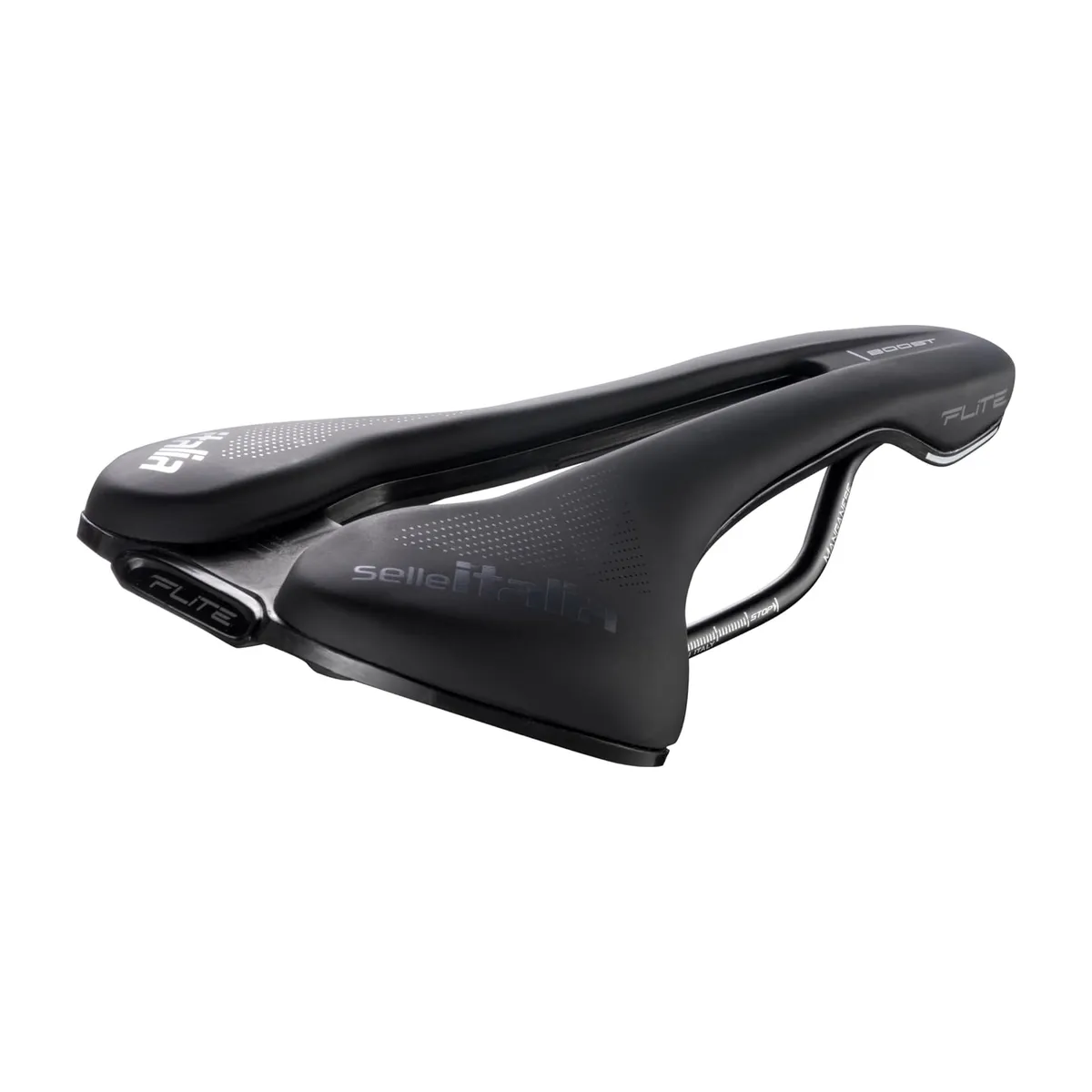
The Flite has been on race bikes since 1990, and the Boost version is the one to buy for long rides: the nose is shorter, so your thighs clear it when you rotate forward, and the Superflow cutout runs through the middle to keep pressure off the perineal area. The profile stays flat and low, which is the Flite signature and the reason riders who spend hours on the hoods and in the drops keep coming back to it.
The TM build uses manganese rails and Selle Italia's Soft-Tek cover, at 233g in the S3 (135mm) and 235g in the L3 (145mm). It is the cheapest way into a Flite, and the one we would choose over the carbon-railed versions for a saddle that spends its life outdoors. It is a firm saddle: if you sit upright, look at the Brooks or the Tempo Argo instead.
Specifications
- Weight: 233g (135mm), 235g (145mm)
- Widths: 135mm / 145mm
- Dimensions: 250mm long
- Rails: Manganese
- Cutout: Superflow
- Cover: Soft-Tek
Brooks Cambium C15
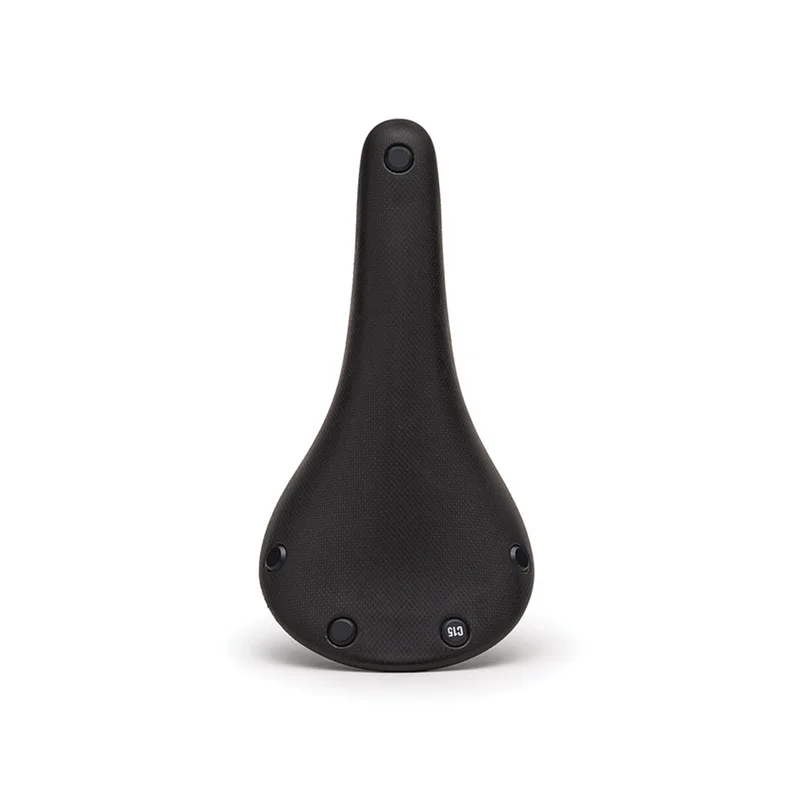
The Brooks Cambium C15 is a modern take on the classic Brooks saddle, built from vulcanized natural rubber and organic cotton instead of leather. The top flexes with your sit bones on every pedal stroke, which delivers the famous Brooks comfort without the weeks of break-in that leather demands.
It is fully weatherproof and needs no maintenance: no proofing, no cover in the rain. A cutout version (Cambium C15 Carved) adds central pressure relief for riders who want it. Heavier than performance saddles, and unmatched for gran fondo, brevet and touring days.
Specifications
- Weight: 300g
- Widths: 140mm / 162mm
- Rails: Tubular steel
- Top: Vulcanized rubber and organic cotton
- Maintenance: None, fully weatherproof
Fizik Tempo Argo R3
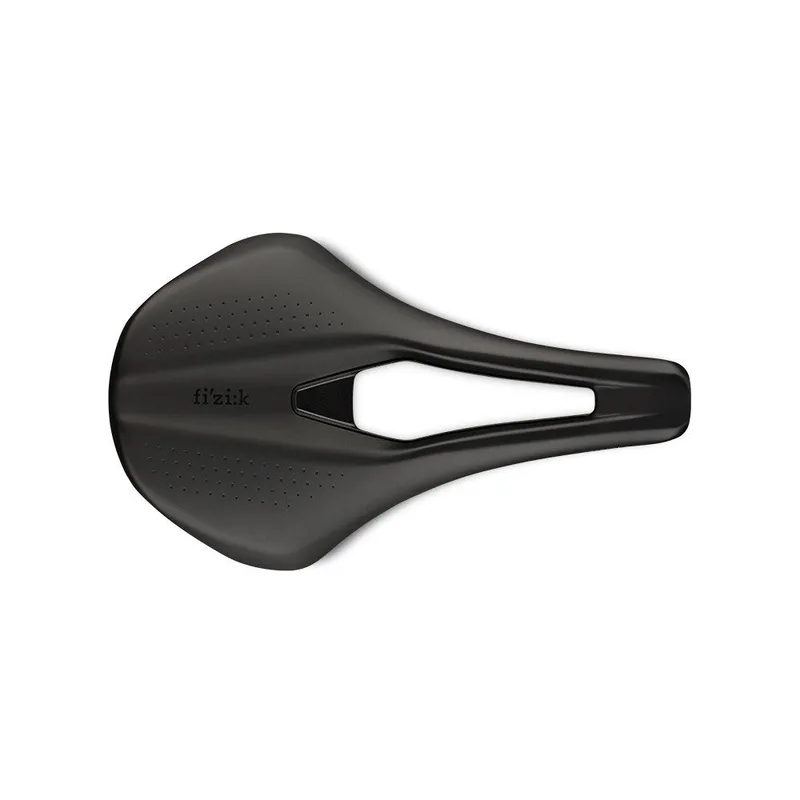
The Tempo Argo R3 is the best-value route into the Argo shape. The short-nose Argo shape lets you rotate the pelvis forward without dropping weight onto soft tissue, and the relief channel runs the full length rather than stopping halfway, which is what separates it from cheaper cutout saddles.
The carbon-reinforced nylon shell flexes under load without collapsing, and hollow Kium rails keep it at 235g in the 150mm width. It is the Argo shape at roughly half the price of the Vento Argo R3 Adaptive above: same channel, same hollow rails, conventional foam instead of the printed lattice. If the Adaptive is out of budget, this is where the shape comes from, and it is the saddle we would put on most endurance bikes for that money.
Specifications
- Weight: 235g (150mm), 240g (160mm)
- Widths: 150mm / 160mm
- Rails: Kium hollow
- Shell: Carbon-reinforced nylon
- Channel: Full-length relief channel
Selle San Marco Shortfit Allroad Sport
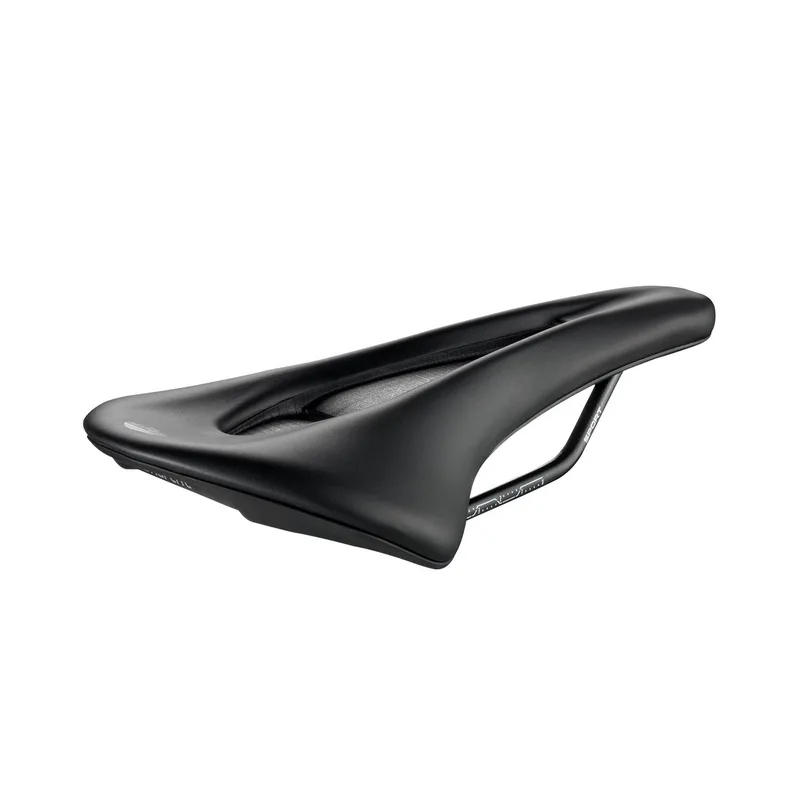
Built for riders who mix tarmac with gravel and broken roads. The Shortfit Allroad Sport uses San Marco's Bow Rail System, which lets the shell pivot slightly around the rails to absorb micro-impacts, plus shock absorbers built into the shell to filter the high-frequency buzz that ruins long days on rough surfaces.
The short-nose shape and open channel handle soft-tissue pressure, the waved profile keeps you from sliding forward on climbs, and carbon steel rails keep the price down. Two widths, 140 and 155mm, both 262mm long.
Specifications
- Weight: 294g (S3), 302g (L3)
- Dimensions: 140 x 262mm (S3), 155 x 262mm (L3)
- Rails: C45 carbon steel, 7mm
- Shell: Integrated shock absorbers, Bow Rail System
- Intended use: Road, gravel and bikepacking
Fizik Antares Versus Evo R3
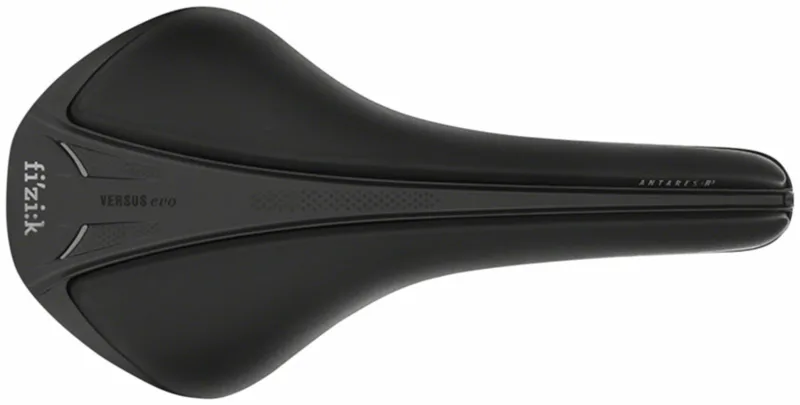
The Antares Versus Evo R3 is built for race-position riders who spend time in the drops. The narrow profile, 139 or 149mm, suits a forward-rotated pelvis, and the cutout runs the length of the saddle to keep pressure off soft tissue in that position.
A wider rear section adds support under the sit bones during seated climbs and hard efforts out of the saddle. It is the most expensive saddle here, and the premium reflects Fizik's racing pedigree more than measurable comfort gains over the Tempo Argo. If you ride upright, buy the Tempo instead.
Specifications
- Weight: 230g
- Widths: 139mm / 149mm
- Rails: K:ium
- Shell: Carbon-reinforced
- Cutout: Full length, with wider rear section
Ergon SR Pro Men
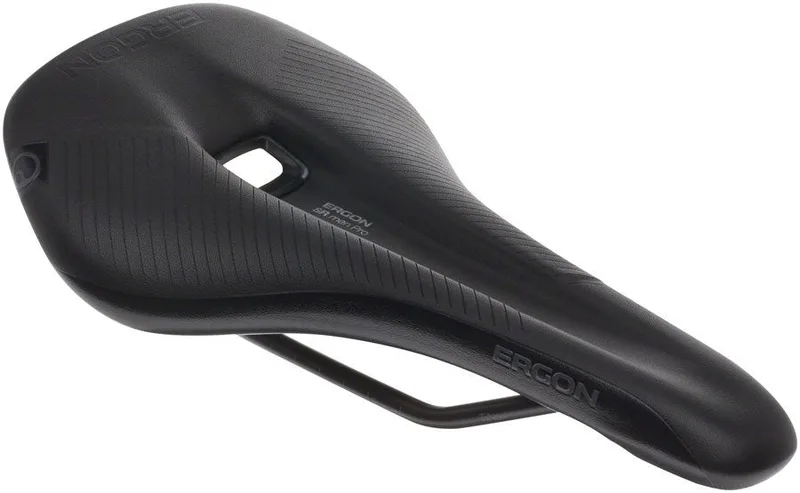
The SR Pro is built around male anatomy with pressure-mapping data behind every decision. OrthoCell inlays in the seating area spread weight across the sit bones, and the deep relief channel keeps blood flow open in a low, forward-tilted position on long rides.
At 220g with TiNox titanium rails and a carbon composite shell, it is one of the lighter saddles here. Ergon sells it in two sizes, S/M and M/L, rather than in millimetre widths, and makes a women's-specific version (SR Pro Women) with a different cutout shape.
Specifications
- Weight: 220g
- Sizes: S/M and M/L
- Rails: TiNox titanium
- Shell: Carbon composite
- Padding: AirCell foam with OrthoCell pads
Prologo Dimension R2
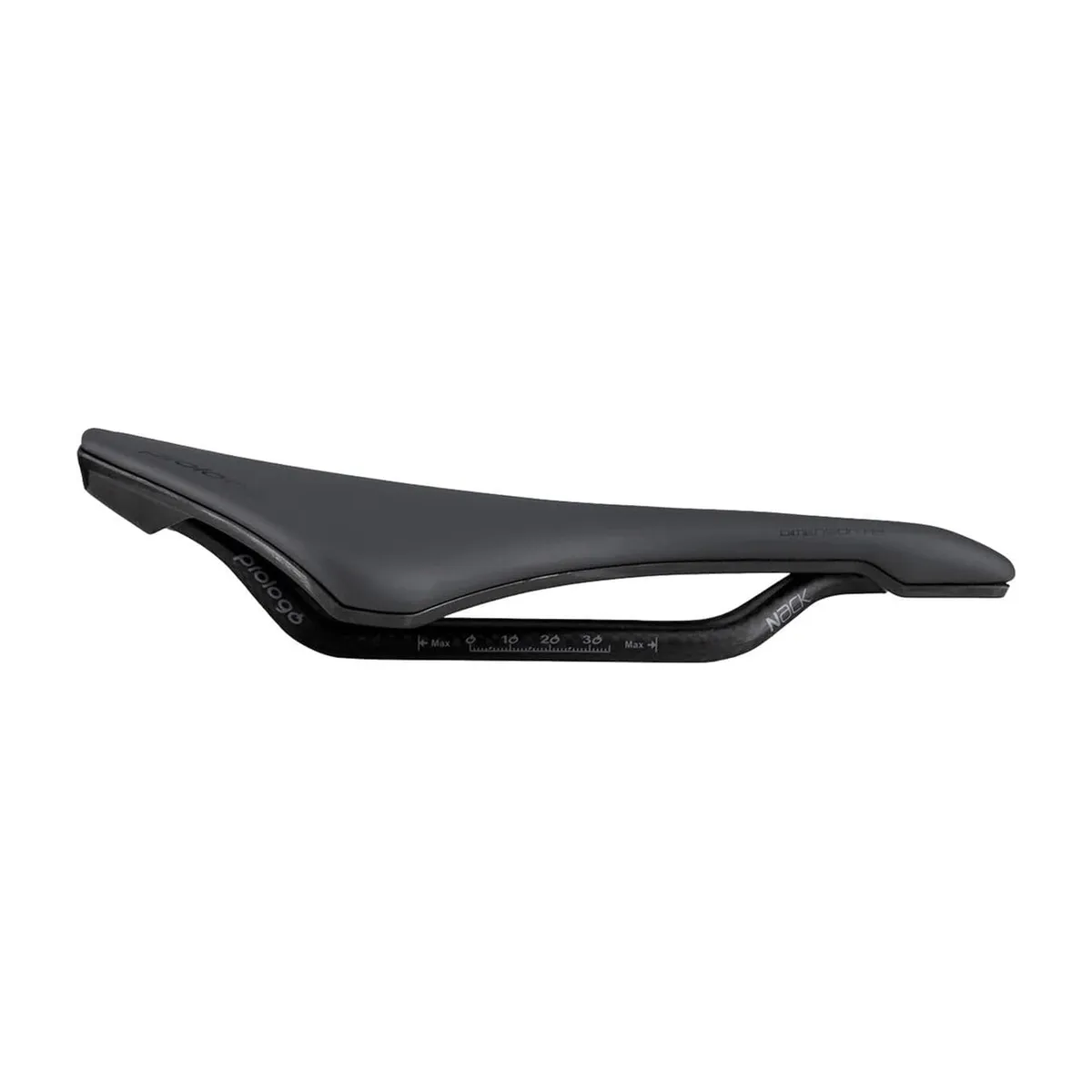
The Dimension is Prologo's short-nose saddle, and the R2 is its current form. The profile is flat with a V-shaped rear, and the nose is 40mm wide, which sounds like a detail until you slide forward on a climb and find you can actually sit on it. The PAS channel runs through the centre to keep pressure off soft tissue, and Prologo cut the rear padding by 20% on this version because riders who rotate forward do not use it.
The base is long-fibre carbon and the rails are Tirox alloy, for 171g, the lightest saddle in this list without carbon rails. Prologo also sells it with Nack carbon rails at 135g for a good deal more. One width, 245 x 143mm; the wider 153mm is sold as a separate model.
Specifications
- Weight: 171g (Tirox rails), 135g (Nack rails)
- Dimensions: 245 x 143mm
- Rails: Tirox alloy or Nack carbon
- Base: Long-fibre carbon
- Channel: PAS perineal channel
- Nose: 40mm wide
Fabric Scoop Elite Shallow
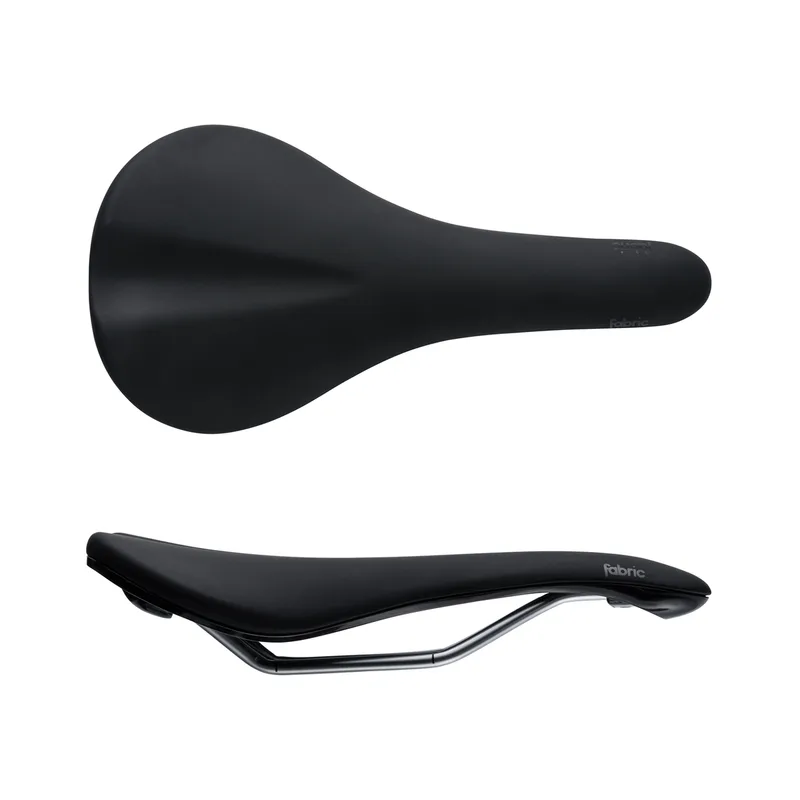
Fabric builds the Scoop in three profiles, Flat, Shallow and Radius, and the Shallow is the one to buy unless you know you want one of the others: flat enough to let you move fore and aft as the road tilts, curved enough to hold you when you settle into one position for an hour. The construction is the same across the range, so the choice is shape, not price.
The flexible bio-based nylon base does most of the comfort work, which is why the Scoop feels softer than its thin foam suggests. CroMo rails and a microfibre cover keep it at the bottom of this list in price without feeling cheap, at 269g. One width, 142mm, so it suits narrow sit bones. The Amazon listings for the Scoop are thin, so the link goes to Fabric's own store.
Specifications
- Weight: 269g
- Width: 142mm, length 282mm
- Rails: CroMo, 7mm
- Base: Flexible bio-based nylon
- Profile: Shallow
Specialized Power Expert with Mirror
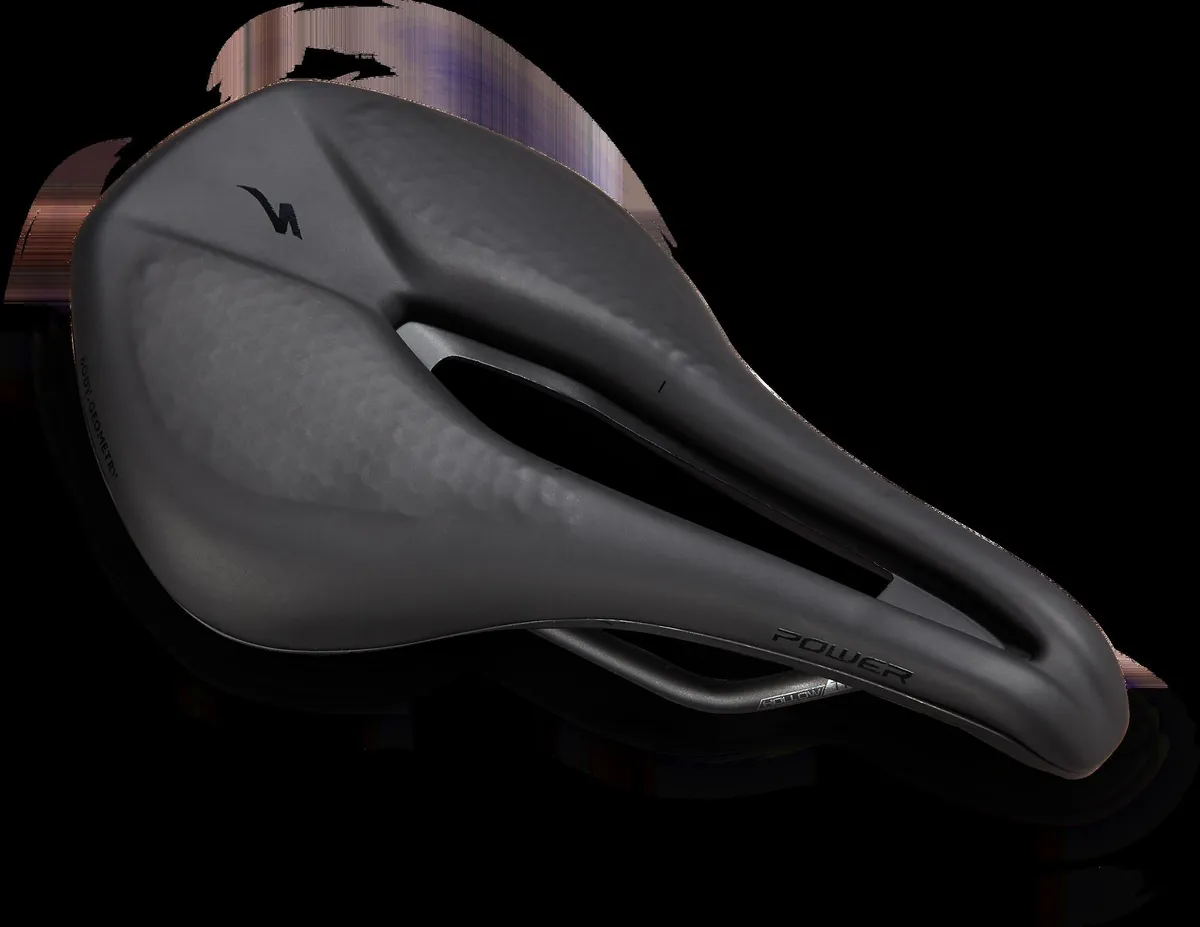
The Power is the most copied short-nose road saddle in cycling, and the Expert with Mirror is what Specialized sells today in place of the foam Power Expert. The shape is unchanged: a short nose that lets you rotate forward into an aggressive position without loading soft tissue, and the wide, elongated Body Geometry channel that keeps blood flow steady over long efforts.
What changed is the padding. Two teardrop-shaped inserts printed from a liquid polymer sit under the sit bones, tuned to spread the load over a wider area; the rest of the top is PU foam. It is not the full printed lattice of the Fizik Adaptive, and it costs a good deal less. Hollow titanium rails, 214g in the 143mm width, and four widths from 130 to 168mm, which is more than anything else here. Specialized sells through its own site and dealers rather than through Amazon.
Specifications
- Weight: 210g (130mm), 214g (143mm), 225g (155mm), 227g (168mm)
- Widths: 130mm / 143mm / 155mm / 168mm
- Rails: Hollow titanium
- Padding: PU foam with two 3D-printed Mirror inserts
- Channel: Body Geometry, extra wide and elongated
Specialized Bridge Comp with MIMIC
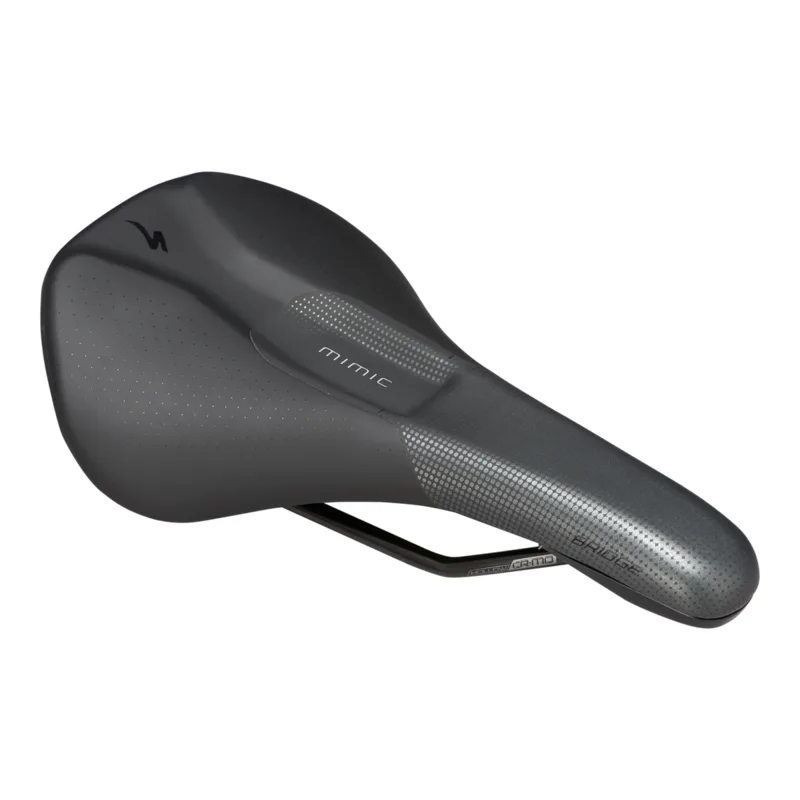
The Bridge Comp uses MIMIC, a multi-layer foam that responds differently depending on the pressure applied to it: firmer under the sit bones, softer where soft tissue makes contact. It is the saddle to try if padded saddles have made numbness worse rather than better.
The profile is broad and flat, which adds control on rough roads and off-road detours, and hollow titanium rails keep it at 282g. Three widths, and a water-resistant cover that survives wet rides.
Specifications
- Weight: 282g
- Widths: 143mm / 155mm / 168mm
- Rails: Hollow titanium
- Padding: MIMIC multi-layer foam, Level 3
- Cover: Water resistant
Best Road Bike Saddles: Key Takeaways
For most riders logging long hours, the Fizik Vento Argo R3 Adaptive is the strongest pick. The short-nose Argo shape works whether you sit upright or rotate forward, the relief channel runs the full length of the saddle, and the 3D-printed padding is the only padding here that still does its job in hour four. It is the most expensive saddle in the list, and it is the one we would pay for.
If you ride low, the Selle Italia Flite Boost Superflow TM is the short-nose classic: flat, two widths, a full Superflow cutout and manganese rails at 233g, for well under the Adaptive money. The Prologo Dimension R2 plays the same role for riders who want the lightest metal-rail saddle here and a nose wide enough to sit on.
The Brooks Cambium C15 remains the choice for riders who want a saddle that flexes rather than one that cushions. Vulcanized rubber moves with each pedal stroke, it is weatherproof, and it needs no break-in or maintenance. Ideal for gran fondo, brevet, and all-day touring. And if the Adaptive is out of budget, the Tempo Argo R3 gives you the same shape with conventional foam.
Whichever saddle you choose, measure your sit bone width first and pick the matching width. Give a new saddle at least five rides before deciding it does not fit: sit bones need a few hours to adapt to a new shape. And use a comfort guarantee programme if the shop offers one, because saddle fit is individual and the only real test is hours in the saddle.