THE BEST FOR EACH USE CASE
- Clif Bar best for long rides, 250 calories, 44g carbs, sustained energy from oats
- Honey Stinger Waffle best for high intensity, thin profile, easy to eat at any pace
- Skratch Labs Anytime best natural ingredients, real-food formula, gluten-free
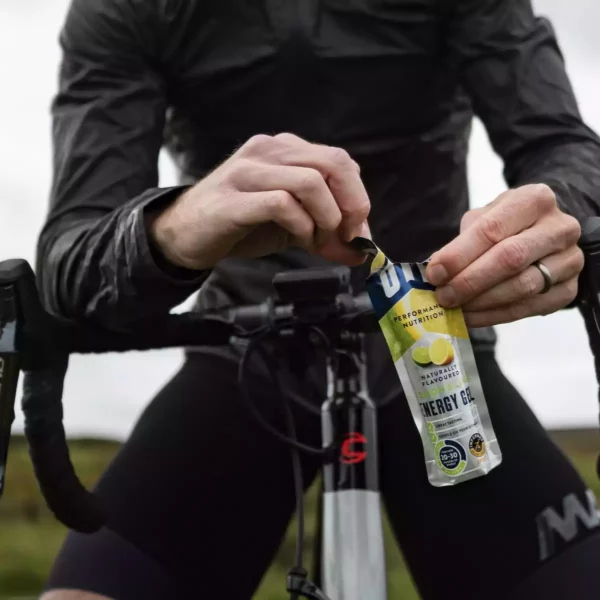
Energy bars are the most forgiving fuel a cyclist can carry: they survive a jersey pocket, they do not need water, and they deliver carbohydrate in a form your stomach can handle for hours. They are also the most misunderstood, because “energy bar” and “nutrition bar” get used for products that do completely different jobs.
This guide compares 15 bars actually on sale in 2026, from the 44g-carbohydrate Clif Bar to the 40g Maurten Solid, with the numbers that matter side by side: carbohydrate per bar, carbohydrate per 100g, and what each one is built for. Pair the right bar with a structured cycling training plan and the bonk stops being part of the sport.
How We Choose These Energy Bars
We are not a lab with a taste panel, and pretending otherwise would be dishonest. What we do instead is verifiable.
What we verify. Every calorie, carbohydrate and protein figure in this guide comes from the manufacturer's own nutrition label, and every bar is on sale today. One bar that appeared in an earlier draft was dropped when we found the brand had closed in 2025.
What we bring that a taste test does not. Cycling Coach AI sees how riders actually fuel: how long their long ride is, what intensity they hold, and where they fade. A bar that tastes great at a desk and sits like a brick at threshold is not a good bar for cycling, whatever the review says.
How we select an energy bar for cycling. A bar makes this list if it delivers at least 20g of carbohydrate per serving, publishes a full nutrition label, comes from a brand with sports-nutrition credentials rather than a snack brand with a cycling photo on the box, and can be bought today in the US or the UK.
Cycling Nutrition Bars vs Energy Bars: What the Label Actually Means
The phrase cycling nutrition bars covers three different products, and buying the wrong one is the most common mistake in this category. An energy bar is built to be eaten on the bike: high carbohydrate, low fat, low fibre, because fat and fibre slow gastric emptying and that is exactly what you do not want at 250 watts. A protein bar is built for after the ride. A meal-replacement bar is built for neither.
Most cycling nutrition bars sold in supermarkets are the second or third kind wearing the first kind's packaging. The tell is the label: if protein is above 10g and fat above 8g, it is a recovery product, however it is marketed. High5 is the honest example: it used to sell an Energy Bar with Protein, and has since split it into an Energy Bar for the ride and a Protein Recovery Bar for afterwards, which is exactly the right distinction.
For the bike itself, the research is unusually clear. Jeukendrup's review in Sports Medicine puts the target at 30g of carbohydrate per hour for rides of one to two hours, rising to 60g and, for events over two and a half hours with trained guts, up to 90g per hour using a blend of glucose and fructose. Every bar in the table below is rated against that number: how many you would need per hour, and whether you could realistically chew them.
«"Carbohydrate intake during exercise […] the recommendations are: 30 g/h for exercise of 1–2 h, 60 g/h for exercise of 2–3 h, and up to 90 g/h (from multiple transportable carbohydrates) for exercise longer than 2.5 h."»
Jeukendrup, A. (2014). A Step Towards Personalized Sports Nutrition: Carbohydrate Intake During Exercise. Sports Medicine, 44(S1). doi:10.1007/s40279-014-0148-z
Comparison Table: 15 Energy Bars Ranked by Carbohydrate
Carbohydrate per 100g is the fairest way to compare a 32g waffle with a 68g bar. Price brackets are relative to each other at the manufacturer's own current price: the premium bars cost roughly double the budget ones per bar.
| Bar | Calories | Carbs (g) | Carbs /100g | Protein (g) | Weight | Price bracket | Vegan | Buy |
|---|---|---|---|---|---|---|---|---|
| Clif Bar | 250 | 44 | 65 | 10 | 68g | Budget | Yes | Buy→ |
| Maurten Solid 160 | 200 | 40 | 73 | 2 | 55g | Premium | Yes | Buy→ |
| Kate's Real Food | 260 | 40 | 65 | 6 | 62g | Premium | No | Buy→ |
| High5 Energy Bar | 189 | 39 | 71 | 2 | 55g | Budget | Yes | Buy→ |
| Veloforte Mocha | 310 | 29 | 47 | 8 | 62g | Budget | Yes | Buy→ |
| SiS GO Energy Bar | 215 | 27 | 49 | 4 | 55g | Mid-range | Yes | Buy→ |
| Clif Nut Butter Bar | 270 | 26 | 52 | 7 | 50g | Mid-range | Yes | Buy→ |
| Larabar Cashew Cookie | 220 | 25 | 52 | 5 | 48g | Budget | Yes | Buy→ |
| Picky Bars | 190 | 25 | 56 | 7 | 45g | Premium | Some | Buy→ |
| Skratch Labs Anytime | 220 | 23 | 34 | 5 | 68g | Mid-range | Yes | Buy→ |
| OTE Duo Bar | 200 | 23 | 46 | 6 | 50g | Budget | Yes | Buy→ |
| GU Energy Waffle | 150 | 22 | 69 | 0 | 32g | Budget | No | Buy→ |
| Honey Stinger Waffle | 160 | 21 | 66 | 1 | 32g | Budget | No | Buy→ |
| Torq Bar | 195 | 21 | 42 | 3 | 50g | Mid-range | No | Buy→ |
| Rawvelo Organic | 145 | 20 | 50 | 8 | 40g | Budget | Yes | Buy→ |
This guide contains affiliate links. We may earn a commission if you buy through them, at no extra cost to you. It never changes what we recommend. See our affiliate disclosure.
Clif Bar vs Honey Stinger Waffle: Direct Comparison
If you've searched for the best energy bar for cycling, you've almost certainly seen these two products mentioned. They are the most popular cycling-friendly bars in the US, and they take very different approaches to fueling a ride.
Clif Bar wins on calorie density
At 250 calories and 44g of carbs per bar, one Clif Bar can fuel an hour or more of moderate-intensity riding. The oat base provides slow-release energy that pairs well with the protein and fiber, keeping hunger at bay during long endurance rides. The downside: at 68g per bar, it's chewy and slow to eat. Trying to chew through a Clif Bar while pedaling at threshold is genuinely difficult.
Honey Stinger Waffle wins on ride-ability
At 160 calories and 21g of carbs in a thin 32g waffle, it's roughly half the calories of a Clif Bar but twice as easy to eat on the bike. The honey-based carbohydrates absorb fast, and the thin profile means you can take a bite, swallow, and keep riding without breaking your rhythm. Pro cyclists routinely use Honey Stinger Waffles in races for this reason.
Quick verdict
Clif Bar for the long, steady day; Honey Stinger for anything you have to eat while breathing hard. That is the short answer, and it is right about 80% of the time. The other 20% is the interesting part: the ride where you want Clif-level carbohydrate but cannot chew a Clif Bar, which is where the Maurten Solid and Kate's come in, and the cold-weather ride where a waffle shatters in the pocket and the OTE Duo does not. The reviews below cover each case.
How to Choose an Energy Bar for Cycling
Match calories to ride duration
For rides under 90 minutes, no bar is needed. For 2–3 hour rides, choose 150–200 calorie bars. For 4+ hour rides, where the calorie cost of the ride is highest, lean toward 200–270 calorie bars (Clif Bar, Clif Nut Butter Filled) for sustained fuel. If you are building up to your first long event, our 100-mile training plan and the cycling nutrition guide for beginners cover how to practise fuelling before race day.
Match texture to intensity
Softer or thinner bars (Honey Stinger Waffle, GU Energy Waffle) work at high intensity. Chewier, denser bars (Clif Bar, Skratch Labs) work better at moderate effort, when you can pause briefly to eat.
Carbs vs protein
During the ride, prioritize carbohydrate-heavy bars (20–45g carbs, low protein). Save high-protein bars (High5 Protein, OTE Duo) for the end of long rides or post-ride recovery, since protein digests slower and can feel heavy mid-effort.
«"Ingesting a combination of glucose and fructose […] can increase exogenous carbohydrate oxidation rates by up to 75% compared with glucose alone, because the two sugars use different intestinal transporters."»
Jeukendrup, A. (2010). Carbohydrate and exercise performance: the role of multiple transportable carbohydrates. Current Opinion in Clinical Nutrition and Metabolic Care, 13(4). doi:10.1097/MCO.0b013e328339de9f
Vegan and gluten-free options
Skratch Labs, Clif Bar, SiS Go, Rawvelo, Veloforte, and OTE Duo all offer vegan formulas. Most cycling-targeted bars are gluten-free or have gluten-free variants, so check labels if needed.
Budget for the season
The gap between the cheapest and dearest bars here is roughly double per bar, and if you ride four hours every weekend that is four to six bars a ride, forty weekends a year. The budget-bracket bars in the table (Clif Bar, Honey Stinger, GU, OTE, Rawvelo, Veloforte) cover the whole season without giving anything up on the bike; the premium ones earn their price on race day, not on Tuesday.
When to Eat Bars vs Gels While Cycling
This is the question most riders actually have, and it deserves its own answer. Our guide to the best energy gels for cycling covers the gel side; here is how the two fit together on a ride.
Bars early, gels late
Energy bars take 45–60 minutes to digest. They are best eaten in the first half of long rides at moderate intensity, when your stomach can handle solid food and you have time before you need the carbs.
Gels for high intensity
Energy gels absorb in 15–20 minutes and require almost no chewing. Switch to gels after 90 minutes of riding, or any time you push into Zone 4 or Zone 5 where chewing becomes hard.
The hybrid approach
On rides over 3 hours, many cyclists use both: one bar every 60–75 minutes during steady riding, plus one gel every 30–45 minutes during harder efforts (climbs, pace lines, finishes). Aim for 60–90g of carbs per hour total.
Avoid bars at race pace
Trying to eat a Clif Bar during a sprint or all-out effort is a recipe for choking or GI distress. Save the bar for the rollers and tailwinds; pull out the gel when the road kicks up.
Energy Bars Reviewed in Detail
Clif Bar
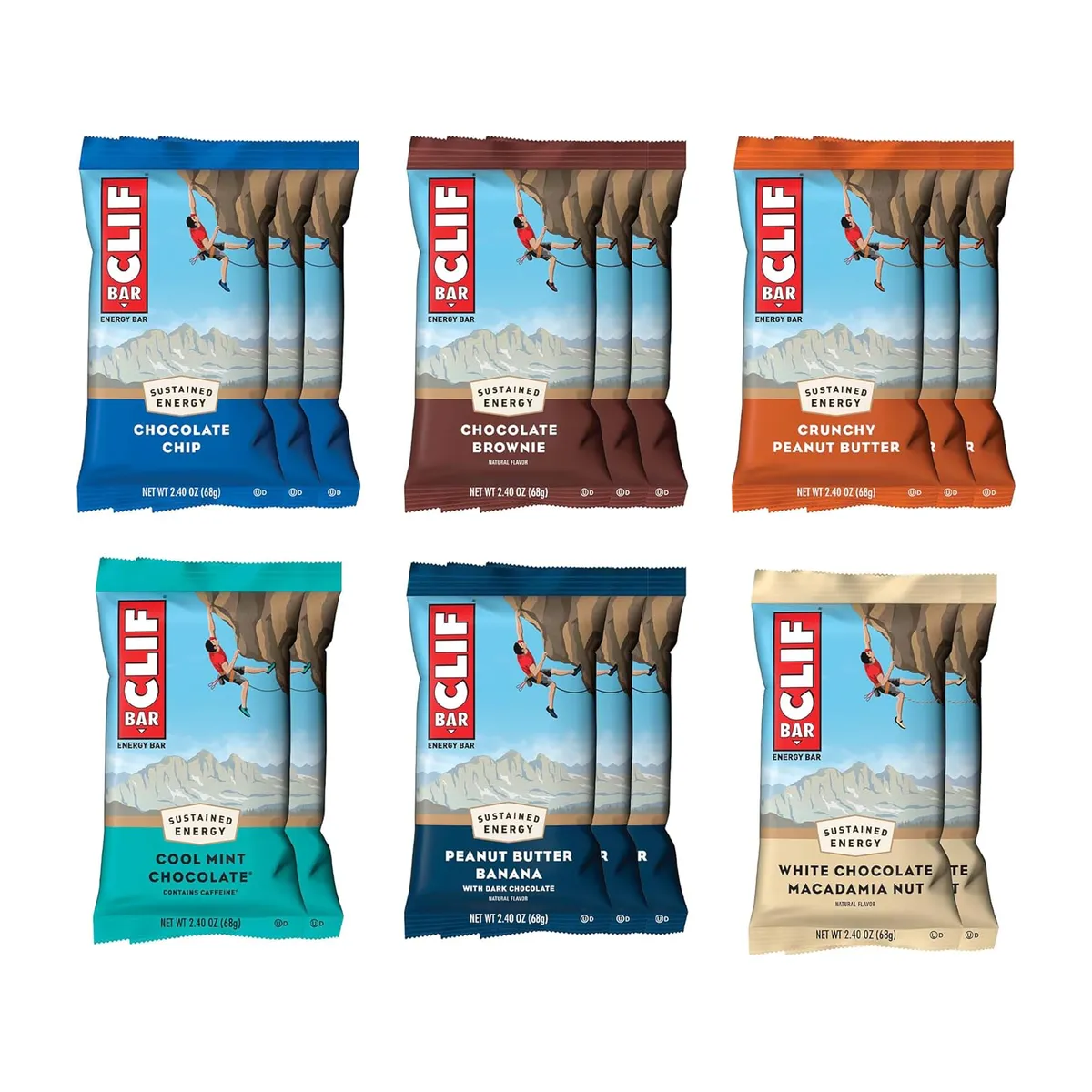
Clif Bar is the flagship energy bar of Clif Bar Inc., created in the early 90s by founder Gary Erickson as a way to provide nutritious and tasty energy to cyclists and outdoor athletes. It is the first certified organic energy bar and one of the first to be certified vegan.
Clif Bar is known for its variety of flavors, from classic Chocolate Chip to Coconut Almond Chocolate, and is packed with quick-burning carbohydrates plus proteins, minerals, and other nutrients to combat fatigue on long rides.
Specifications
- Calories: 250 per bar
- Carbs per bar: 44g
- Protein: 10g
- Serving size: 68g
- Vegan: Yes
Honey Stinger Organic Energy Waffle
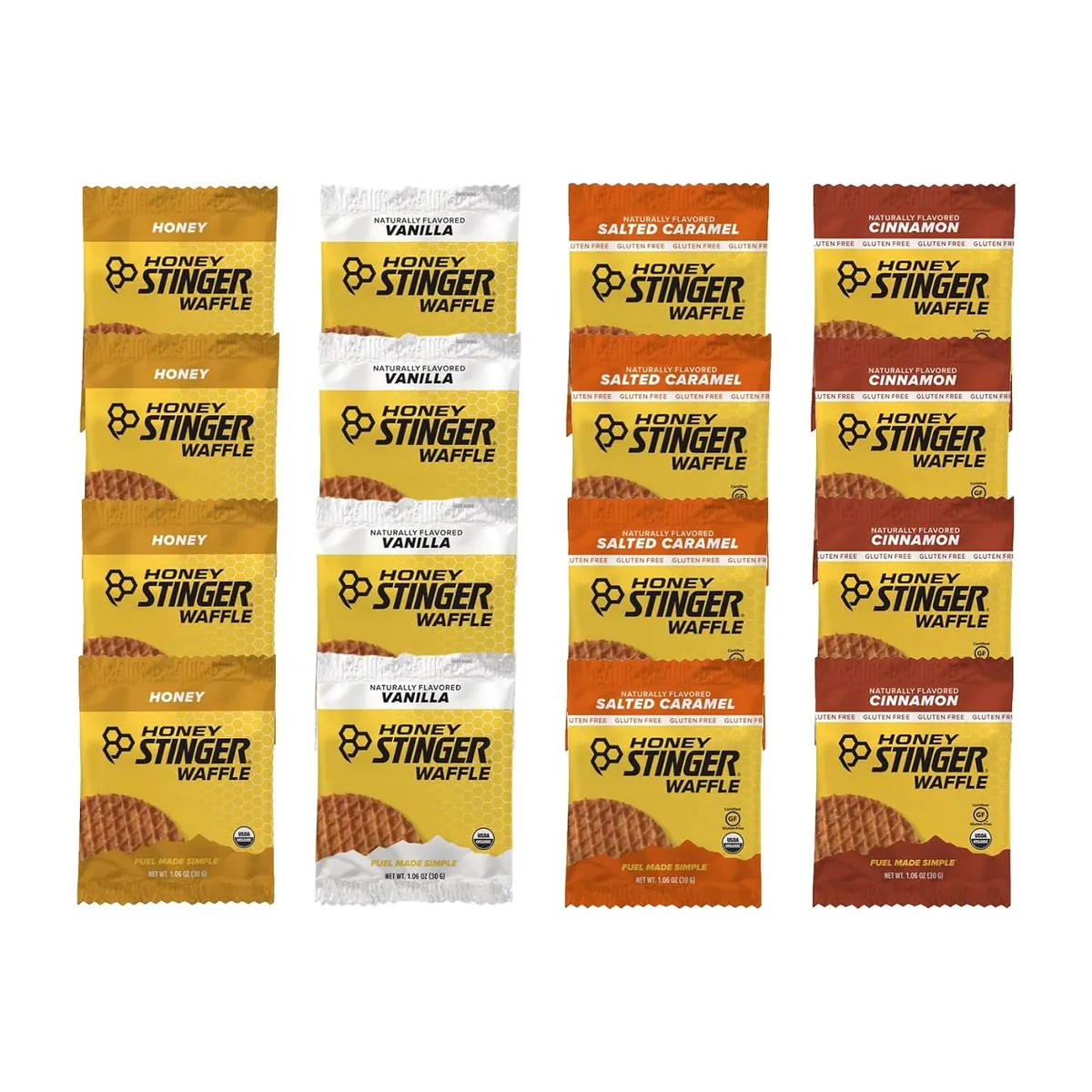
Honey Stinger Organic Energy Waffles have become the most ride-friendly snack in cycling. The thin waffle profile is easy to unwrap with one hand, easy to chew at any intensity, and uses honey as the primary carbohydrate source for fast absorption.
Pro cyclists and recreational riders alike use Honey Stinger Waffles for races and hard rides because they require almost no break in rhythm to eat. The trade-off is lower total calories per serving, so on long rides you need to plan for more frequent fueling.
Specifications
- Calories: 160 per waffle
- Carbs per waffle: 21g
- Protein: 1g
- Serving size: 32g
- Vegan: No
Skratch Labs Anytime Energy Bar
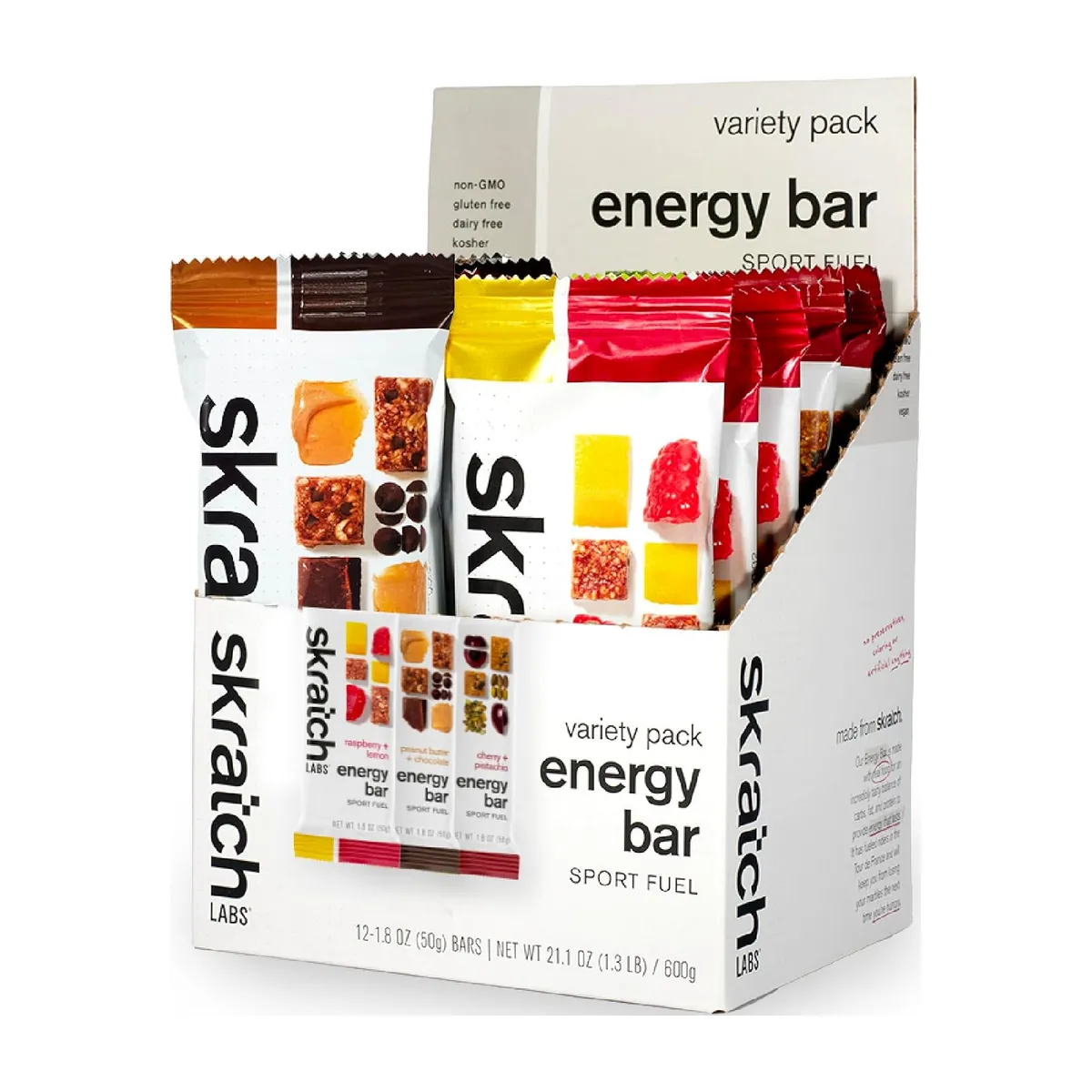
Skratch Labs Anytime Energy Bar is built for cyclists who want a great-tasting bar with simple, real-food ingredients. It's made with organic oats, almonds, figs, crunchy rice, and dried raisins, with no more than 8g of sugar and 5g of fat per bar.
The bar is gluten-free, vegan, and fortified with natural B-vitamins. It's a popular choice for athletes who avoid heavily processed sports nutrition products and prefer something closer to a homemade granola bar.
Specifications
- Calories: 220 per bar
- Carbs per bar: 23g
- Protein: 5g
- Serving size: 68g
- Vegan: Yes
Torq Bar
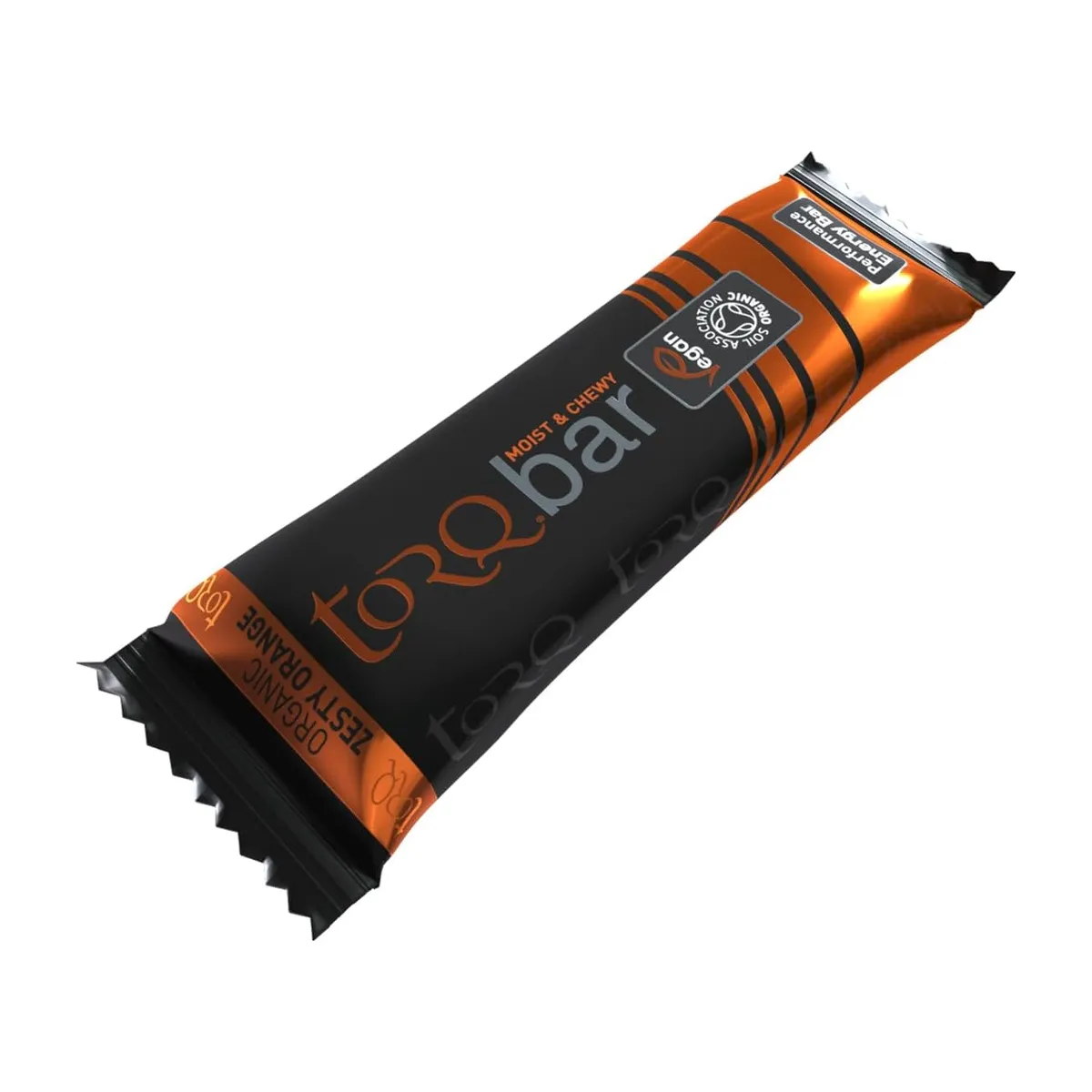
The Torq Bar comes from British nutrition company Designed for Performance Ltd. and offers a range of flavors from classic peanut to rum and raisin. It uses gluten-free oats and a unique energy blend of chia seeds, dates, and coconut for sustained energy.
Torq Bars are rich in vitamins and minerals and suitable for vegetarians, though not strictly vegan in all flavors. The blend of slow-release carbs makes them well-suited to medium-length endurance rides.
Specifications
- Calories: 195 per bar
- Carbs per bar: 21g
- Protein: 3g
- Serving size: 50g
- Vegan: No
SiS Go Energy Bar
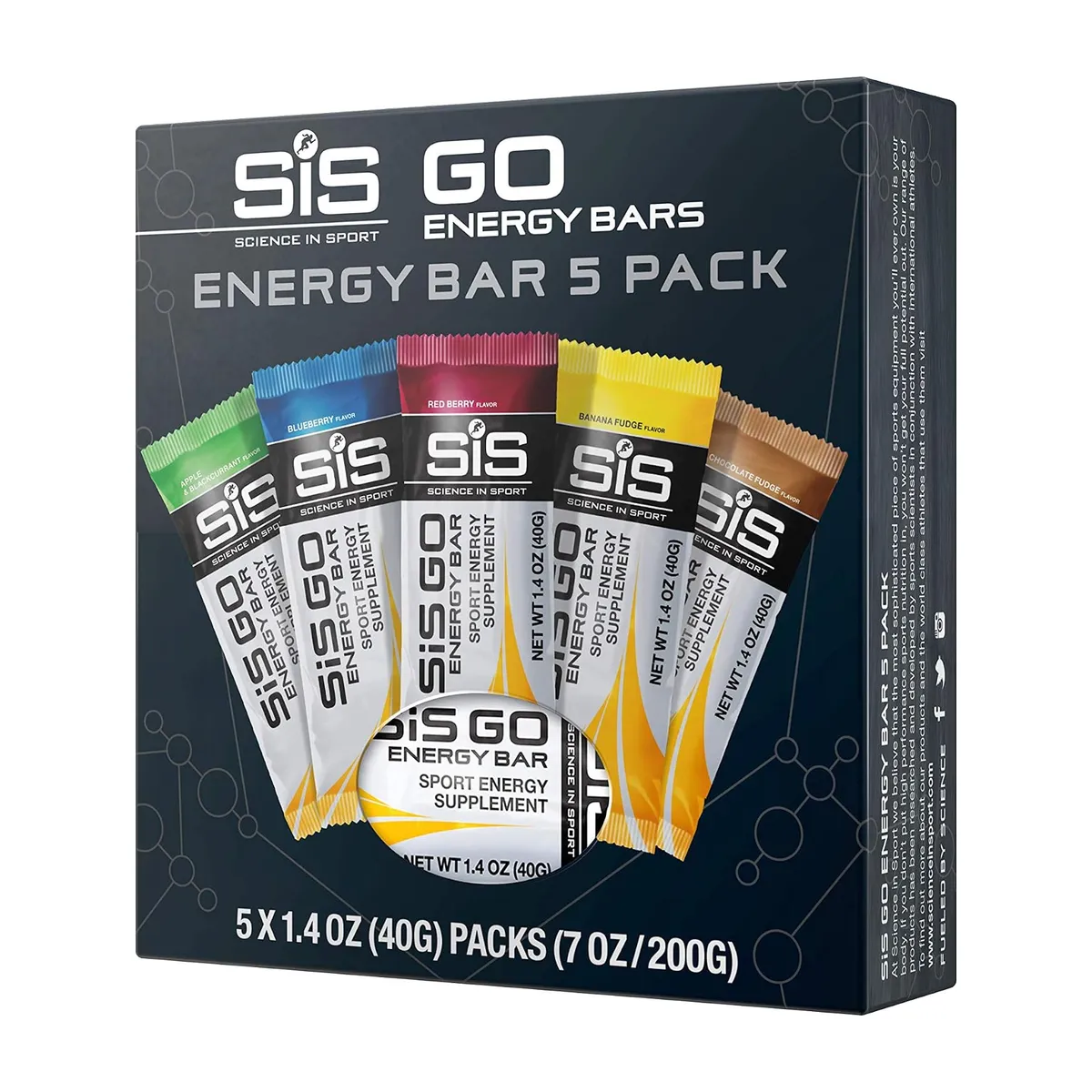
SiS Go Energy Bar comes from Science in Sport, a nutrition company founded by former professional cyclists. It's designed for cyclists who need quick and sustained energy before, during, and after rides, with a complex carbohydrate blend that helps stave off fatigue.
The bar contains a blend of dietary fibers and is vegan-friendly. The 27g of carbs per bar makes it one of the higher-carb options in this list, suitable for sustained efforts.
Specifications
- Calories: 215 per bar
- Carbs per bar: 27g
- Protein: 4g
- Serving size: 55g
- Vegan: Yes
Rawvelo Organic Energy Bar
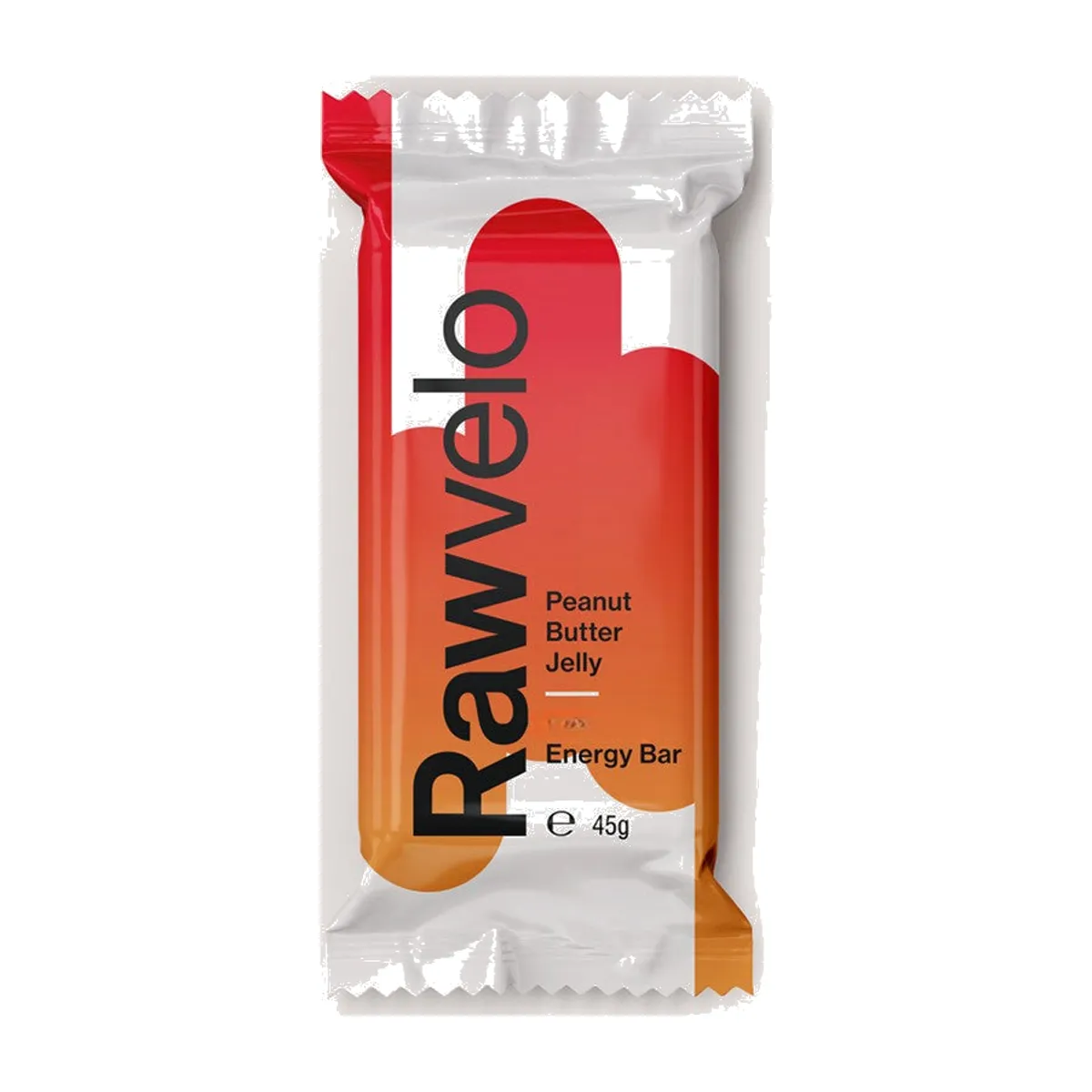
Rawvelo Organic Energy Bar is built around natural ingredients with no added sugars or preservatives. The bars are made with organic oats and fruit and provide more than 6g of dietary fiber and 8g of plant-based protein per serving.
It's vegan-friendly and gluten-free, making it a good fit for cyclists with dietary restrictions. The smaller serving size (40g) and lower calorie count make it a snack-sized option for moderate rides.
Specifications
- Calories: 145 per bar
- Carbs per bar: 20g
- Protein: 8g
- Serving size: 40g
- Vegan: Yes
Larabar Cashew Cookie
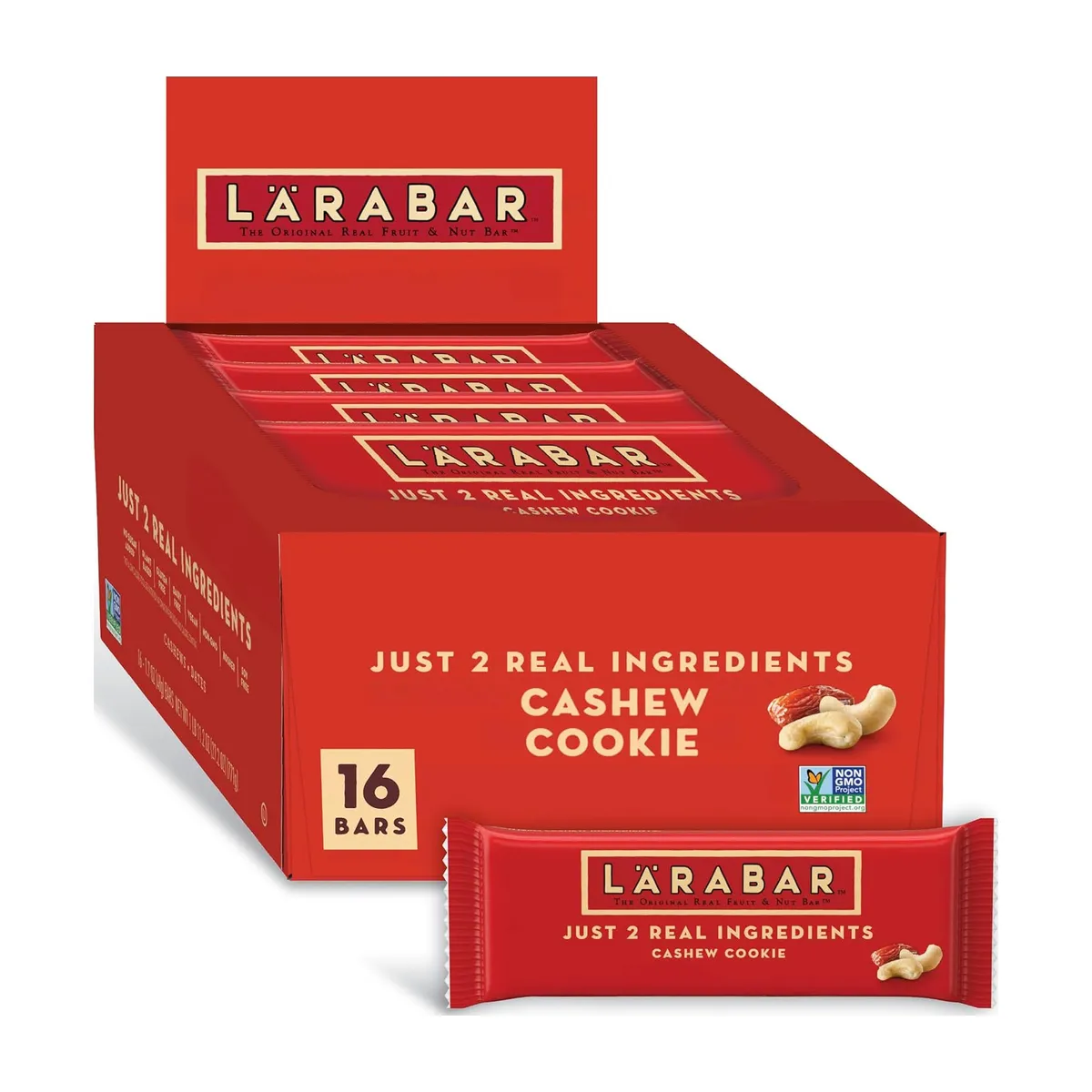
Larabar is the simplest bar on this list: dates and cashews, pressed into a 48g bar, and nothing else on the label. That gives you 220 calories and 25g of carbohydrate with no added sugar, and a bar you can buy in any US supermarket or by the box on Amazon, which is why it takes the natural date bar slot that the Tribe Infinity held until Tribe dropped it.
The trade is digestion speed. Cashews bring 12g of fat, so the carbohydrate arrives more slowly than from a waffle or a gel; eat it early in a long ride or at a steady pace, not in the last hour. It is dense and chewy, so pair it with a drink. Vegan, gluten-free and kosher.
Specifications
- Calories: 220 per bar
- Carbs per bar: 25g
- Protein: 5g
- Serving size: 48g
- Vegan: Yes
Clif Nut Butter Filled Energy Bar
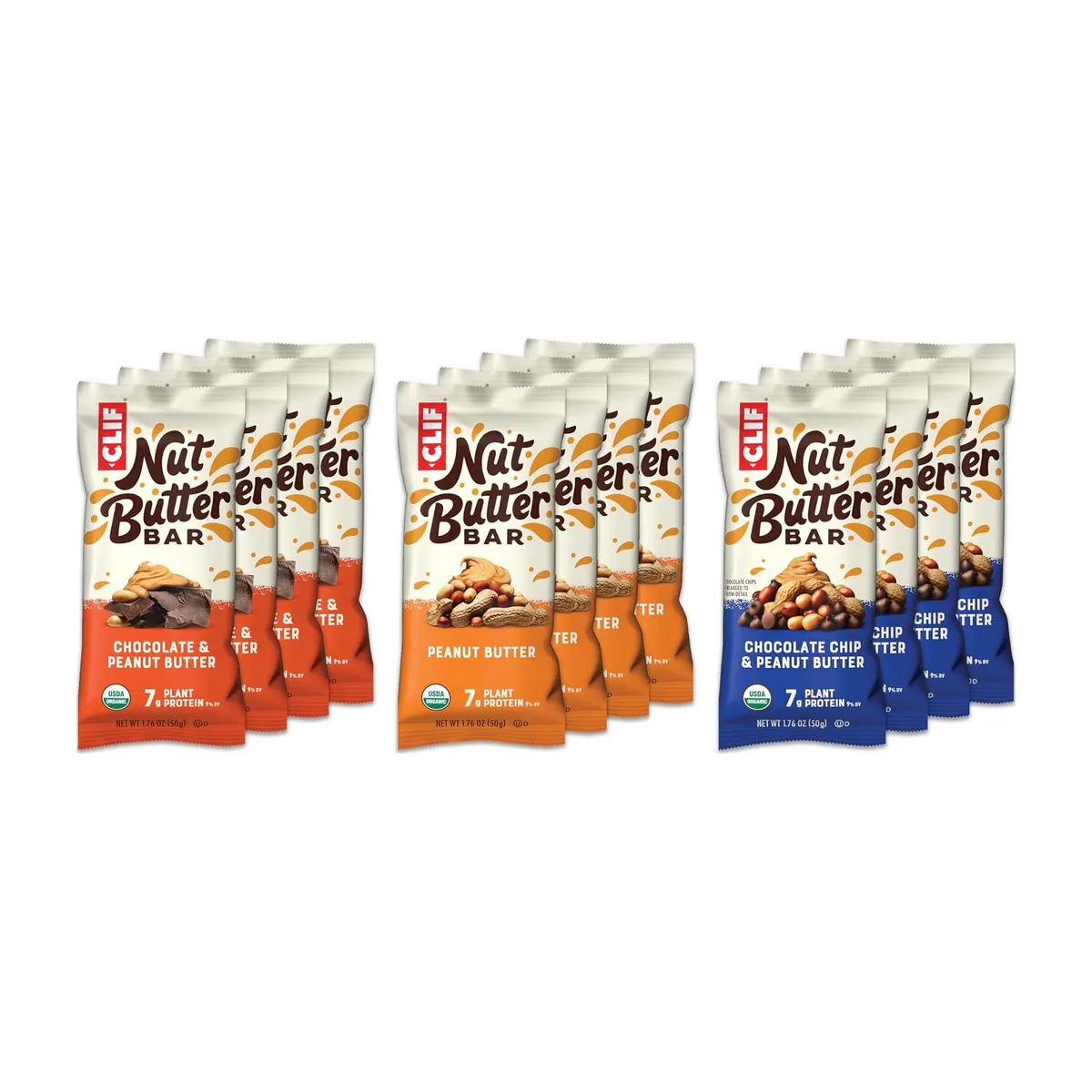
Clif Nut Butter Filled Energy Bar is Clif's nut-butter spin on the classic Clif Bar. It's packed with a roasted-almond and peanut filling, lower in sugar than most bars, and made with rolled oats, dates, raisins, and chia seeds.
It's gluten-free, soy-free, and vegan-friendly. The 270 calories per bar make it the highest-calorie option in this list, ideal for very long rides where you need maximum fuel per gram.
Specifications
- Calories: 270 per bar
- Carbs per bar: 26g
- Protein: 7g
- Serving size: 68g
- Vegan: Yes
Veloforte Mocha Energy Bar
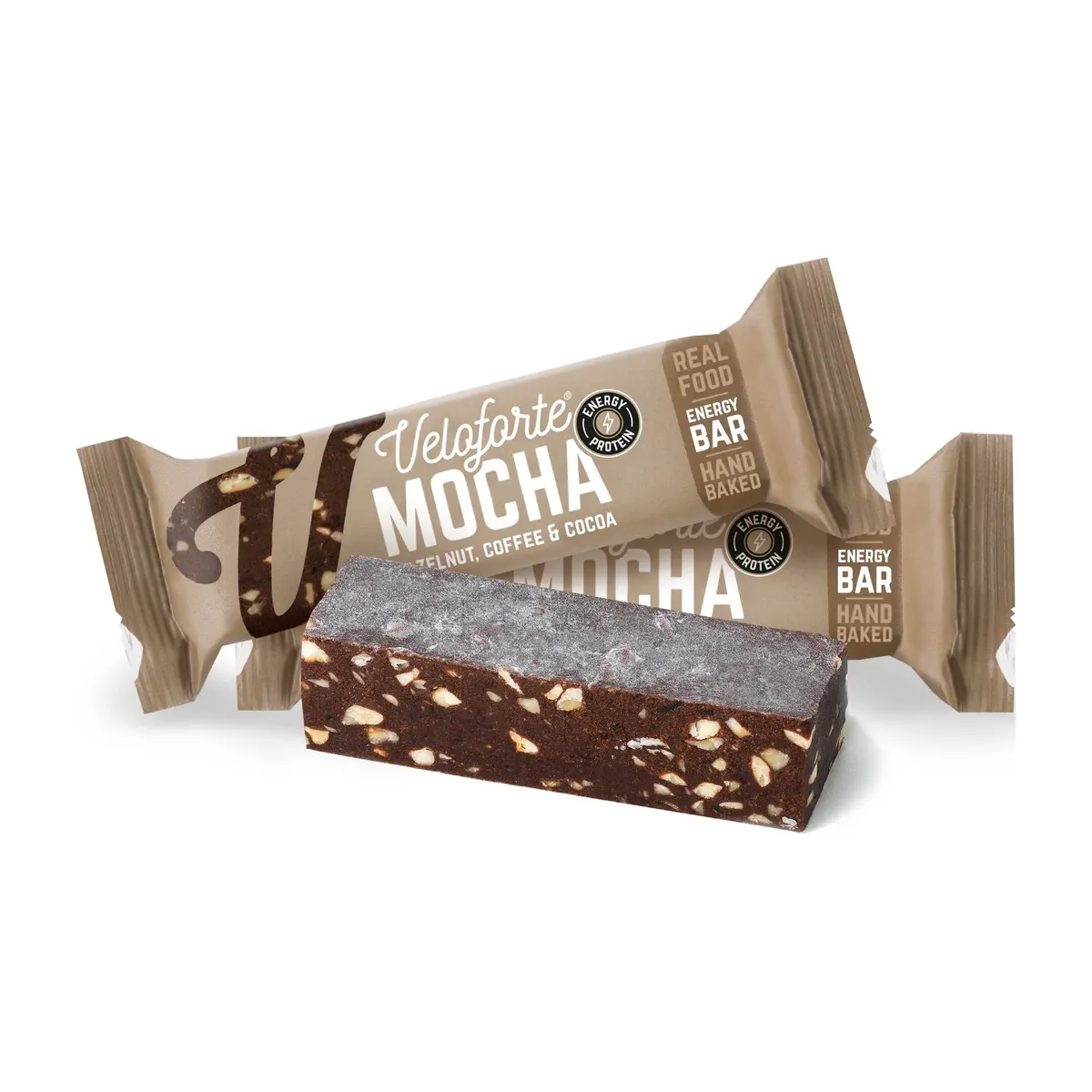
Veloforte Mocha Energy Bar is a premium bar made with organic nuts, fruits, seeds, cocoa, and espresso. The mocha flavor profile makes it a favorite for coffee-loving cyclists.
The bar contains almonds, cashew nuts, dates, pumpkin seeds, and chia seeds for sustained energy. It's gluten-free and vegan-friendly. Built-in caffeine from espresso adds a mental boost on demanding rides.
Specifications
- Calories: 310 per bar
- Carbs per bar: 29g
- Protein: 8g
- Serving size: 62g
- Vegan: Yes
High5 Energy Bar
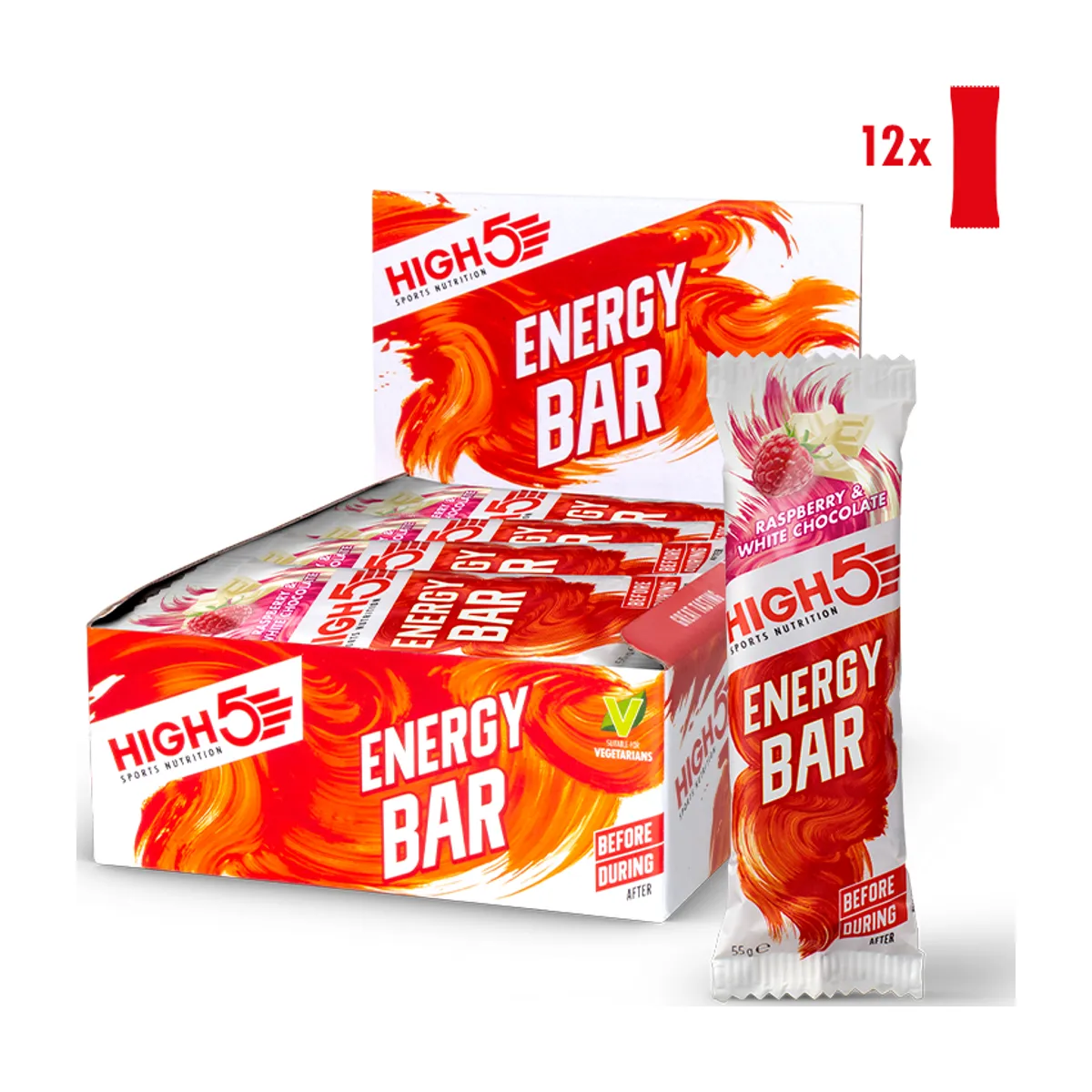
High5 used to sell an Energy Bar with Protein, and this guide used to list it. That product is gone: High5 has split the range into a plain Energy Bar and a separate Protein Recovery Bar, and the Energy Bar is the one that belongs here. It is an oat-based bar with 36 to 39g of carbohydrate in 55g depending on flavour, which puts it near the top of this list for carbohydrate per bar at a budget price.
The flavours are not interchangeable: Berry and Banana are the high-carbohydrate ones; the Peanut flavour trades carbohydrate for fat and protein and behaves more like a snack. Read the wrapper.
Specifications
- Calories: 189 per bar (Berry)
- Carbs per bar: 39g (Berry), 36g (Banana), 25g (Peanut)
- Protein: 2g
- Serving size: 55g
- Vegan: Yes (Berry, Banana)
OTE Duo Bar
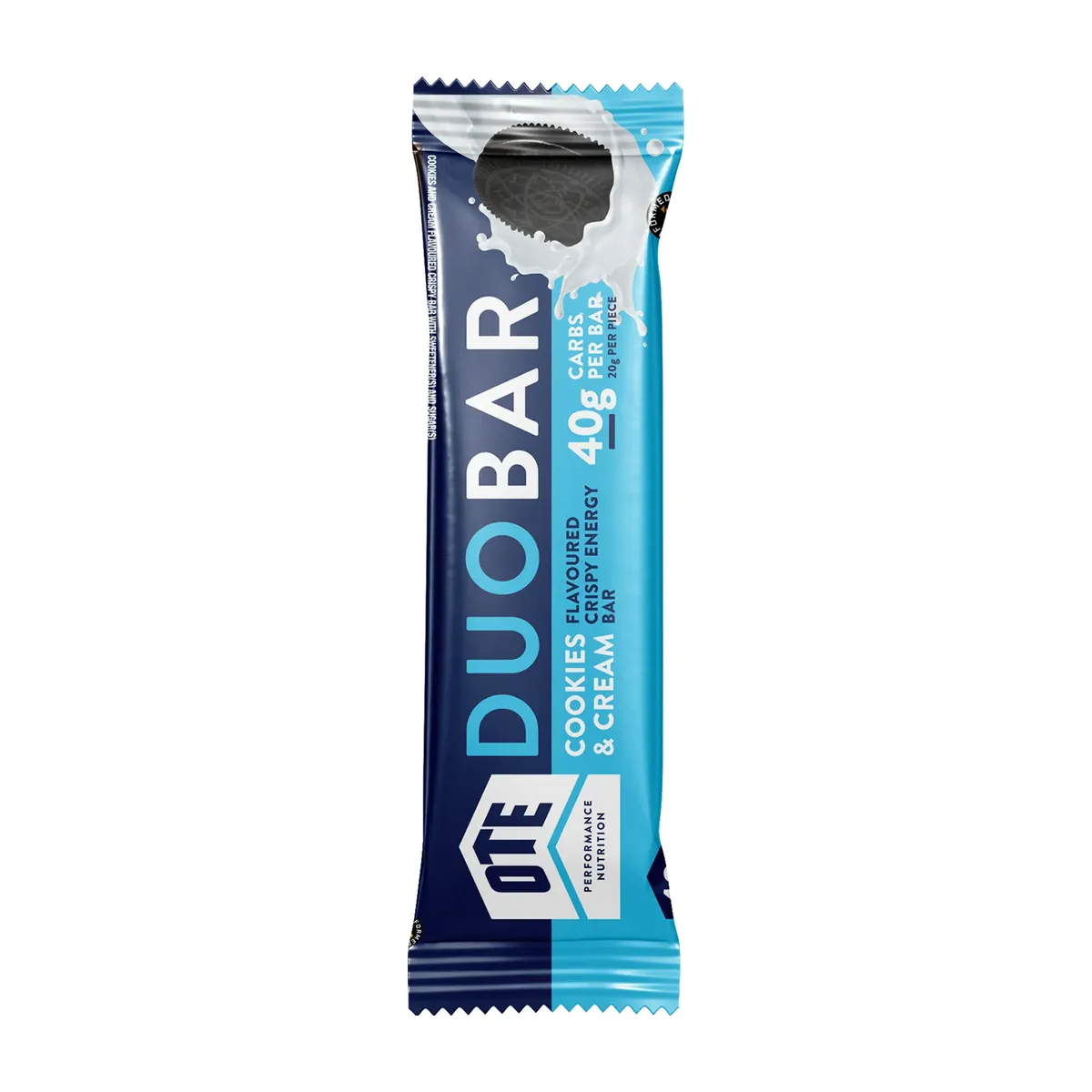
OTE Duo Bar is from OTE Sports, a nutrition brand founded by professional cyclists. It's designed for fast-acting energy and post-ride recovery, made with vegan proteins, dates, apple puree, and oat flour.
The bar is high in fiber and contains no added sugars or syrups, a strong choice for vegan cyclists looking for clean energy. Works well both during and after rides.
Specifications
- Calories: 200 per bar
- Carbs per bar: 23g
- Protein: 6g
- Serving size: 50g
- Vegan: Yes
GU Energy Waffle (formerly Stroopwafel)
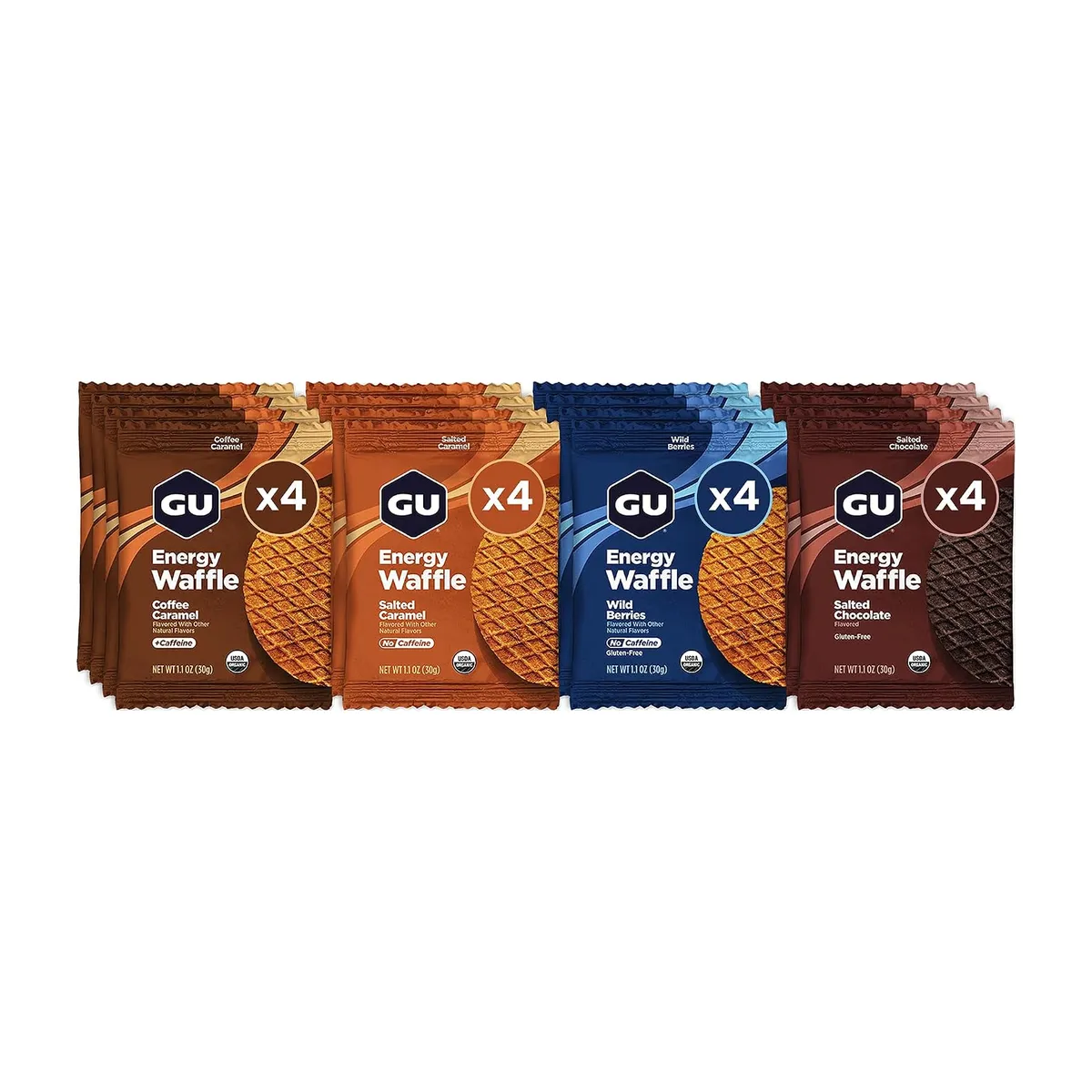
GU renamed its Stroopwafel to Energy Waffle in 2026, but it is the same product: GU took the Dutch stroopwafel, two thin wafers with syrup between them, and turned it into ride fuel: 21 to 23g of carbohydrate in 32g, with amino acids and 75mg of sodium added. It is the direct competitor to the Honey Stinger waffle, and the choice between them is mostly flavour and whether you want caffeine, which GU offers in the Caramel Coffee.
Like every waffle here it is easy to eat at intensity and light on the stomach, and like every waffle it will not get you far on its own: at 22g you need three an hour to hit 60g. Contains dairy, so not vegan.
Specifications
- Calories: 140-150 per waffle
- Carbs per waffle: 21-23g
- Protein: 0g
- Serving size: 32g
- Vegan: No
Maurten Solid 160
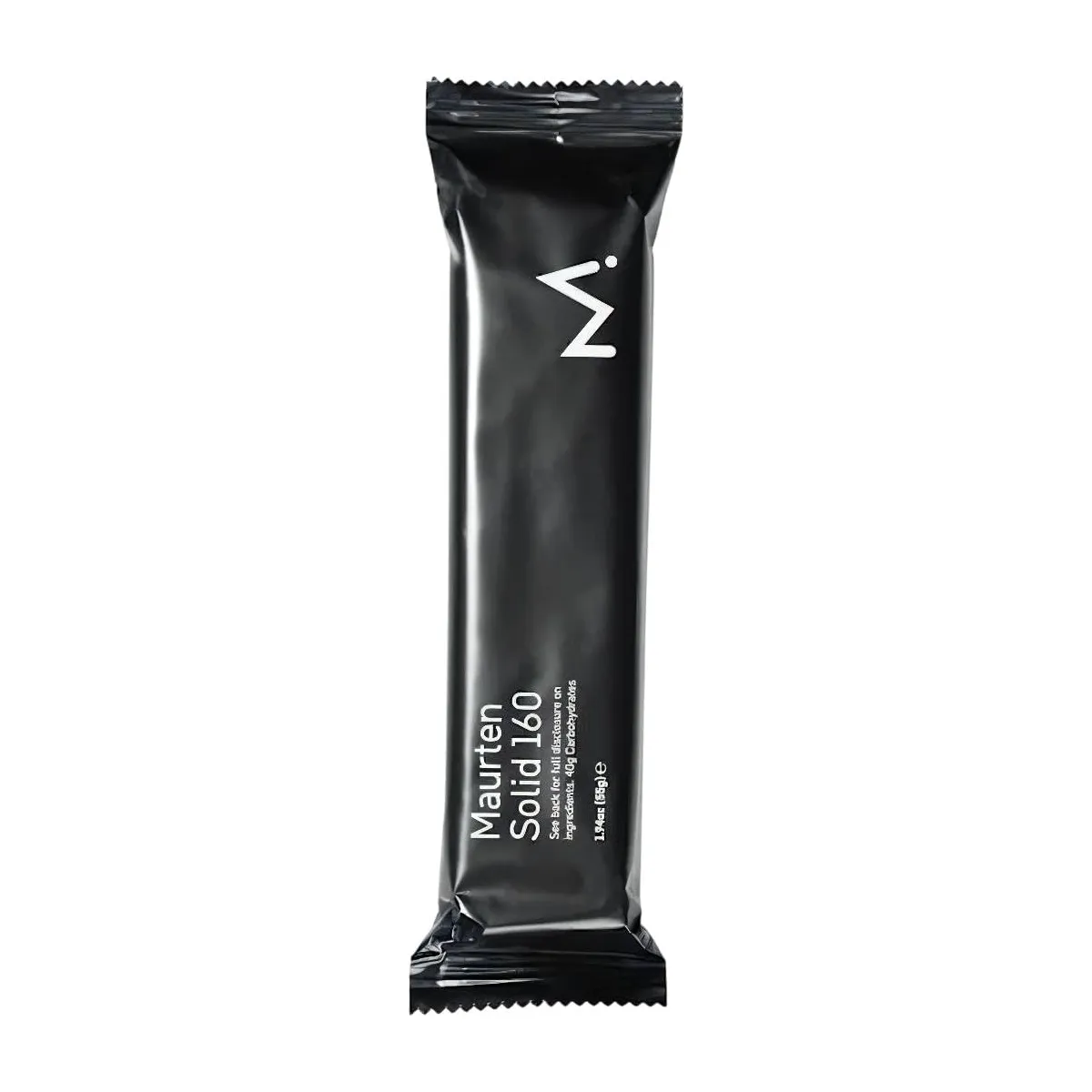
Maurten built its name on hydrogel drinks and gels, and the Solid is the same philosophy in bar form: oat and rice, 40g of carbohydrate, almost no fibre, almost no fat, and a deliberately neutral taste. Nothing on this list gets more carbohydrate into you per gram with less for your stomach to argue about.
It splits into two 20g halves, which makes hourly dosing simple, and it is the bar we would hand to someone racing a 70.3 who has never managed to eat solid food at race pace. The price is premium and the flavour is plain by design; both are the point.
Specifications
- Calories: 200 per bar
- Carbs per bar: 40g
- Protein: 2g
- Serving size: 55g
- Vegan: Yes
Picky Bars Real Food Energy Bar
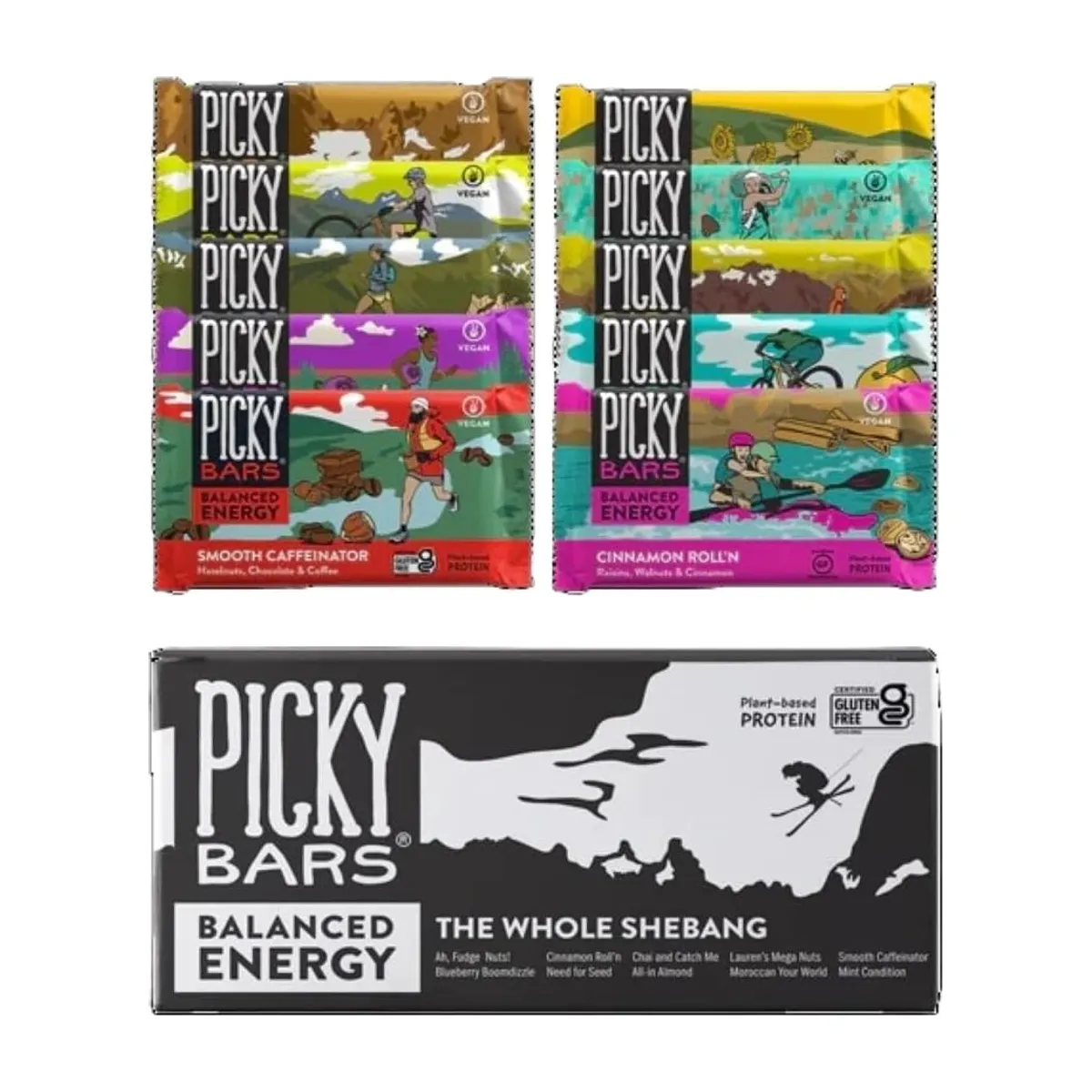
Picky Bars were started by pro runner Lauren Fleshman and pro triathlete Jesse Thomas after he could not find a bar that agreed with his stomach in races. They are real-food bars: dates, nuts and seeds, gluten-free, non-GMO, with 21 to 28g of carbohydrate and 6 to 10g of protein depending on flavour.
That protein and the nut fat make them better for the first hour of a long ride, or the ride to the café, than for a hard final hour. Several flavours are vegan; check the wrapper.
Specifications
- Calories: 180-200 per bar
- Carbs per bar: 21-28g
- Protein: 6-10g
- Serving size: 45g
- Vegan: Some flavours
Kate's Real Food Dark Chocolate Cherry & Almond
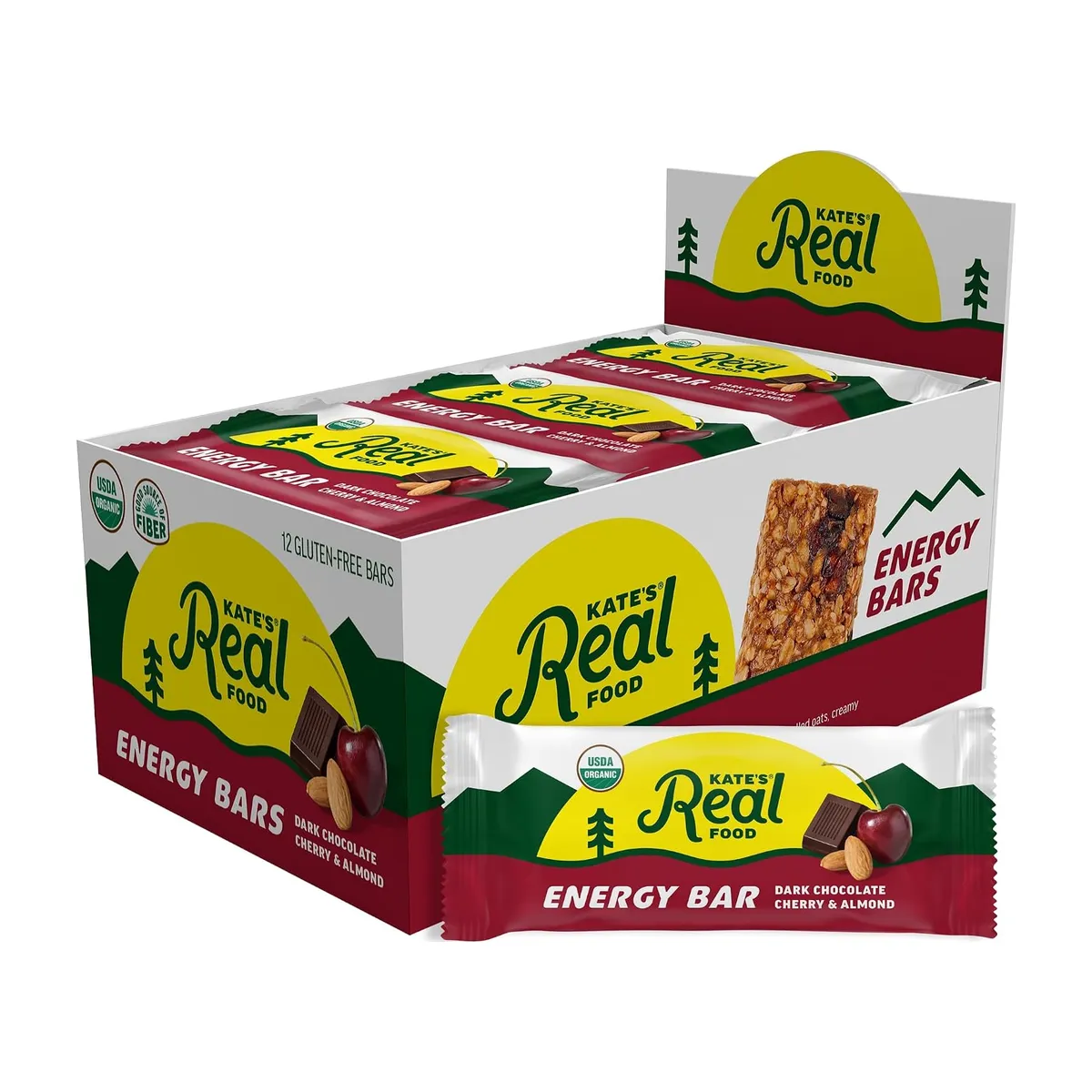
Kate's started as a bar made in a Jackson Hole kitchen for ski patrollers and long days in the mountains, and it still reads like one: organic oats, almond butter, honey, dried cherries and dark chocolate. 260 calories and 40g of carbohydrate in 62g, on a par with the Clif Bar for load and denser in calories.
It is the most "food" thing on this list, which cuts both ways. On a five-hour gravel day it is exactly what you want at hour two; at threshold it is not. Contains honey, so not vegan.
Specifications
- Calories: 260 per bar
- Carbs per bar: 40g
- Protein: 6g
- Serving size: 62g
- Vegan: No
Best Energy Bars: Key Takeaways
The right energy bar depends on ride length, intensity and what your stomach tolerates, and across fifteen bars the pattern is consistent. For long rides at moderate intensity, the Clif Bar, Kate's and Maurten Solid carry the most carbohydrate per bar; Maurten does it with the least fibre and fat, which is why it is the one to reach for at race pace. For anything hard, a waffle: Honey Stinger or GU, thin enough to eat while breathing hard, and light enough to need three an hour.
The Honey Stinger Waffle covers high-intensity efforts and races where you need fast-acting carbs without a heavy chew. The thin, easy-to-eat format makes it the go-to choice when you can't slow down to digest a denser bar.
Skratch Labs Anytime offers a real-food alternative for riders who want recognizable ingredients over engineered formulas. It works well on long, low-intensity rides and gravel days where digestion has time to catch up.
Carry one of each on long rides and switch based on what the road throws at you. Test every bar in training before relying on it in a race or century. Texture, sweetness, and your gut's tolerance vary, and discovering you can't stomach a bar at hour 4 of a long ride is the kind of mistake you only want to make once.