Getting into cycling can feel like a steep climb, with a dizzying amount of gear, training jargon, and unwritten rules to learn.
We agree it can be overwhelming.But we promise that with the right guidance, you can bypass the common pitfalls and build a strong, enjoyable foundation in the sport.
If you’re looking for a structured way to apply these principles, our Cycling Training Plan for Beginners offers a perfect roadmap.
In this guide, we’ll preview eight crucial cycling tips for beginners, covering everything from securing a proper bike fit to dialing in your nutrition and building a consistent schedule.
1. Invest in a Proper Bike Fit
Before you start chasing miles or logging intense workouts, the single most important piece of cycling advice for beginners is to get a proper bike fit. That starts with owning the right bike in the first place, and if you are training for your first triathlon, our triathlon bike guide for beginners is the place to start.A professional bike fit is a detailed process where a trained specialist adjusts your bike to match your unique body geometry, flexibility, and riding goals.
This goes far beyond just setting your saddle height. It fine-tunes everything from saddle fore-aft position and handlebar reach to cleat alignment.
The primary goal is to create a seamless connection between you and your machine.
This alignment optimizes comfort, boosts pedaling efficiency, and, most importantly, prevents common overuse injuries in the knees, back, and shoulders.
An ill-fitting bike forces your body into unnatural positions, leading to pain and wasted energy.
Why It's Foundational for Training
A proper fit ensures you can comfortably and powerfully execute workouts.When your position is dialed in, you can sustain efforts without being limited by discomfort.
This is crucial when following a structured program, as compensatory movements from a bad fit can quickly derail your progress with nagging injuries.
«Key Insight: A bike fit isn't a luxury for pros; it's a fundamental investment in your long-term performance and enjoyment. It maximizes power transfer from your legs to the pedals, turning wasted effort into forward momentum.»
How to Get Started with a Bike Fit
You have several options depending on your budget and goals:- DIY Basic Fit: Use online calculators and video guides to set your initial saddle height and handlebar reach. This is a good starting point but lacks precision.
- Local Bike Shop Fit: Many shops offer basic fitting services that cover the fundamentals and are more affordable than advanced options.
- Advanced Professional Fit: Services like Specialized Retül Fitting use 3D motion capture technology for millimeter-perfect adjustments. This is the gold standard for anyone serious about structured training.
- Virtual Fitting: Platforms like MyVeloFit offer AI-powered analysis from videos you submit, providing a convenient and modern alternative.
2. Start with Low Intensity and Build Gradually
A common mistake among new cyclists is riding too hard, too often.This approach quickly leads to burnout, injury, and frustration. If you are ready to add intensity, our guide to cycling interval training covers the readiness checklist and the two sessions to start with.
The most effective cycling advice for beginners is to embrace the principle of progressive overload, which involves gradually increasing training stress over time.
This science-backed method is the cornerstone of sustainable improvement and long-term fitness.
The goal is to build a strong aerobic foundation before adding significant intensity.
By spending the initial 8–12 weeks focusing on lower-intensity rides (Zones 1-2), you teach your body to become more efficient at using fat for fuel, which builds deep endurance.
This base makes future high-intensity efforts more productive and less likely to cause overtraining.
Why It's Foundational for Training
Building a solid aerobic base is like constructing the foundation of a house; without it, you can't build upwards.This initial phase of low-intensity training develops your cardiovascular system, improves muscular endurance, and strengthens connective tissues, preparing your body for the stress of harder workouts.
It ensures you have the stamina to complete challenging intervals later on and the resilience to recover from them.
«Key Insight: Consistency trumps intensity, especially for beginners. The "80/20 rule" is a proven model: spend 80% of your training time at an easy, conversational pace and only 20% at moderate-to-high intensity.»
How to Get Started with Gradual Progression
You can implement this principle immediately, regardless of your current fitness level:- Follow a Structured Plan: Use one of the best cycling apps for beginners like Cycling Coach AI that automates progressive overload. It assigns workouts tailored to your fitness and adjusts the difficulty weekly based on your performance.
- Use Heart Rate or Power: Objectively measure your effort with a heart rate monitor or power meter. This is more reliable than perceived exertion, ensuring your "easy" days are truly easy.
- Prioritize Rest: Schedule 1–2 complete rest days each week. Recovery is when your body adapts and gets stronger, so don't skip it. Use a heart rate monitor to stay honest on easy days, and get your Max HR based heart rate zones to follow clear BPM targets.
- Be Patient: Building a strong aerobic base takes time. Professional cyclists spend months on base training before a racing season. Trust the process and resist the urge to push too hard too soon.
3. Invest in Basic Safety Gear and Maintenance Tools
Before you start a structured training plan, ensuring your safety and your bike's reliability is non-negotiable.This means investing in essential safety gear and learning basic maintenance.
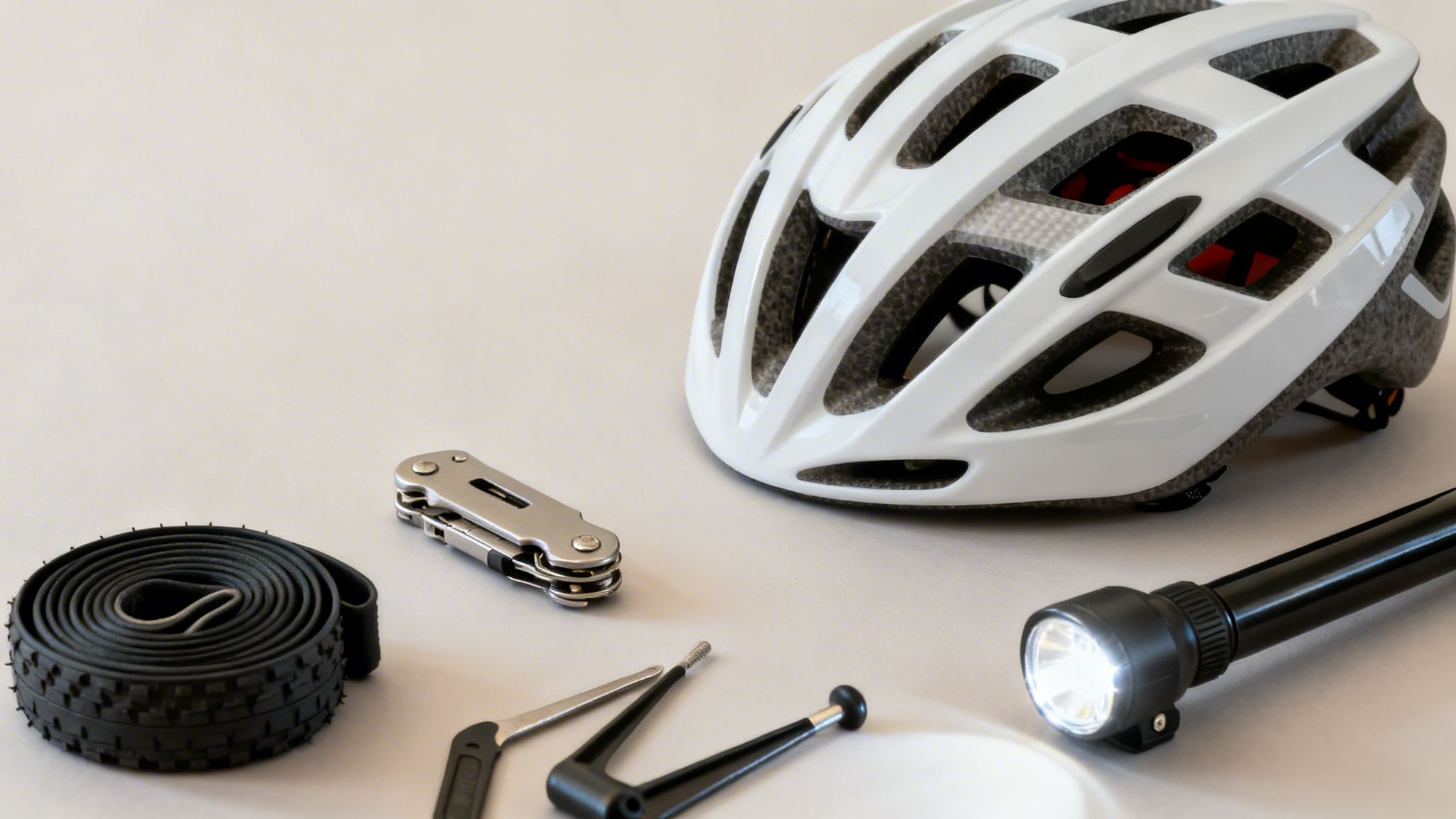
Core safety items include a certified helmet, front and rear lights for visibility, and reflective apparel.
Equally important are basic tools like a pump, tire levers, a spare tube, and a multi-tool to handle common roadside issues.
This preparation isn’t just about safety; it’s about consistency.
A preventable mechanical failure, like a flat tire you can’t fix, can derail a key workout and disrupt your progress.
Being prepared ensures you stay on track with your training goals.
Why It's Foundational for Training
A reliable bike is a trainable bike. When you can trust your equipment, you can focus entirely on executing your workout, whether it's a long endurance ride or a high-intensity interval session. Learning to perform simple checks, like monitoring tire pressure and cleaning your chain, prevents mechanical issues that lead to missed training days and ensures your bike performs efficiently when it matters most.«Key Insight: Safety gear protects you, while maintenance tools protect your training consistency. A flat tire or a dropped chain is a minor inconvenience if you're prepared, but a training-killer if you're not.»
How to Get Started with Safety and Maintenance
Equipping yourself doesn't have to be expensive.Focus on quality essentials that offer the most impact on your safety and reliability:
- Essential Safety Gear: Start with a properly fitted, certified helmet. To dive deeper into what to look for, explore our guide on the best road bike helmets. Add a set of bright, rechargeable USB lights (like those from Knog or Lezyne) for all-conditions visibility.
- Basic Maintenance Kit: Assemble a small saddlebag with a multi-tool (e.g., Crank Brothers or Park Tool), two tire levers, a spare inner tube, and a compact pump or CO2 inflator.
- Learn the Basics: Watch tutorials from reputable sources like Park Tool's YouTube channel to learn how to fix a flat, clean and lube your chain, and perform a pre-ride safety check.
- Build a Routine: Make it a habit to check your tire pressure before every ride. This simple, two-minute task drastically reduces your risk of flats and improves ride quality.
4. Develop a Consistent Training Schedule and Track Workouts
More than any fancy gear or secret workout, consistency is the single greatest predictor of cycling fitness gains.Beginners who train haphazardly see minimal progress and often grow frustrated.
A structured schedule, even just three rides per week, creates the accountability needed for your body to adapt and grow stronger. This approach transforms random pedaling into purposeful training.
The core principle is simple: your body improves by responding to a consistent stimulus.
Tracking your workouts with tools like Strava or a Garmin device provides objective feedback on your progress. It allows you to see patterns in your performance, identify when you need more recovery, and stay motivated by watching your fitness improve over time.
Why It's Foundational for Training
A consistent schedule is the framework upon which all fitness is built.It ensures your body receives a predictable training load, which is essential for physiological adaptations like building aerobic capacity and muscular endurance.
Tracking workouts is crucial for platforms like Cycling Coach AI, whose adaptive algorithms require consistent data to calibrate intensity, adjust future sessions, and personalize your plan effectively.
«Key Insight: Consistency turns effort into results. Sporadic, intense rides are less effective than a steady, planned routine. Tracking your data makes your training history visible, turning abstract feelings into concrete evidence of your improvement.»
How to Get Started with a Consistent Schedule
Building a sustainable routine is about planning and using the right tools:- Fixed Scheduling: Block out specific times in your calendar for rides, just like any other important appointment (e.g., Monday, Wednesday, and Saturday mornings).
- Use Community Platforms: Apps like Strava or Zwift create social accountability. Seeing friends complete rides or joining group events can be a powerful motivator.
- Automate Tracking: Use a GPS computer from brands like Garmin or Wahoo to automatically sync your ride data to platforms like Cycling Coach AI or TrainingPeaks. This removes the manual effort of logging workouts.
- Embrace Flexibility: A major factor in successful training is maintaining momentum. If you miss a day, don't panic; just get back on schedule with your next planned ride.
5. Dial In Nutrition and Hydration for Training and Recovery
Many beginners focus entirely on the bike, but what you consume before, during, and after rides is just as crucial for progress.Proper nutrition and hydration are the fuel for your training and the foundation of your recovery.
This means consuming the right balance of carbohydrates, protein, and electrolytes to power your workouts and repair your muscles afterward.
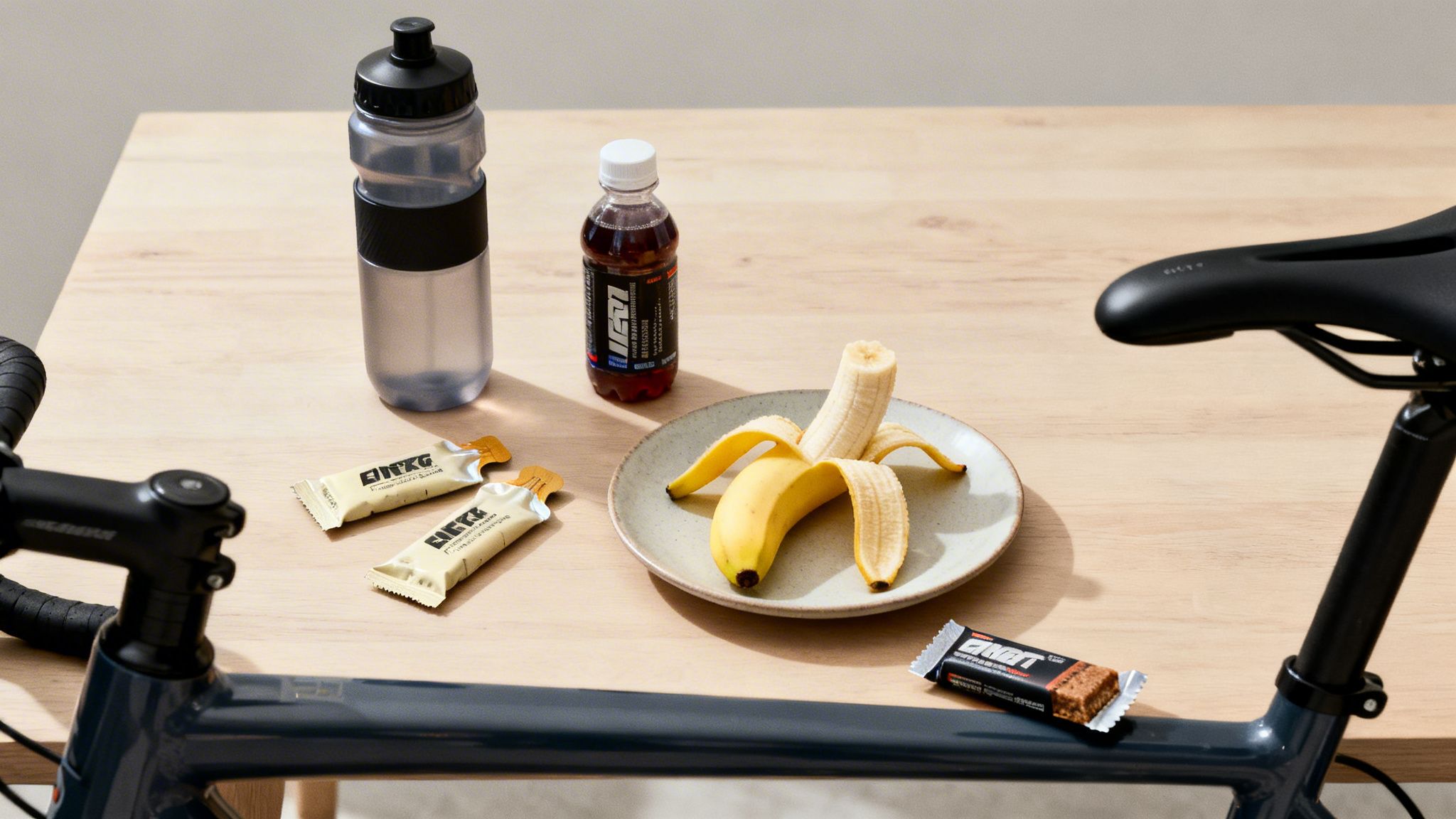
The primary goal is to maintain energy levels and prevent “bonking,” a state of glycogen depletion that leads to a sudden drop in performance.
Properly fueling ensures you can complete workouts effectively and bounce back stronger, avoiding fatigue and muscle soreness.
Why It's Foundational for Training
Effective fueling is the difference between a productive training session and a miserable slog.Without adequate carbohydrates on longer rides (over 90 minutes), your body runs out of its primary energy source, making it impossible to sustain intensity.
Post-ride nutrition, especially a mix of carbs and protein, kick-starts muscle repair and replenishes your energy stores, preparing you for your next session.
«Key Insight: Think of nutrition not as an afterthought but as an integral part of your training plan. What you eat directly impacts your power output, endurance, and how quickly your body adapts and gets stronger.»
How to Get Started with Nutrition and Hydration
You can build a solid fueling strategy without hiring a nutritionist.Start with these fundamental principles:
- Rides Under 90 Minutes: Water is typically sufficient. Focus on pre-ride hydration.
- Rides Over 90 Minutes: Aim for 30-60 grams of carbohydrates per hour. This can come from sports drinks (like Gatorade or Nuun), energy gels (GU or Maurten), or real food like bananas.
- Post-Ride Recovery: Within 30-60 minutes of finishing, consume a snack or meal with a 3:1 or 4:1 ratio of carbohydrates to protein. A simple glass of chocolate milk or a protein shake with fruit works perfectly.
- AI-Powered Guidance: For personalized advice, use a tool like Cycling Coach AI. Its 24/7 chat function can provide specific fueling recommendations for your scheduled workouts, taking the guesswork out of what to eat and when.
6. Join a Cycling Community or Find an Accountability Partner
Embarking on a solo cycling journey can be rewarding, but it can also feel isolating.A powerful piece of cycling advice for beginners is to connect with others.
Joining a cycling community, whether it’s a local club, an online group, or simply finding a training partner, dramatically increases motivation, adherence, and overall enjoyment.
This connection transforms cycling from a solitary activity into a shared experience, providing support and a healthy dose of competition.
Being part of a group exposes you to new skills like drafting and group ride etiquette, while an accountability partner ensures you stick to your training plan.
This social framework is crucial for turning a new hobby into a lasting passion, especially when you’re just starting out and need that extra push.
Why It's Foundational for Training
Consistent training is the bedrock of progress, and accountability is the glue that holds consistency together. When you have a group ride scheduled or a partner waiting, you are far less likely to skip a workout.This social commitment directly translates into faster fitness gains. Furthermore, riding with more experienced cyclists provides invaluable real-time learning opportunities that you can’t get from reading articles alone.
«Key Insight: Accountability is a performance multiplier. Studies show that having an accountability partner can increase your chances of reaching a fitness goal by over 80%, providing the social structure needed to overcome a lack of motivation.»
How to Get Started with a Community
Finding your tribe is easier than ever, with options for every personality and location:- Local Group Rides: Check with your local bike shop. Most organize weekly beginner-friendly or no-drop rides, which are perfect for learning the ropes in a supportive environment.
- Online Platforms: Engage with communities on platforms like Strava or Zwift. Join clubs, participate in group events, or compete in virtual races to connect with a global community of riders.
- Find a Partner: Ask a friend to join you on your cycling journey or use a community forum like Reddit's r/cycling to find a local rider with similar goals and fitness levels.
- Event-Driven Groups: Sign up for a local charity ride or a beginner-friendly race. Training for a shared goal is one of the fastest ways to build camaraderie and find like-minded cyclists.
7. Set SMART Goals and Track Progress Metrics
Vague ambitions like "get faster" or "improve fitness" are common starting points, but they lack the direction needed for consistent progress.The best cycling advice for beginners is to adopt the SMART goal framework: setting targets that are Specific, Measurable, Achievable, Relevant, and Time-bound.
This methodology transforms broad wishes into a clear, actionable roadmap with defined finish lines.
For example, instead of “ride more,” a SMART goal would be “Complete a 100-mile gran fondo in six months.”
This structured approach creates clear targets that make it easy to track your progress and stay motivated.
It provides the “why” behind every training session, connecting individual workouts to a larger, meaningful objective.
Whether your goal is to increase your Functional Threshold Power (FTP) or simply to complete your first charity ride, setting clear metrics is the key to seeing real results.
Why It's Foundational for Training
A structured plan is only as good as the goals it's built to achieve.SMART goals provide the necessary framework for any effective training program, ensuring every ride has a purpose.
Knowing you are working toward a specific outcome, like increasing your FTP from 180W to 220W in 12 weeks, keeps you focused and makes it easier to measure the effectiveness of your training.
«Key Insight: Progress is the ultimate motivator. By setting measurable goals, you make your fitness gains visible, turning abstract effort into tangible achievements that fuel your desire to keep training.»
How to Get Started with Goal Setting
Begin by defining what you want to achieve, then break it down into manageable steps.- Establish a Baseline: Before setting a goal, you need to know where you're starting. Use a platform like Cycling Coach AI or an FTP test on your smart trainer to establish your current fitness metrics.
- Define Your Primary Goal: Choose one major "A" goal for a specific period (e.g., a 12-week training block). This could be an outcome goal like completing an event or a metric-based goal like raising your FTP by 15%.
- Set Process Goals: Support your main goal with process-oriented targets, such as "complete 95% of planned workouts each month" or "ride consistently four times per week."
- Track Everything: Use tools like TrainingPeaks or the built-in analytics of your chosen training app to monitor your progress. Regularly review metrics like FTP trends, time in zones, and workout compliance to stay on track and make adjustments.
8. Prioritize Recovery and Sleep as Part of Your Training Plan
Many beginners believe that fitness gains happen during hard rides, but the opposite is true: adaptation and improvement occur during recovery.Your body repairs muscle tissue, replenishes energy stores, and builds strength while you rest.
Prioritizing recovery, especially quality sleep, is not a passive activity but a critical component of any effective training plan.
It’s the essential process that converts your hard work on the bike into real-world fitness.
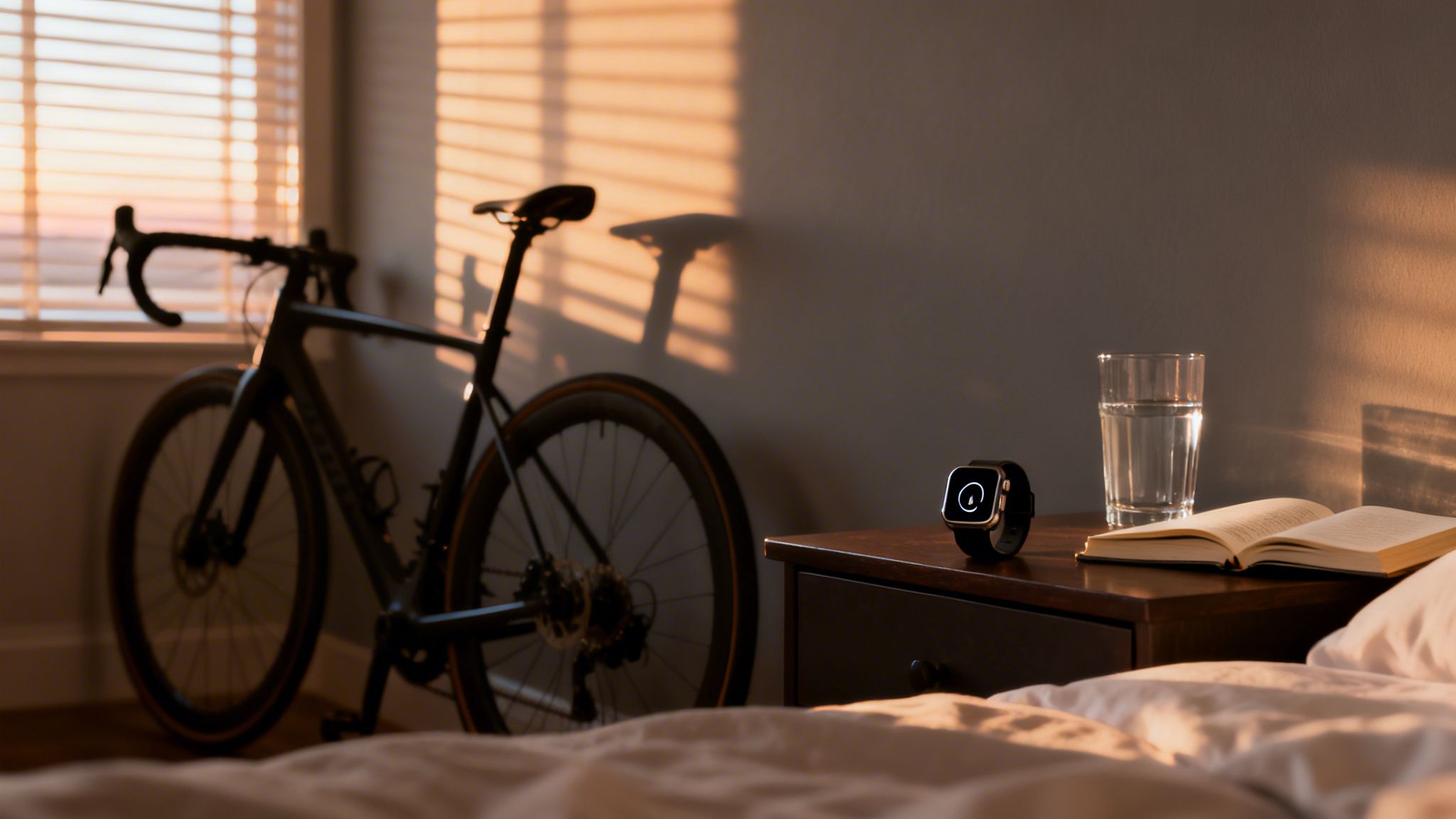
During deep sleep, your body releases human growth hormone (HGH), which is vital for muscle repair and growth.
Ignoring rest can lead to overtraining, suppressed immune function, and a significant reduction in performance gains.
This is a common pitfall for new cyclists eager to see progress quickly.
Why It's Foundational for Training
Structured training introduces stress, and recovery allows your body to adapt and become stronger.Without adequate rest, you’re merely accumulating fatigue.
A well-recovered cyclist can hit their workout targets with more power and less perceived effort, while an under-recovered one will struggle, increasing the risk of injury and burnout.
This makes recovery a non-negotiable part of your routine.
«Key Insight: Training provides the stimulus for improvement, but recovery is when the actual physiological adaptations happen. Treating rest with the same importance as your workouts will accelerate your progress two to three times faster than training alone.»
How to Get Started with Recovery
Integrating recovery into your plan is straightforward and can be scaled to your needs:- Prioritize Sleep: Aim for 7-9 hours of consistent, high-quality sleep per night.
- Active Recovery: On rest days, perform a 20-40 minute easy spin in Zone 1. This gentle activity promotes blood flow to your muscles, helping to clear metabolic waste without adding training stress. You can explore more on this in our detailed guide to recovery after cycling.
- Track Your Readiness: Use a wearable device like a Garmin watch or Oura Ring to monitor metrics like Heart Rate Variability (HRV) and sleep quality. Adjust your training intensity based on these readiness scores.
- Schedule Deload Weeks: Every 3-4 weeks, reduce your training volume and intensity by 40-50% to allow for deeper systemic recovery and prevent plateaus.
8-Point Comparison of Beginner Cycling Advice
| Item | Implementation Complexity 🔄 | Resource Requirements ⚡ | Expected Outcomes ⭐📊 | Ideal Use Cases | Key Advantages |
|---|---|---|---|---|---|
| Invest in a Proper Bike Fit | Moderate 🔄 — professional recommended; DIY possible | Cost $150–$300+; shop time; fitting tech optional | ⭐⭐⭐⭐⭐ — reduces knee/back strain; improves power transfer and comfort | New bike purchase; starting structured training; injury-prone riders | Prevents overuse injuries; increases pedaling efficiency; more comfortable longer rides |
| Start with Low Intensity and Build Gradually | Low–Moderate 🔄 — discipline to pace and follow plan | Minimal; power/HR monitor recommended; time for 8–12 week base | ⭐⭐⭐⭐ 📊 — sustainable gains; reduces injury/overtraining risk 60–80% | Beginners building aerobic base; returning riders | Sustainable long-term fitness; prevents burnout; better adaptation |
| Invest in Basic Safety Gear and Maintenance Tools | Low 🔄 — learn basic skills (tire repair, pump use) | Helmet $80–$300; lights $50–$200; multi-tool, pump, spare tube | ⭐⭐⭐⭐ 📊 — reduces injury severity 50–70%; fewer missed rides from mechanics | All beginners; frequent road rides; solo outings | Increases safety and confidence; self-sufficiency on rides |
| Develop a Consistent Training Schedule & Track Workouts | Moderate 🔄 — habit formation and device setup | Devices/apps (Garmin/Wahoo/Trainer apps); time 3–5 rides/wk | ⭐⭐⭐⭐ 📊 — adherence rises to 85%+; objective progress tracking | Riders wanting steady progress; users of adaptive coaching apps | Accountability, data-driven adjustments, clear trends over time |
| Dial In Nutrition and Hydration | Moderate 🔄 — requires planning and individual testing | Fuel cost $2–$5/serving; sports drinks; meal prep time | ⭐⭐⭐⭐ 📊 — +10–15% workout performance; faster recovery; prevents bonking | Long rides >90 min; high training volume | Improves performance & recovery; stabilizes energy during rides |
| Join a Cycling Community or Find an Accountability Partner | Low 🔄 — seek groups/partners online or local | Time; possible club fees; internet access for online groups | ⭐⭐⭐⭐ 📊 — adherence +20–30% (partnering can raise 50→80%+) | Solo indoor riders; newcomers wanting social support | Boosts motivation, learning, and consistency |
| Set SMART Goals and Track Progress Metrics | Low–Moderate 🔄 — requires baseline testing and review | Tracking apps (TrainingPeaks/Cycling Coach AI); time to set goals | ⭐⭐⭐⭐ 📊 — clearer direction; tracked riders show ~3x greater gains | Goal-oriented riders; event preparation; metric-driven athletes | Focused progression; objective milestones and plan adjustments |
| Prioritize Recovery and Sleep | Moderate 🔄 — lifestyle changes; monitor readiness | Optional wearables $100–$300; time for sleep & deloads | ⭐⭐⭐⭐⭐ 📊 — accelerates gains 40–60%; reduces overtraining risk | All trainees, especially heavy-load or time-crunched athletes | Better adaptation, immune support, mood and performance stability |
Turn Advice Into Action
You've just navigated a comprehensive roadmap of essential cycling advice for beginners, covering everything from the critical importance of a proper bike fit to the science of structured training and recovery.We’ve explored why starting slow is actually the fastest way to get strong, how basic safety gear is non-negotiable, and why nutrition is the invisible training partner you can’t ignore.
Remember, each piece of advice, from setting SMART goals to joining a community, is a building block in your cycling journey.
The path from beginner to confident cyclist isn’t about one giant leap; it’s about the consistent application of these fundamentals.
Making a small commitment to track your workouts, prioritizing an extra hour of sleep, or learning basic bike maintenance are the actions that compound over time.
These habits separate those who just ride from those who truly progress and enjoy the sport for a lifetime.
The initial learning curve can feel steep, but by mastering these foundational elements, you are setting yourself up for incredible success and enjoyment on the bike.
Think of this article as your starter kit.
Your next step is to transform this knowledge into consistent, real-world practice.
Don’t let the complexity of creating a progressive plan hold you back.
The most important thing is to start, stay consistent, and listen to your body.
Embrace our beginners cycling guide and develop a sustainable, rewarding, and lifelong passion for cycling.
The road ahead is yours to conquer.